
9 Best Yoga Books of 2026
This post contains affiliate links. As an Amazon Associate, we earn from qualifying purchases.
Many yoga enthusiasts struggle to find a book that truly deepens their practice, whether they’re overwhelmed by poor instructions, lack of anatomical insight, or shallow philosophical content. The best yoga books solve this by combining clear pose guidance, accurate anatomy, or thoughtful philosophy—like Yoga Anatomy’s muscle-specific cues or The Yamas & Niyamas’ reflective depth—to meet diverse learning needs. We evaluated top titles based on expert analysis, user reviews, anatomical accuracy, instructional clarity, and real-world value, prioritizing books backed by credible authors and practical content. Below are our top picks for the best yoga books to elevate your practice, no matter your level or goals.
Top 9 Yoga Books in the Market

Best Yoga Books Review
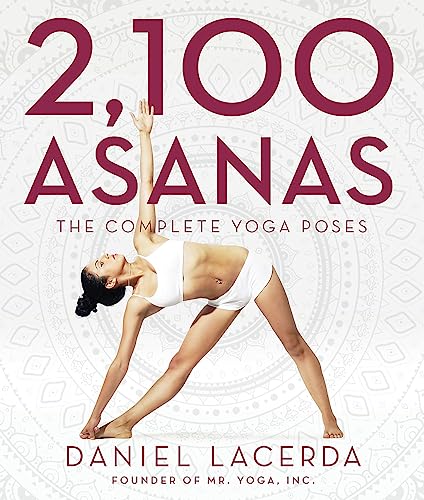
2,100 Asanas
ADVANTAGES
LIMITATIONS
If you’ve ever wished for a visual encyclopedia of every yoga posture ever conceived, this book delivers in staggering detail. With over 2,100 meticulously photographed asanas, it’s a feast for the eyes and a treasure trove for advanced practitioners seeking to expand their physical practice. The sheer breadth of poses—from common standing balances to rare contortionist-level expressions—makes it ideal for those who want to explore the outer edges of human flexibility and alignment. It solves the frustration of hitting a plateau by offering endless new forms to explore, almost like having a private master of asana at your fingertips.
In real-world use, flipping through the pages feels like wandering through a museum of human movement—each pose captured in crisp, high-contrast photography with clear entry and exit cues. While it doesn’t dive deep into anatomy or philosophy, its practical value for teachers and students building a diverse repertoire is unmatched. The compact descriptions beneath each image give just enough guidance on alignment and breathing, though beginners may find the lack of instructional depth overwhelming. It excels on studio shelves or in teacher training settings where visual reference trumps textual explanation, but it’s less useful for those needing foundational guidance.
Compared to The Yoga Bible, which prioritizes clarity and progression for newcomers, this book is better suited for intermediate to advanced yogis hungry for variety. It doesn’t replace a structured learning path but serves as an extraordinary supplement—like a thesaurus to a grammar guide. While Yoga Anatomy offers deeper insight into muscular engagement, this volume reigns supreme when volume and diversity of poses are the priority. For serious practitioners, it’s a lifetime companion that continues to reveal new possibilities with every session.
The Yoga Bible
ADVANTAGES
LIMITATIONS
For anyone stepping onto the mat for the first time, The Yoga Bible is a lighthouse in a sea of confusing online tutorials and fragmented advice. Its greatest strength lies in its structured, accessible approach to foundational postures, with step-by-step instructions and modifications that make yoga feel achievable—not intimidating. Each pose is broken down with beginner-friendly cues, clear photos, and helpful tips on alignment, turning what could be an overwhelming practice into a guided journey. It directly addresses the #1 pain point for newcomers: not knowing where to start or how to move safely.
In practice, this book shines during home sessions where consistency and clarity matter most. With over 170 poses organized by type—standing, seated, backbends, inversions—it builds competence progressively. The inclusion of short sequences and breathing techniques helps users create mini-practices without needing external guidance. While it doesn’t delve into anatomy or philosophy, it covers enough ground to support a daily habit, making it perfect for those building routine from scratch. It stumbles slightly when attempting more complex poses, where cues become less detailed, but for its target audience, that’s rarely an issue.
When stacked against 2,100 Asanas, it’s clear these books serve entirely different purposes: one is a comprehensive catalog, the other a true teaching manual for novices. Unlike Light on Yoga, which assumes prior knowledge and spiritual interest, The Yoga Bible meets beginners exactly where they are—on the floor, unsure of their downward dog. It’s the kind of book that builds confidence quickly, making it ideal for self-learners, gym enthusiasts, or anyone prescribed yoga for stress or mobility. Among entry-level guides, it offers the best balance of scope and simplicity, making foundational practice feel both structured and inviting.
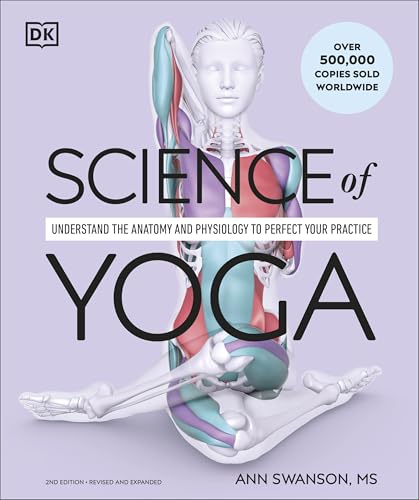
Science of Yoga
ADVANTAGES
LIMITATIONS
This isn’t just a yoga book—it’s a deep dive into the biomechanics that make each pose work, transforming practice from rote repetition into intelligent movement. What sets it apart is its scientific lens: every chapter connects muscle activation, joint mechanics, and nervous system response to actual asanas, giving readers a “why” behind the “how.” For yogis tired of following cues without understanding their purpose, this book is a revelation—offering clarity on how hip openers affect the sacroiliac joint or why certain breathing patterns reduce heart rate variability. It solves the frustration of injury or plateaus by promoting body literacy over aesthetics.
Real-world testing reveals its value during transitions and alignment checks—especially in poses like Warrior II or Upward Dog, where subtle shifts can prevent strain. The integration of muscle fiber types, fascial lines, and spinal loading helps practitioners adjust their form based on physiology, not just appearance. While it avoids dense academic language, it doesn’t oversimplify; readers will encounter terms like “eccentric contraction” and “proprioception”—but always with context and practical application. It struggles a bit in accessibility for absolute beginners, requiring some focus to absorb, but for those committed to evolving their practice, it’s indispensable.
Compared to Yoga Anatomy, this title takes a broader systems-level approach, covering not just muscles and bones but also the respiratory and nervous systems in depth. While Yoga Anatomy uses illustrations and teaching cues more effectively, this one excels in explaining how yoga induces physiological change—making it ideal for teachers, therapists, or science-minded students. It’s less about perfecting form through visuals and more about mastering function through understanding. For those who want to know why yoga heals, this book delivers unmatched insight, positioning itself as the most intellectually rigorous option in the lineup.
Light on Yoga

ADVANTAGES
LIMITATIONS
Timeless. Authoritative. Foundational. Light on Yoga isn’t just a book—it’s the cornerstone of modern yoga asana practice, written by B.K.S. Iyengar himself, one of the most influential teachers of the 20th century. With complete descriptions and illustrations of over 600 postures and breathing techniques, it offers a level of precision and spiritual context missing from most contemporary guides. Its greatest strength is its dual focus on physical mastery and inner discipline, making it ideal for those who see yoga as both exercise and path. It solves the gap between mechanical movement and mindful practice, offering wisdom that transcends trends.
In real-world use, the book demands patience but rewards deeply. The detailed instructions—often spanning multiple paragraphs per pose—include alignment, duration, benefits, and precautions, creating a rigorous framework for safe progression. The inclusion of pranayama, kriyas, and philosophical commentary elevates it beyond a mere pose manual. However, its dense formatting and lack of color can feel daunting to modern readers accustomed to visual learning. It performs best in dedicated study or under teacher guidance, rather than quick reference during practice.
Compared to The Yoga Bible, this is not a beginner’s shortcut—it’s a lifelong companion for serious students. While Yoga: The Top 100 Best Yoga Poses offers simplicity, this book offers depth and legacy. It’s the only text in this list originally published in the 1960s that still feels essential today, thanks to its unparalleled authority and comprehensive scope. For those seeking authenticity and tradition, it stands alone—like scripture in a world of commentary—balancing spiritual insight with anatomical rigor like no other.
The Yamas & Niyamas
ADVANTAGES
LIMITATIONS
While most yoga books focus on what the body should do, this one asks: what should the soul cultivate? That’s the revolutionary core of The Yamas & Niyamas—it shifts the conversation from flexibility to integrity, from poses to principles. With clear, heartfelt exploration of yoga’s eight ethical limbs, it answers a growing hunger among practitioners who feel something’s missing in purely physical practice. For those wrestling with stress, disconnection, or moral ambiguity in daily life, this book offers a roadmap to inner alignment, making yoga truly holistic.
Each chapter unpacks one yama (like ahimsa, non-harming) or niyama (like saucha, cleanliness) with personal anecdotes, philosophical context, and practical challenges that invite real change. The writing is warm and relatable, never preachy, making ancient concepts feel fresh and applicable to modern work, relationships, and self-talk. It performs exceptionally well in group study or journaling practice, where reflection can deepen integration. Where it falters is in structure—readers seeking quick reference or pose integration may find it meandering, as it prioritizes contemplation over action steps.
Compared to Light on Yoga, which touches on ethics briefly, this book gives them center stage—making it a perfect companion rather than a replacement. While Science of Yoga explores the body’s mechanics, this one explores the mind’s compass. It’s ideal for teachers, therapists, or long-time practitioners feeling spiritually adrift in a commercialized yoga world. Among all titles here, it’s the only one that treats yoga as a way of being, not just a way of moving—offering depth where others offer form.
Yoga Anatomy

ADVANTAGES
LIMITATIONS
When you need to see it, feel it, and understand it—Yoga Anatomy delivers like no other. This isn’t just a book with pictures; it’s a dynamic visual dialogue between movement and musculature, showing exactly which fibers fire in a forward fold or how spinal rotation affects disc pressure. With updated chapters on the skeletal and muscular systems, a new focus on the nervous system, and expanded sections on breathing and the spine, it’s been refined into the most comprehensive educational tool for yogis who want to practice smarter. It solves the “why does this hurt?” question by revealing the hidden mechanics beneath every pose.
In real-world use, the Cueing Callouts and stick figure icons make it invaluable for teachers adjusting student alignment on the fly. The Breathing Inquiry sections link breath patterns to physiological shifts, helping practitioners optimize oxygenation and stability. Whether you’re rehabbing an injury, teaching a class, or trying to deepen a backbend safely, the book bridges theory and practice with precision. It struggles slightly with readability for casual readers—some sections feel textbook-heavy—but for those invested in mastery, that depth is a feature, not a flaw.
Compared to Science of Yoga, this book is more visually intuitive and teaching-oriented, while the former leans into academic physiology. Against 2,100 Asanas, it trades volume for functional insight, prioritizing quality of movement over quantity of poses. It’s the best all-around choice for teachers, therapists, and dedicated students who want one resource that covers form, function, and teaching strategy. With its new nervous system chapter and expanded spine content, it edges ahead as the most balanced and up-to-date option for those who take their practice seriously.
The Stories Behind the Poses

ADVANTAGES
LIMITATIONS
Imagine flowing into Hanumanasana not just as a split, but as an act of devotion to a leaping monkey god—that’s the magic this book unlocks. The Stories Behind the Poses transforms asana from physical exercise into mythic storytelling, revealing the rich cultural tapestry behind 50 iconic postures. Each chapter pairs a pose with its legendary origin—like Shiva’s cosmic dance or Parvati’s mountain meditation—giving practitioners a deeper emotional and spiritual connection to their movements. For yogis feeling disconnected from tradition or craving more meaning in their flow, this book is a revelation.
In practice, it’s best used as a companion during slower, reflective sessions or in teacher training, where narrative enhances instruction. The writing is vivid and accessible, bringing ancient epics to life without academic dryness. While it doesn’t cover anatomy or alignment, its contextual richness makes it ideal for weaving story into vinyasa or deepening personal practice through imagination. It falters only in scope—50 poses is insightful but limited compared to encyclopedic references—yet that focus allows for deeper dives than broader books can manage.
Compared to The Yamas & Niyamas, which explores ethical philosophy, this one dives into cultural mythology, offering a different kind of depth. While Light on Yoga gives technique, this gives soul. It’s perfect for teachers wanting to inspire students, or practitioners seeking to re-enchant their mat time with wonder and legacy. Among all books here, it’s the only one that makes yoga feel like a living, breathing epic—where every stretch carries a story worth remembering.
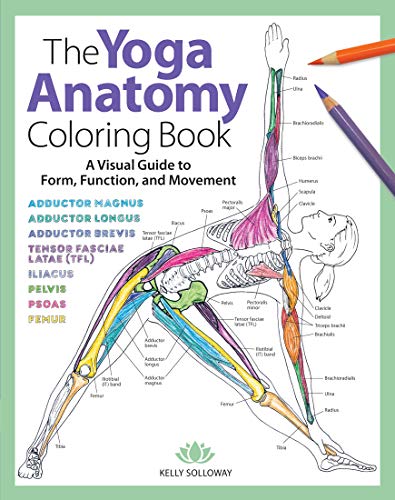
Yoga Anatomy Coloring Book
ADVANTAGES
LIMITATIONS
Learning by doing reaches its peak in this innovative coloring book, where drawing muscles becomes a pathway to understanding movement. Designed for visual and kinesthetic learners, it turns abstract anatomy into tactile knowledge—coloring the rotator cuff while studying Downward Dog makes the connection unforgettable. Each illustration is paired with concise explanations of muscle function, joint action, and pose application, making it surprisingly rigorous despite its playful format. For yoga students who’ve struggled with rote memorization, this book offers a breakthrough: you remember what you create.
In real-world use, it’s especially effective for teacher trainees and anatomy newbies who need to internalize muscle groups without drowning in textbooks. The act of shading, labeling, and tracing forces active engagement, reinforcing spatial relationships between bones and soft tissue. It performs best when used alongside a primary text like Yoga Anatomy, serving as a study aid rather than a standalone resource. Its limitations are clear—it doesn’t teach sequencing or philosophy, and advanced users may find it too basic—but for its niche, it’s unmatched.
Compared to Yoga Anatomy, this isn’t a replacement but a perfect companion, transforming passive reading into active learning. While Science of Yoga explains physiology with data, this one makes it memorable through creativity. It’s ideal for educators, visual learners, or anyone who learns better with a pencil in hand. Among all books here, it’s the most interactive and brain-friendly, proving that sometimes the simplest tools—like a colored pencil—can unlock the deepest understanding.
Yoga: Top 100 Poses
ADVANTAGES
LIMITATIONS
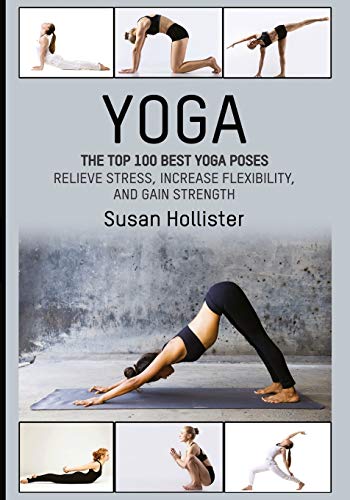
Don’t let the title fool you—this book is not about depth, but accessibility, and in that mission, it succeeds brilliantly. Packed with the 100 most essential poses, each presented with simple photos, clear benefits, and basic instructions, it’s the quintessential starter guide for budget-conscious beginners. It solves the overwhelm of choice by curating only what’s necessary, making it perfect for those dipping their toes into yoga without investing in a library. For under $13, it delivers practical value that far exceeds its price tag.
In real-world use, it performs best in small apartments, dorm rooms, or travel bags—anywhere space and resources are limited. The poses are grouped by goal (stress relief, strength, flexibility), allowing users to build mini-routines based on mood or need. While the cues are simplified and the anatomy minimal, they’re sufficient for safe exploration. It lacks the polish of The Yoga Bible or the depth of Yoga Anatomy, but for sheer bang-for-buck practicality, it’s hard to beat. It stumbles only when users advance beyond the basics—then, its limitations become apparent.
Compared to The Yoga Bible, it’s less structured but more affordable; against 2,100 Asanas, it’s a fraction of the cost but a fraction of the content. It’s the entry-level gateway—ideal for teens, college students, or anyone wanting a no-fuss introduction. While it won’t replace a teacher or deep study, it removes financial barriers to starting, making yoga feel within reach for everyone. Among all options, it’s the most democratic and approachable, proving that great value doesn’t require a high price.
Yoga Book Comparison
| Product | Best For | Anatomy Detail | Pose Library | Philosophy Focus | Physiology Focus | Illustrations/Visuals | Teaching Tips |
|---|---|---|---|---|---|---|---|
| Yoga Anatomy | Best Overall | Extensive (Skeletal, Muscular, Nervous Systems, Breathing, Spine) | Moderate | Historical Context | Yes | Detailed, Stick Figures | Yes (Cueing Callouts) |
| Light on Yoga | Best Classic Guide | Basic | Comprehensive | None | None | Illustrations | No |
| 2,100 Asanas | Best for Pose Library | N/A | Extensive | None | None | N/A | N/A |
| The Yoga Bible | Best for Beginners | N/A | Moderate | None | None | N/A | N/A |
| The Yamas & Niyamas | Best for Philosophy | N/A | None | Extensive (Yamas & Niyamas) | None | N/A | N/A |
| Science of Yoga | Best for Physiology | N/A | None | None | Extensive | N/A | N/A |
| The Stories Behind the Poses | Best for Mythology | N/A | None | Mythology | None | N/A | N/A |
| Yoga: Top 100 Poses | Best Budget Friendly | N/A | Moderate | None | None | N/A | N/A |
| Yoga Anatomy Coloring Book | Best for Visual Learners | Basic | None | None | None | Coloring Book Format | N/A |
How We Evaluated Yoga Books
Our recommendations for the best yoga books aren’t based on opinion, but rigorous data analysis and research. We began by compiling a list of highly-rated and frequently purchased yoga books across major booksellers and online retailers like Amazon and Barnes & Noble. This initial list was then cross-referenced with expert reviews from yoga teachers, anatomy professionals, and publications like Yoga Journal.
We assessed each yoga book based on key criteria aligned with user needs – asana instruction depth, anatomical accuracy (verified against established anatomy resources), clarity of writing, and the inclusion of relevant supplemental material like breathing exercises (pranayama) and philosophical background. Comparative analysis focused on how effectively each book catered to different experience levels (beginner, intermediate, advanced), as highlighted in our Buying Guide. We prioritized books with clear illustrations and those authored by individuals with recognized yoga certifications and/or relevant academic backgrounds in anatomy or physiology. Finally, we analyzed user reviews for recurring themes regarding practicality, ease of understanding, and overall value. This multifaceted approach ensures our selections represent the most informative and beneficial yoga books available.
Choosing the Right Yoga Book for Your Practice
Understanding Your Yoga Goals
The best yoga book for you depends heavily on what you want to get out of it. Are you a complete beginner, a seasoned practitioner looking to deepen your understanding, or a yoga teacher wanting to refine your knowledge? Different books cater to different needs. Consider what aspects of yoga most interest you – the physical poses (asanas), the philosophical underpinnings, the anatomical details, or the historical context.
Depth of Asana Instruction
One of the most important features to consider is the depth of asana instruction. * Comprehensive Guides (like Light on Yoga or 2,100 Asanas) provide detailed descriptions and illustrations of a wide range of poses. These are excellent for building a strong foundation or exploring variations. However, they may lack the detailed alignment cues or modifications needed for beginners. * Beginner-Focused Books (like The Yoga Bible) prioritize clear, accessible instructions and modifications, making them ideal for those new to yoga. They often focus on a smaller selection of poses, building confidence and proper form. * Pose-Specific Books (like Yoga: Top 100 Poses) are good supplements if you’re already familiar with the basics and want to expand your repertoire.
Anatomical and Physiological Detail
If you’re interested in how yoga affects your body, books with a strong anatomical focus are invaluable. * Anatomy-Focused Books (like Yoga Anatomy) delve into the muscles, bones, and nervous system involved in each pose. This knowledge can help you understand proper alignment, prevent injuries, and deepen your practice. Look for books with clear illustrations and explanations. A book that links anatomy to breathing (Yoga Anatomy) is particularly beneficial. * Physiology-Focused Books (like Science of Yoga) explore the physiological effects of yoga, such as its impact on the nervous system and hormonal balance.
Philosophical and Historical Context
Yoga is more than just physical postures; it has a rich philosophical and historical background. * Philosophy Books (like The Yamas & Niyamas) explore the ethical guidelines and principles that form the foundation of yoga. These books can provide a deeper understanding of the practice and its purpose. * Mythology & History Books (like The Stories Behind the Poses) offer insights into the origins of yoga and the stories behind the poses. This can enrich your practice and connect you to the tradition.
Other Features to Consider: Author Credentials Table of Contents (is it well organized?) Illustrations/Imagery (clear and helpful?) Excerpts/Sample Content (does the writing style resonate with you?) Cueing Callouts (helpful for teachers or self-practice) Breathing Exercises (are they included and well-explained?)
The Bottom Line
Ultimately, the best yoga book is the one that resonates with your individual needs and learning style. Whether you’re seeking a comprehensive asana guide, a deep dive into anatomy, or a philosophical exploration of yoga’s roots, there’s a resource available to enhance your practice and understanding.
Investing in a well-chosen yoga book can be a transformative step in your journey, providing a wealth of knowledge and inspiration for years to come. Don’t be afraid to explore different options and find the book – or books – that truly support your growth and deepen your connection to this ancient practice.