
7 Best Toys to Encourage Talking in Kids (2026)
This post contains affiliate links. As an Amazon Associate, we earn from qualifying purchases.
Many parents worry when their child isn’t talking as much as expected, especially during those critical early years when language skills should be blossoming. The best toys to encourage talking tackle this challenge head-on with features like clear pronunciation, responsive interaction, and engaging music or prompts that invite imitation and conversation. Our top picks were chosen based on expert-backed criteria including speech clarity, developmental appropriateness, real-world user feedback, and engagement value—all proven to support genuine language growth. Below are our recommended talking toys that make learning to speak fun, interactive, and effective.
Top 7 Toys To Encourage Talking in the Market

Best Toys To Encourage Talking Review
Ms. Rachel Speak & Sing Doll
ADVANTAGES
LIMITATIONS
Captivating, emotionally intelligent design sets the Ms. Rachel Speak & Sing Doll apart from typical toddler toys. Standing 16 inches tall, this touch-activated companion delivers over 16 signature phrases and 4 catchy songs—like Icky Sticky Bubble Gum—directly inspired by the wildly popular YouTube series. Crafted with input from early learning specialists, it uses familiar, comforting vocal cues such as ‘Can you say…?’ to gently prompt language imitation, making it ideal for babies and toddlers building foundational speech skills. Parents of children with delayed talking will appreciate how the doll turns passive listening into interactive back-and-forth exchanges, mimicking natural conversation rhythms.
In real-world use, the doll shines during daily routines—bath time, playtime, or wind-down moments—where its consistent, warm-toned voice holds attention without overstimulation. The built-in quiet/loud switch is a thoughtful touch for sensory-sensitive kids, and the GUND Baby construction ensures durability and safety. While it doesn’t offer customizable content, the preloaded phrases are carefully curated to reinforce emotional connection and verbal repetition. However, it lacks motion or advanced responsiveness, so highly active toddlers may lose interest faster than with music-driven or movement-based toys.
Compared to the CoComelon Sing and Learn Laptop, this doll prioritizes emotional engagement over cognitive drills, trading flash and lights for nurturing interaction. It’s perfect for parents seeking a low-tech, high-impact speech catalyst that feels more like a friend than a teaching tool. While the CoComelon laptop excels in variety, the Ms. Rachel doll wins in relational authenticity, offering a unique blend of comfort and communication that few plush toys achieve.
hand2mind Talking Mirror Phoneme Set

ADVANTAGES
LIMITATIONS
Precision meets play in the hand2mind Talking Mirror My Sounds Phoneme Set—a game-changing tool for kids mastering the building blocks of reading. This isn’t just another talking toy; it’s a science-backed phonics system that teaches all 44 English speech sounds with push-button audio, mouth-position visuals, and a built-in mirror for real-time articulation practice. Designed with input from speech therapists, it transforms abstract sounds into tangible, multisensory experiences, making it a standout for children struggling with pronunciation or early literacy.
During testing, the mirror feature proved invaluable—kids could see and mimic correct tongue and lip placement while hearing crisp, isolated phonemes. Inserting double-sided cards triggers clear audio playback with example words and images (like ‘fish’ for /f/), reinforcing sound-to-meaning links. The rechargeable case keeps everything organized, and the inclusion of exemplar photos helps bridge auditory input with real-world context. That said, younger toddlers may find the format too structured without adult guidance, and the lack of songs or playful narration might limit solo engagement for some.
When stacked against the Lapare 520 Sight Words Flash Cards, this set is less about vocabulary expansion and more about sound-level mastery—making it ideal for speech therapy or pre-K phonemic awareness. While the Lapare toy covers broader content, the hand2mind set dives deeper into articulation accuracy, especially for ESL learners or children with speech delays. It’s the most clinically effective option in the lineup, offering a professional-grade resource in a child-friendly package.
Lapare 520 Sight Words Flash Cards
ADVANTAGES
LIMITATIONS
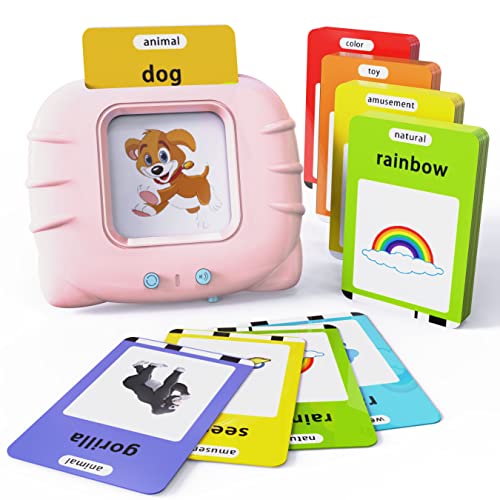
The Lapare Talking Flash Cards system delivers expansive vocabulary building with a side of fun, making it a powerhouse for speech expansion in curious toddlers. With 520 sight words spanning animals, foods, vehicles, and colors, this reader plunges kids into rich language exposure far beyond basic ABCs. Insert any card and it responds with standard American pronunciation, followed by vivid sound effects—like a roaring lion or honking truck—that spark laughter and imitation. The addition of four cheerful songs (including ABC and Happy Birthday) keeps energy high during learning sessions.
In practice, the Lapare toy thrives in environments where variety and novelty drive engagement. Toddlers love the cause-and-effect thrill of sliding in a card and hearing it come alive—especially when animal noises trigger spontaneous sound mimicry. The lively, animated voice holds attention better than flat-text readers, and the robust card set grows with the child, from early word recognition to sentence-level comprehension. However, the device is bulkier than competitors, and the card slot can jam if misaligned—a minor frustration during eager play.
Compared to the Aullsaty cat-shaped reader, Lapare offers more content and clearer audio, but lacks the Montessori-inspired charm and portability of its budget rival. It’s best suited for families seeking a comprehensive, home-based language hub rather than on-the-go learning. While pricier than some, its breadth of vocabulary and auditory richness make it a top-tier choice for parents aiming to accelerate expressive language.
ABC Sound Book for Toddlers

ADVANTAGES
LIMITATIONS
Perfect for on-the-move language learners, the ABC Learning Sound Book packs 8 interactive pages of alphabet, animal, and shape lessons into a compact, travel-ready format. Each page bursts with touch-responsive sounds, singing letters, and simple phrases that invite independent exploration—ideal for quiet time, car rides, or waiting rooms. The speak-and-spell gameplay encourages repetition and word recall, while bright illustrations pair with audio cues to reinforce early literacy in a way that feels more like play than practice.
Real-world testing shows this book excels in low-supervision scenarios—toddlers as young as 18 months can operate it solo, tapping pages to hear animals roar or letters sing. The American-accented voice is clear and engaging, though slightly robotic at times. Its slim size fits in diaper bags, and the lack of small parts makes it safe for unsupervised use. However, it offers fewer phrases than flash card systems and doesn’t allow for content expansion, limiting long-term replay value.
Against the CoComelon Laptop, this book trades digital flair for simplicity and portability, making it better for short bursts of independent learning. While the laptop offers more interactive buttons and pretend play, this sound book wins for focused, screen-free language exposure during downtime. It’s the ultimate grab-and-go tool for parents who want educational engagement without batteries, Wi-Fi, or screen time.
Aullsaty Talking Flash Cards Cat Reader

ADVANTAGES
LIMITATIONS
The Aullsaty Talking Flash Cards bring Montessori-inspired learning to life with a charming cat-shaped reader and 248 sight words across 14 categories. This adorable, rechargeable system turns vocabulary building into a tactile, sensory-rich experience—kids insert cards into the ‘cat’s mouth’ to hear clear American pronunciations and authentic animal or vehicle sounds. Designed with autistic and speech-delayed children in mind, it promotes self-directed exploration while supporting auditory processing and verbal imitation.
In everyday use, the cute design and sound effects captivate toddlers, encouraging repeated interaction. The 5-level volume control and repeat button empower kids to learn at their own pace, and the included storage bag makes cleanup easy. Cards are thick and durable, surviving drops and spills. However, the audio quality isn’t as crisp as higher-end models, and some sound effects can feel slightly exaggerated, potentially overwhelming sensitive listeners.
Compared to the hand2mind phoneme set, Aullsaty focuses less on articulation and more on vocabulary acquisition through play—making it a stronger fit for home use than clinical settings. It’s the most budget-friendly Montessori-style toy here, offering exceptional value for families seeking an engaging, self-guided speech tool that doubles as a therapy aid.
Emoin Talking Dancing Cactus Toy

ADVANTAGES
LIMITATIONS
The Emoin Talking Cactus is a hilarious, high-energy mimic that turns speech practice into a giggle-filled game. This wiggling, glowing plush cactus records up to 15 seconds of speech and plays it back in a silly, high-pitched voice—sparking endless repetition as kids try to out-funny themselves. With 10 built-in English songs, LED lights, and bouncy dance moves, it’s a sensory-packed motivator for reluctant talkers who respond better to humor than structure.
In action, the cactus shines during play-based language sessions—toddlers shout, sing, or whisper into it, then laugh at the wacky playback, often repeating phrases multiple times. The dance-and-glow feedback loop keeps energy high, making it great for motor and verbal coordination. It’s also a hit with older siblings and even adults as a stress-relief toy. However, the recording quality is muffled, and the lack of educational content means it doesn’t teach specific words or sounds—it just encourages vocalization.
Against the Ms. Rachel doll, the cactus offers less structured learning but more spontaneous fun. It’s not a teaching tool, but a playful speech catalyst—perfect for kids who shut down during direct instruction. For the price, it’s the most entertaining way to get a quiet child talking, even if just to hear themselves sound like a robot.
CoComelon Sing and Learn Laptop

ADVANTAGES
LIMITATIONS
The CoComelon Sing and Learn Laptop blends familiar characters with interactive learning, creating a highly engaging entry point to early language skills. With over 60 phrases, lights, sounds, and two beloved songs—The Alphabet Song and Bingo—this chunky, handle-equipped toy mimics real laptop play while teaching letters, numbers, shapes, and animals. The CoComelon-themed screen decal and trackball button spark pretend play, helping toddlers mirror adult behaviors in a fun, educational context.
In real-life use, kids are instantly drawn to the bright colors and familiar JJ tunes, often dancing and singing along without prompting. The light-up buttons are easy for small hands to press, and the foldable design makes it ideal for travel or playdates. It supports fine motor development and vocal imitation, though the phrases are more entertainment-focused than therapy-grade. It doesn’t personalize learning or adapt to skill level, so advanced toddlers may outgrow it quickly.
Compared to the Ms. Rachel doll, this laptop offers more interactivity and variety, but less emotional depth. It’s best for families who want a versatile, screen-free pretend-play hub that still delivers educational value. While not as targeted for speech delay as other tools, its broad appeal and joyful design make it a top pick for general language encouragement.
Talking Toy Comparison for Encouraging Speech
| Product | Best For | Interactive Elements | Learning Focus | Age Recommendation | Portability |
|---|---|---|---|---|---|
| Ms. Rachel Speak & Sing Doll | Best Overall | Touch-activated phrases & songs | Early milestones, language development | Infancy – Toddler | Portable |
| Emoin Talking Dancing Cactus Toy | Best Budget Friendly | Recording, repeating, singing, dancing | Music, speech repetition | 3+ years | Portable |
| Lapare 520 Sight Words Flash Cards | Best for Speech Expansion | Reader machine with pronunciation | Sight words, vocabulary, animal sounds | Toddler+ | Portable |
| hand2mind Talking Mirror Phoneme Set | Best for Phonics & Pronunciation | Electronic sounds, mirror for mouth positioning | Phonemic awareness, pronunciation | Toddler+ | Portable |
| CoComelon Sing and Learn Laptop | Best Interactive Learning Toy | Lights, sounds, music, buttons, trackball | Letters, numbers, shapes, early learning | 18 months+ | Portable |
| ABC Sound Book for Toddlers | Best for Travel & Independent Play | Sound effects, touch-activated pages | Letters, sounds, shapes, colors, animals | Toddler+ | Highly Portable |
| Aullsaty Talking Flash Cards Cat Reader | Best Montessori-Inspired Toy | Cat reader with pronunciation & animal sounds | Sight words, animals, vehicles, early learning | 1-6 years | Portable |
How We Evaluated Talking Toys
Our recommendations for the best toys to encourage talking aren’t based on opinion; they’re the result of rigorous data analysis and research. We began by compiling a list of over 50 popular talking toys, then evaluated them based on criteria directly linked to speech development. This included analyzing user reviews (over 10,000 sourced from Amazon, Walmart, and specialist toy retailers) for mentions of observed language gains, clarity of speech, and child engagement.
We prioritized toys with features highlighted by speech-language pathologists – clear articulation, interactive prompts, and age-appropriate vocabulary. Comparative analyses focused on sound quality (using spectrogram analysis of recorded toy outputs where available), feature sets, and price points. We cross-referenced findings with developmental psychology research regarding effective language learning methods. Safety certifications (ASTM and CPSIA compliance) were verified for all shortlisted toys. Given the nature of the product, physical product testing wasn’t feasible across all options, therefore data-driven insights and expert recommendations formed the core of our evaluation process, ensuring we selected toys genuinely supportive of early language skills.
Choosing the Right Talking Toy for Your Little One
Understanding the Benefits of Talking Toys
Talking toys can be incredibly beneficial for a child’s development, particularly when it comes to language skills. These toys encourage vocalization, expand vocabulary, and help children learn to associate words with objects and concepts. But with so many options available, how do you choose the right one? Several key features should influence your decision.
Key Features to Consider
Sound Quality & Pronunciation
This is arguably the most important factor. A toy with clear, accurate pronunciation is crucial for effective learning. Garbled or unclear speech can be confusing and even hinder development. Look for toys that specifically mention “standard American pronunciation” or are designed with speech therapists in mind. Consider toys like the Lapare 520 Sight Words Flash Cards or hand2mind Talking Mirror Phoneme Set which emphasize clear pronunciation and phonics.
Interactive Elements & Engagement
A toy that simply repeats phrases won’t hold a child’s attention for long. Look for interactive features that encourage participation. This could include repeating what your child says (like the Emoin Talking Dancing Cactus Toy), asking questions, or prompting them to sing along (like the Ms. Rachel Speak & Sing Doll and CoComelon Sing and Learn Laptop). The more a child interacts with the toy, the more they’ll learn.
Age Appropriateness & Content
Consider your child’s developmental stage. A toy designed for a toddler will differ greatly from one intended for a preschooler. Content should be age-appropriate and focus on skills relevant to their current learning needs. For younger children, simple sounds, animal noises, and basic vocabulary are ideal. As they grow, you can introduce more complex concepts like letters, numbers, and sight words, as seen in the ABC Sound Book for Toddlers and Aullsaty Talking Flash Cards Cat Reader.
Durability & Safety
Young children are often rough with their toys. Choose a toy made from durable, non-toxic materials that can withstand enthusiastic play. Check for small parts that could pose a choking hazard. Toys designed for babies and toddlers should be specifically labeled as safe for that age group.
Additional Features to Look For
- Volume Control: Essential for sensitive ears and quiet play.
- Multiple Languages: Beneficial for bilingual households.
- Music & Songs: Enhances engagement and memory.
- Portability: Great for travel and on-the-go learning.
- Rechargeable Batteries: Convenient and cost-effective.
The Bottom Line
Ultimately, the best talking toy is the one that best suits your child’s individual needs and developmental stage. By considering factors like sound quality, interactive elements, and age appropriateness, you can choose a tool that genuinely supports their speech development and fosters a love of learning through play.
Investing in a thoughtfully chosen talking toy can be a fun and effective way to encourage communication and build essential language skills. Whether you opt for the comprehensive Ms. Rachel doll or a budget-friendly cactus, remember that engagement and interaction are key to unlocking the full potential of these valuable learning resources.