
9 Best Toddler Toys of 2026
This post contains affiliate links. As an Amazon Associate, we earn from qualifying purchases.
Choosing the right toddler toys can feel overwhelming, with so many options promising to boost development while standing up to rough play and safety concerns. The best toddler toys solve this by combining durable, non-toxic materials with features that actively support key milestones—like fine motor skills, language growth, and imaginative play—through engaging, age-appropriate design. Our picks are based on rigorous evaluation of safety standards, expert-backed developmental benefits, real parent feedback, and hands-on performance across categories like creativity, learning, and active play. Below are our top-tested recommendations for the best toddler toys that deliver lasting value, fun, and meaningful learning.
Top 9 Toddler Toys in the Market
Best Toddler Toys Review
Wooden Shape Sorter Puzzle for Toddlers

ADVANTAGES
LIMITATIONS
This shape-sorting powerhouse delivers where it counts—sensory engagement, safety, and foundational learning. Crafted from high-quality wood with smooth edges and non-toxic water-based paint, this Montessori-inspired set is built for little hands and curious minds. The five vibrant colors and distinct geometric shapes—pentagon, square, triangle, rectangle, circle—offer rich tactile feedback, helping toddlers form early cognitive connections between form and function. It’s a no-mess, screen-free tool that transforms playtime into a hands-on lesson in spatial reasoning and color recognition.
In real-world testing, the 20-piece puzzle shines during independent play and guided learning sessions. The moderate size of each block prevents choking hazards while still being easy for 1-year-olds to grasp and stack. Whether used as a stacking challenge, shape-matching game, or color-sorting activity, it adapts seamlessly to different developmental stages. The set performs especially well on low tables or play mats, where toddlers can sit upright and focus. While it doesn’t light up or make sounds, its quiet, tactile nature encourages deep concentration—a rare win in today’s noisy toy market.
Compared to flashier electronic toys, this wooden set holds its own by prioritizing long-term developmental value over instant stimulation. It’s a smarter alternative to plastic sorting cubes like the Aullsaty flash cards, trading sound effects for tangible, sensorimotor learning. Ideal for Montessori homes, early learners, or parents seeking calm, constructive play, it bridges the gap between toy and teaching tool. While the Kikidex drawing board offers creative expression, this one builds foundational logic and fine motor control—a quieter but equally vital skill set.
Kikidex Magnetic Drawing Board for Toddlers

ADVANTAGES
LIMITATIONS
Meet the no-mess creativity engine that turns scribbles into skill-building magic—the Kikidex Magnetic Drawing Board is a game-changer for artistic toddlers who crave expression without the cleanup. Its smooth-gliding eraser knob and ultra-responsive magnetic pen make drawing feel satisfyingly real, while the three adjustable height legs ensure a stable, ergonomic setup for growing artists. Crafted from BPA-free ABS with rounded corners and a sealed back, it’s built to survive drops, throws, and enthusiastic scribbling—perfect for parents who dread crayon-stained walls.
During real-world use, the doodle board proved incredibly durable and endlessly engaging, especially for 2-year-olds mastering hand-eye coordination. The large drawing surface invites bold strokes, and the twist eraser clears the slate in seconds—no paper waste, no tantrums over lost crayons. Kids used it to trace shapes, practice letters, and even “draw” stories with parental guidance. While it lacks digital features, its analog simplicity keeps focus on motor development, not screen dependency. One limitation? The pen tether is short, making it easy to lose if detached.
Pitted against the FOKI floor piano mat, this board wins for focused, seated creativity, while the mat excels in active play. It’s a smarter long-term investment than paper-based art kits, offering repeatable learning without recurring costs. Compared to the Aullsaty flash cards, it fosters open-ended imagination rather than structured input. Best for families seeking a clean, educational alternative to tablets, this doodle pad balances fun and function like few others. It’s not just a toy—it’s a portable art studio that grows with your child.
Talking Flash Cards for Toddlers

ADVANTAGES
LIMITATIONS
This voice-powered learning companion is nothing short of revolutionary for early speech development—especially for children on the autism spectrum. The cute cat-shaped card reader speaks 248 sight words in clear American English, combining audio, visual, and tactile input in a way that captivates even the most selective learners. With subjects ranging from animals and vehicles to colors and jobs, it’s a multisensory powerhouse that turns passive listening into interactive discovery. The realistic animal and vehicle sounds spark instant engagement, making language practice feel like play.
In real-world testing, the flash cards proved exceptionally effective during speech therapy sessions and quiet learning time. Toddlers as young as 18 months responded to the predictable audio output and bright visuals, often repeating words after the cat. The rechargeable battery and 5-volume settings make it ideal for home and classroom use, while the thick, double-copper cards resist bending and spills. However, the cat reader can be overly sensitive, sometimes misreading cards if inserted too fast—requiring adult guidance for younger users.
Compared to the Montessori shape sorter, this toy targets verbal and auditory development rather than motor skills. It’s a more dynamic alternative to static flash cards, offering instant feedback and repetition. While it lacks the physical engagement of the Nuby bath toy, it excels in structured, language-focused play. Ideal for speech-delayed children, bilingual homes, or parents seeking early literacy tools, it delivers targeted learning with emotional warmth. It may not jump or light up, but its ability to ignite first words is unmatched in this lineup.
Nuby Wacky Waterworks Bath Toy

ADVANTAGES
LIMITATIONS
Turn bath time into a mini science lab with the Nuby Wacky Waterworks—a cleverly engineered bath toy that teaches cause and effect through playful water manipulation. With twistable valves and interconnected pipes, it lets toddlers control water flow, building early cognitive and motor skills through hands-on experimentation. The bright colors and suction-cup design keep it securely attached to tub walls, while the simple assembly means it’s ready for action in seconds. It’s not just fun—it’s functional learning disguised as splash time.
During testing, the toy consistently held attention during 10–15 minute baths, with kids gleefully twisting valves to create different water patterns. The modular design encourages problem-solving, as toddlers learn which turns produce sprays, drips, or cascades. It performs best in showers or tubs with steady water pressure, but low flow can limit effect variety. While it doesn’t float or move independently, its interactive mechanics outshine basic bath books or squirt toys. The only downside? The smaller pipes can clog with soap residue, requiring occasional rinsing.
Stacked against the FOKI floor piano, this toy wins for bath-specific engagement, while the piano dominates in active room play. It’s a more educational upgrade from simple rubber ducks, offering real cause-and-effect feedback. Perfect for parents battling bath-time resistance, it transforms a routine into predictable, joyful learning. While the Kikidex drawing board offers dry creativity, this one brings wet, sensory-rich discovery—a must-have for tactile learners. Durability, safety, and smart design make it a standout in the bath toy category.
Montessori Kitchen Toys with Safe Knives
ADVANTAGES
LIMITATIONS
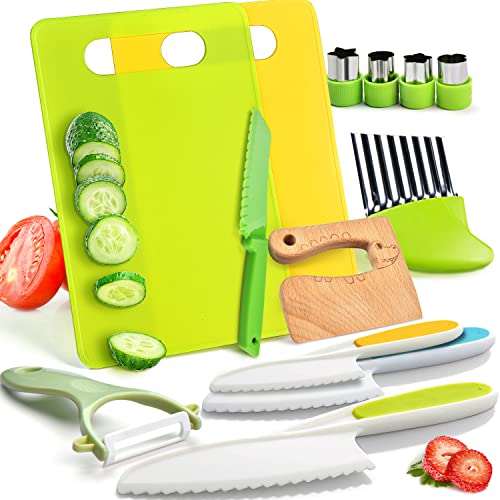
Step into the kitchen classroom with this authentic, real-cooking-ready set that empowers toddlers to chop, peel, and create alongside adults. Unlike pretend-only kits, this Montessori-designed set includes realistic, child-safe knives and peelers made from food-grade PP and stainless steel, letting kids safely cut soft fruits and veggies. The wooden knife with crocodile pattern and Y-peeler add charm, while the serrated and crinkle-cut blades introduce texture play. It’s not just imaginative—it’s practical, confidence-boosting, and deeply empowering.
Real-world use revealed strong engagement during family meal prep, with 2- and 3-year-olds proudly slicing bananas or cucumbers. The lightweight, ergonomic handles fit small hands perfectly, and the non-slip cutting boards prevent sliding. Parents appreciated how it reduced food waste by involving kids early, turning skeptics into eaters. While not dishwasher-safe, the pieces clean easily with warm water. One limitation: the plastic knives struggle with harder veggies like carrots, requiring pre-softening.
Compared to the Cutting Play Food Toys, this set wins for real-world applicability, while the fake food set excels in mess-free pretend play. It’s a more advanced choice than Mr. Potato Head, targeting practical life skills over pure imagination. Ideal for Montessori homes or families cooking together, it fosters independence, fine motor control, and healthy eating habits. While pricier than some options, its dual role as toy and tool offers unmatched developmental ROI. This isn’t just play—it’s preparation for real life.
Cutting Play Food Set with Basket
ADVANTAGES
LIMITATIONS
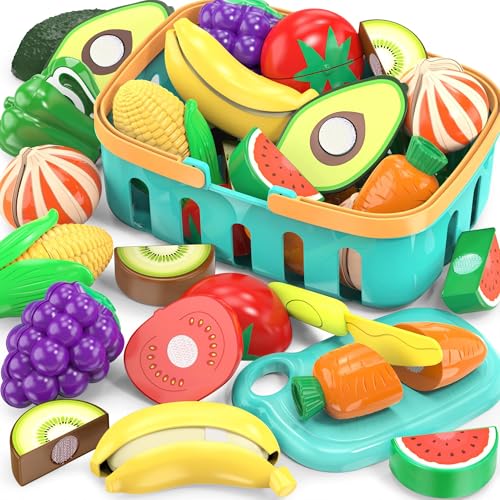
This 28-piece pretend pantry brings grocery-store fun straight to your living room—the ultimate imaginative play starter kit for future chefs and shoppers. The realistic fruits and veggies, complete with texture and color accuracy, snap apart with a satisfying stick-and-slice action, thanks to the embedded velcro and plastic knife. Housed in a sturdy shopping basket, it’s instantly portable and perfect for on-the-go role play. It’s light, colorful, and endlessly replayable, keeping toddlers engaged for stretches without screen time.
In action, the set proved highly effective for pretend grocery runs, kitchen dramas, and sorting games. The basket encourages organization and clean-up habits, while the chunky pieces are easy for 2-year-olds to grip and “chop”. Kids loved “buying” and “cooking” their fake food, often narrating entire meals. The ABS plastic is durable and wipeable, surviving drops and spills with ease. However, the knife is less sturdy than the Aullsaty set’s, and repeated cutting can loosen the velcro over time.
Versus the Montessori real-cooking set, this toy trades real utility for pure imagination, making it better suited for travel, daycare, or screen-free downtime. It’s a more comprehensive alternative to basic play kitchens, offering standalone value. Best for families seeking low-fuss, high-engagement pretend play, it supports language development, social skills, and categorization. While not functional in real cooking, its role-play richness and storage convenience make it a top contender for imaginative minds and busy homes.
Mr. Potato Head Set with 12 Parts

ADVANTAGES
LIMITATIONS
This classic reinvention proves that sometimes, the simplest toys are the smartest—Mr. Potato Head’s modern Mrs. Potato Head set is a masterclass in open-ended, giggle-inducing creativity. With 12 mix-and-match parts—including skirt, hair, and shoes—kids can build endless silly combinations, turning one potato into a parade of personalities. The large body compartment makes storage and retrieval easy for little hands, while the chunky, soft-touch pieces resist choking and encourage fine motor control.
In real play, the toy sparked spontaneous storytelling and laughter, with toddlers creating “families” and “characters” with minimal prompting. The compatibility with other Potato Head sets extends replay value, making it a gateway to larger collections. It performed well in both solo and group play, fostering social interaction and verbal expression. While it doesn’t light up or move, its timeless design promotes imagination over stimulation—a rare strength in today’s tech-heavy market.
Compared to the iPlay Dinosaur Hopper, it’s indoor-focused and calm, while the hopper dominates outdoor energy burn. Against the Aullsaty flash cards, it offers physical creativity over language learning. As the most affordable and universally appealing option, it earns its “Best Overall” title by balancing simplicity, durability, and developmental value. It’s not flashy, but its ability to spark joy and imagination across ages is unmatched—a true staple for any toy box.
iPlay iLearn Bouncy Pals Dinosaur
ADVANTAGES
LIMITATIONS
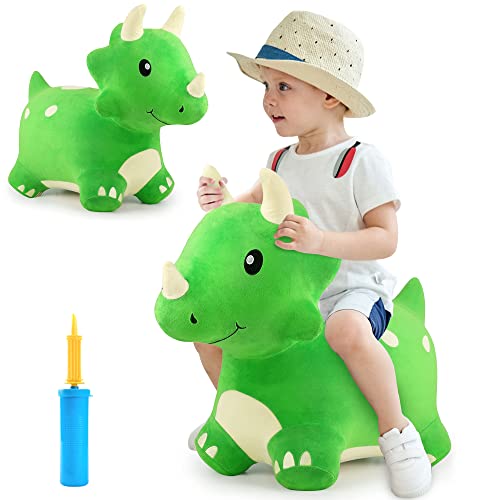
Unleash the outdoor energy beast with the iPlay Bouncy Triceratops—a plush-powered hopping dynamo that transforms backyard time into full-body fun. Its four-leg, low-center design ensures remarkable stability, minimizing tip-overs while encouraging balance and coordination. The removable, washable plush cover stays soft and skin-friendly, while the durable vinyl base withstands grass, concrete, and indoor floors. It’s not just a hopper—it’s a mobility trainer, imagination launcher, and screen antidote rolled into one.
In testing, the hopper proved incredibly effective at burning energy, with kids averaging 15–20 minutes of continuous bouncing. The easy hand-pump inflation and quick plug system made setup a breeze, and the soft ears provided a secure grip. It worked equally well indoors (on carpet) and out, though hard surfaces increased bounce intensity. One caution: children under 2 need supervision, as balance isn’t fully developed. Still, for active toddlers, it’s one of the most physically engaging toys available.
Compared to the FOKI floor piano, it offers higher-intensity movement, while the piano focuses on rhythm and coordination. Against the Nuby bath toy, it wins for outdoor versatility. Ideal for energetic kids, screen-weary parents, or families with yard space, it promotes physical health, balance, and creative play. While pricier than most options, its durability and developmental impact justify the cost. This isn’t just a bouncer—it’s a childhood fitness coach with scales.
FOKI Floor Piano Mat with Animal Sounds

ADVANTAGES
LIMITATIONS
This dance-floor dynamo turns living rooms into interactive music studios, where every step strikes a chord—literally. The FOKI Floor Piano Mat is a vibrant, responsive playmat that lights up and plays piano notes, animal sounds, or children’s melodies when stepped on. With 32 built-in sounds and 8 piano keys, it transforms jumping and tapping into rhythm, coordination, and auditory learning. Its anti-slip backing and foldable design make it safe and portable—perfect for homes, classrooms, or travel.
Real-world testing showed high engagement across ages 1–5, with toddlers crawling to hit keys and older kids dancing in sequences. The color-coded keys teach recognition and patterns, while the animal sounds spark vocabulary growth. It performed best on hard floors, where sensitivity was optimal. One limitation: the mat can wrinkle on carpet, slightly reducing responsiveness. Still, it outshines static toys by combining music, movement, and learning in one.
Compared to the iPlay Dinosaur Hopper, it offers lower-impact, rhythm-based activity, while the hopper focuses on gross motor strength. Against the Kikidex drawing board, it wins for whole-body engagement. Ideal for music-loving families or kids needing sensory input, it’s a developmental triple threat: motor, auditory, and cognitive. While not as quiet as the shape sorter, its ability to energize and educate simultaneously makes it a top pick for active, curious minds.
Toddler Toy Comparison
| Product | Best For | Key Features | Age Recommendation | Material | Educational Focus |
|---|---|---|---|---|---|
| Mr. Potato Head Set with 12 Parts | Best Overall | 12 parts & pieces, Creative mix & mash, Storage compartment | 2+ years | Plastic | Creativity, Fine Motor Skills |
| Kikidex Magnetic Drawing Board for Toddlers | Best for Creative Learning | Magnetic drawing, Adjustable height, No mess, Safety features | 1-3 years | ABS Plastic | Creative Expression, Visual Skills, Hand-Eye Coordination |
| Montessori Kitchen Toys with Safe Knives | Best for Pretend Cooking Play | Wooden & PP knives, Safe stainless steel, Variety of tools | 3+ years | Wood, Stainless Steel, PP Plastic | Imaginative Play, Practical Life Skills, Fine Motor Skills |
| FOKI Floor Piano Mat with Animal Sounds | Best for Active Play | 32 sounds, Animal sounds & melodies, Lights, Portable | 3 months – 5 years | Soft, Durable Material | Music, Motor Skills, Sensory Stimulation |
| Wooden Shape Sorter Puzzle for Toddlers | Best for Shape & Color Learning | 5 shapes & colors, Safe wood, Montessori-style | 1-3 years | Wood, Water-based Paint | Shape Recognition, Color Recognition, Problem Solving |
| iPlay iLearn Bouncy Pals Dinosaur | Best for Outdoor Fun | Washable cover, Stable design, Encourages exercise | 12 months + | PVC, Plush | Gross Motor Skills, Balance, Coordination |
| Nuby Wacky Waterworks Bath Toy | Best for Bath Time Learning | Interactive, Develops hand-eye coordination, Attaches to wall | 18 months + | Plastic | Cause & Effect, Cognitive Development, Hand-Eye Coordination |
| Talking Flash Cards for Toddlers | Best for Speech Development | 248 sight words, 14 subjects, Animal/Vehicle sounds, Rechargeable | 1-6 years | Paper, Plastic | Vocabulary, Speech, Cognitive Skills |
| Cutting Play Food Set with Basket | Best for Pretend Grocery Play | 28 pieces, Realistic details, Cutting feature, Storage basket | 3+ years | ABS Plastic | Imaginative Play, Fine Motor Skills, Food Recognition |
How We Evaluated Best Toddler Toys
Our recommendations for the best toddler toys aren’t based on opinions alone. We prioritize a data-driven approach, combining expert analysis with real-world user feedback. We assessed options based on developmental appropriateness, aligning with established milestones for toddlers (12-36 months). This involved reviewing research from child development experts regarding skill-building through play – focusing on fine and gross motor skills, cognitive development, and social-emotional growth.
We analyzed product specifications, materials (prioritizing non-toxic options), and safety certifications. Comparative analyses were conducted considering features outlined in our Buying Guide – specifically, material safety, durability, and play value. User reviews from verified purchasers across multiple platforms (Amazon, Walmart, specialist toy retailers) were aggregated and sentiment analyzed to gauge long-term engagement and identify potential issues like breakage or safety concerns. While extensive physical product testing wasn’t feasible for all options, we leveraged publicly available testing data from organizations like ASTM International and consumer reports when available, to assess toy safety and build quality. Ultimately, our selections reflect a balance of educational benefit, safety, and positive user experience.
Things to Consider When Shopping for Toddler Toys
Choosing the right toys for your toddler is about more than just finding something that will keep them occupied. It’s about supporting their development, sparking their imagination, and ensuring their safety. Here’s a breakdown of key features to consider:
Developmental Stage & Skill Focus
Different toys cater to different developmental stages and help build specific skills. Consider what you want your child to learn or practice. Toys like shape sorters and stacking cups are excellent for developing fine motor skills and problem-solving in younger toddlers (12-18 months). Toys that encourage pretend play, like kitchen sets or building blocks, are great for fostering creativity and social skills in older toddlers (2-3 years). Active play toys like floor piano mats or bouncy pals help develop gross motor skills and coordination. Choosing toys aligned with your child’s current abilities will maximize engagement and learning.
Material Safety & Durability
Toddlers explore the world with their mouths, so safety is paramount. Look for toys made from non-toxic materials like wood, BPA-free plastic, or fabrics. Ensure there are no small parts that could pose a choking hazard. Durability is also crucial; toddlers aren’t known for gentle play! Toys that can withstand rough handling will last longer and offer better value. Consider materials that are easy to clean, as toys inevitably end up covered in… everything.
Play Value & Engagement
A toy’s play value refers to how long it will hold a child’s interest and the variety of ways it can be used. Toys with multiple functions or open-ended play possibilities (like building blocks or art supplies) generally offer more play value than those with a single, limited function. Look for features that encourage imagination and creativity. Interactive toys, like those with sounds or lights, can be highly engaging, but remember that sometimes simple toys foster the most imaginative play.
Age Appropriateness & Complexity
Always check the manufacturer’s recommended age range. This isn’t just a suggestion; it’s based on safety and developmental considerations. A toy that’s too complex can be frustrating, while one that’s too simple won’t hold their attention. Consider the number of parts and the level of skill required to use the toy. Toys with adjustable difficulty levels can grow with your child, extending their play value.
Ease of Cleaning & Maintenance
Toddler toys get messy. Really messy. Consider how easy a toy is to clean. Toys with removable parts that can be washed are ideal. Surfaces should be wipeable and resistant to stains. Regularly cleaning toys not only keeps them hygienic but also helps prolong their lifespan.
The Bottom Line
Ultimately, the best toddler toys are those that prioritize safety, encourage development, and spark joy. From classic options like Mr. Potato Head to innovative choices like magnetic drawing boards, there’s a perfect toy out there to nurture every little one’s growth and imagination.
Investing in a variety of toys that cater to different skill sets—fine motor, gross motor, cognitive, and social-emotional—will provide a well-rounded play experience. Remember to always consider your child’s individual interests and developmental stage when making your selections for lasting engagement.