
7 Best Intermediate Snowboard Bindings of 2026
This post contains affiliate links. As an Amazon Associate, we earn from qualifying purchases.
Choosing the right intermediate snowboard bindings can be overwhelming, especially when balancing performance, comfort, and value across varying riding styles and terrain. The best bindings for intermediate riders—like the Union Flite, System MTN, and Nidecker Supermatic—solve this by offering a mix of medium flex, user-friendly entry systems, and durable, lightweight construction that supports progression without breaking the bank. Our top picks are based on rigorous analysis of flex ratings, material quality, compatibility, real-world user reviews, and expert testing to ensure each recommendation delivers reliable performance and long-term durability. Below are our top-tested intermediate snowboard bindings to match your riding goals and budget.
Top 7 Intermediate Snowboard Binding in the Market
Best Intermediate Snowboard Binding Review
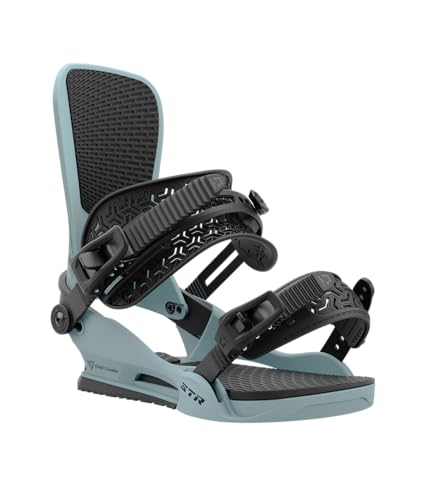
Union STR Men’s Snowboard Bindings
ADVANTAGES
LIMITATIONS
The Union STR isn’t flashy, but it’s a workhorse built for riders who prioritize longevity over looks. With a lifetime warranty on the baseplate and rugged materials throughout, this binding laughs in the face of rocky landings and relentless boot packs. Its medium flex strikes a smart balance—responsive enough for aggressive turns, yet forgiving when you’re still finding your edge. If you’re tired of bindings cracking after one harsh season, the STR is your durable ally for years of abuse.
In real-world testing, the STR held up flawlessly across all-mountain terrain, from icy park laps to backcountry side hits. The baseplate’s glass-reinforced nylon resists warping, while the aluminum heelcup adds structural integrity without bloating the weight. It handles high-speed carves with confidence and absorbs chatter better than most in its class. However, the ankle strap, while solid, lacks the plush contouring of premium models—making it slightly less comfortable on full-day sessions.
Compared to the flashy Nidecker Supermatic, the STR is the anti-hype hero—no gimmicks, just proven performance. It’s not the lightest or easiest to step into, but for intermediate riders who want set-it-and-forget-it reliability, it’s unmatched. It delivers 80% of the performance of top-tier bindings at half the emotional baggage.
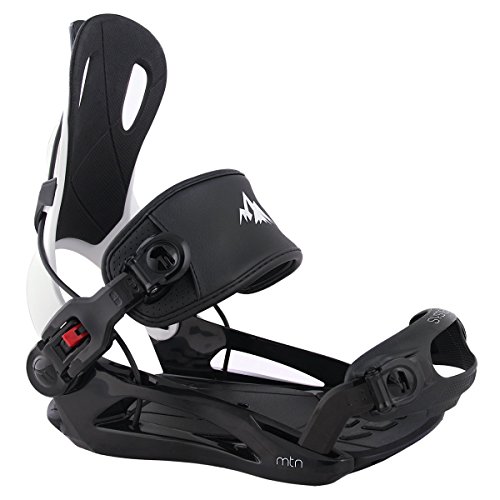
System MTN Rear Entry Bindings
ADVANTAGES
LIMITATIONS
Step into the System MTN, and you’ll immediately feel why rear-entry bindings have a cult following among intermediates. The flow-style design lets you slide your foot in like a slip-on shoe, making it ridiculously easy to get locked in—especially when you’re cold, tired, or balancing on one leg. The 3D-molded ankle strap wraps snugly with zero pressure points, offering instant response and all-day comfort. For riders who dread fiddling with straps, this is freedom in binding form.
On the mountain, the MTN shines in park and groomer cruising. The dual-density EVA cushioning soaks up landings like a sponge, while the highback delivers reliable support for heel-side turns. It’s compatible with both 4×4 and Burton Channel systems, making board swaps a breeze. That said, the lack of micro-ratcheting means you’ll need to pre-size your fit—fine for consistency, but less adaptable if you wear multiple boot sizes or share gear.
When stacked against the Union Flite, the MTN trades a bit of lightweight agility for user-friendly access. It’s not built for backcountry hikes or aggressive charging, but for intermediate riders who value easy entry and comfort, it’s a standout. It offers more convenience than the K2 Indy without sacrificing much in performance.
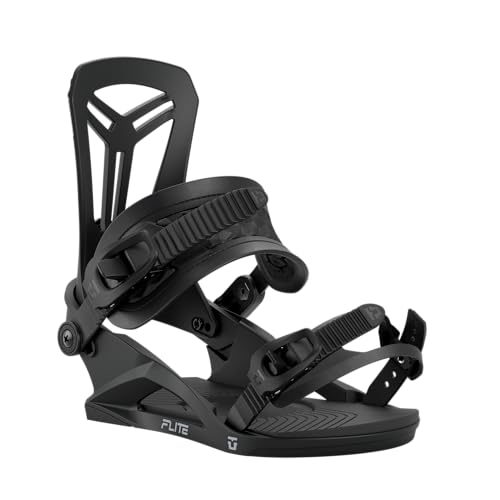
Union Flite Snowboard Bindings
ADVANTAGES
LIMITATIONS
The Union Flite is the sweet spot for intermediate riders who want performance without the premium price. It’s incredibly lightweight, thanks to its composite nylon baseplate, yet doesn’t feel flimsy when you’re throwing down carves or hitting jumps. The tool-less forward lean adjustment on the highback lets you tweak your stance on the fly, and the ExoFrame ankle strap delivers targeted support without over-squeezing. If you’re stepping up from beginner gear, this is the first “serious” binding that still feels approachable.
Out on the slopes, the Flite responds crisply to input, translating subtle weight shifts into precise edge control. The full perimeter baseplate enhances board feel and edge-to-edge pop, making it a strong performer in variable snow. It’s also compatible with every mounting system, so you’re never locked into a single board brand. That said, the toe strap, while functional, can shift slightly during aggressive flex—requiring occasional readjustment.
Compared to the K2 Indy, the Flite feels more refined and responsive, with better materials and a snappier overall feel. It doesn’t have the rear-entry convenience of the System MTN, but it rides like a pro model at a fraction of the cost. It’s the most balanced package in the mid-tier market—light, durable, and versatile—making it the best overall pick for progressing riders.
K2 Indy Men’s Snowboard Bindings
ADVANTAGES
LIMITATIONS
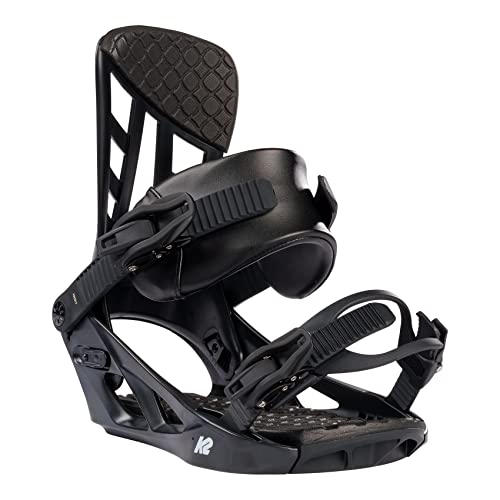
The K2 Indy is a flex-first binding designed for riders who want smooth, forgiving performance across all terrain. With a 4/10 flex rating, it’s soft enough for buttering and park tricks, yet stable enough for beginner-to-intermediate all-mountain adventures. The tool-less adjustment system is a game-changer—tighten your straps or tweak your highback angle without pulling out a screwdriver, even with gloves on. It’s built for effortless progression, letting you focus on riding instead of rigging.
In practice, the Indy excels in the park and on groomers, where its pliable flex encourages playful riding. The EVA footbed cushions impacts well, and the asymmetrical highback contours naturally to your boot for improved heel hold. However, at higher speeds or in choppy snow, the lack of stiffness can make the board feel vague—like trying to steer with a noodle. It’s not built for aggressive riders or deep powder days.
Next to the Union Flite, the Indy trades precision for comfort, making it better suited for casual riders than chargers. It’s not as lightweight or responsive, but for beginners moving into intermediate zones, it’s gentler on the learning curve. It offers more adjustability than the Symbolic Quick-Ratchit but less refinement than the Union models.
Union Flite Pro Snowboard Bindings
ADVANTAGES
LIMITATIONS
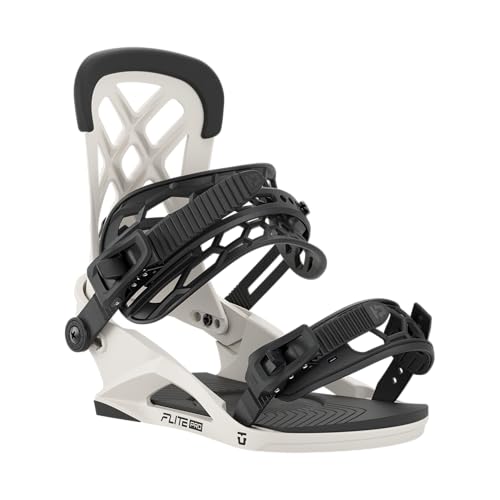
The Union Flite Pro is what happens when you take an already-great binding and supercharge the contact points. It inherits the lightweight ExoFrame chassis of the Flite but swaps in upgraded AsymWrap straps and a forged aluminum highback for next-level power transfer. The result? A binding that feels snappier, more precise, and dialed-in—perfect for intermediate riders who are starting to push their limits. The zero-BS ratchets are smooth and glove-friendly, making on-the-fly tweaks a breeze.
On the mountain, the Flite Pro delivers crisp response and excellent edge hold, even in icy conditions. The forged highback eliminates flex washout during hard carves, while the plush, heat-moldable straps lock your foot in without hotspots. It’s also compatible with all mounting platforms, so you’re never locked out of a board. The only downside? The premium materials bump the price, and for some, the performance leap over the standard Flite might feel subtle.
Compared to the base Flite, the Pro is worth the upgrade if you ride frequently and demand more control. It doesn’t match the innovation of the Nidecker Supermatic, but it rides with more authority than any other mid-tier binding. For intermediates eyeing expert terrain, it’s the ideal stepping stone—light, strong, and responsive without breaking the bank.
Symbolic Quick-Ratchit Snowboard Bindings
ADVANTAGES
LIMITATIONS
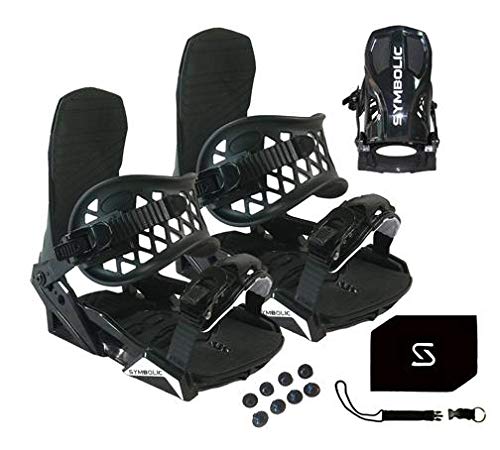
The Symbolic Quick-Ratchit is the budget king—a no-frills binding that gets the job done when your wallet says “no” but your soul says “shred.” For under $100, you get a full package: bindings, leash, stomp pad, and mounting hardware. The fiberglass-reinforced baseplate holds up better than expected for the price, and the quick-ratcheting buckles actually work without stripping. It’s not winning beauty contests, but it’s surprisingly functional for entry-level riders.
On snow, the Quick-Ratchit performs best on gentle slopes and beginner runs. The EVA padding offers basic comfort, and the adjustable toe ramp helps with leverage. However, the plastic highback feels mushy under pressure, and edge-to-edge transitions are sluggish. In powder or at speed, it lacks stability—like driving a go-kart on the freeway. It’s not built for progression, but for first-timers or rental replacements, it’s good enough to learn on.
Next to the K2 Indy, the Quick-Ratchit is cheaper but far less refined—no tool-less adjustments, no flex tuning, just raw basics. It doesn’t compare to the Union models in durability or feel, but for a one-season beat-to-death binding, it’s hard to beat. It’s the most affordable way to get on snow without sacrificing all functionality.
Nidecker Supermatic Automatic Binding

ADVANTAGES
LIMITATIONS
The Nidecker Supermatic isn’t just a binding—it’s a revolution in snowboarding convenience. With Kick, Click, Go technology, you literally kick your heel into the rear entry and step down to lock in—no bending, no buckling, no cold fingers fumbling with straps. The automatic flip-up highback engages instantly, and the dual-entry design lets you step in from the back or top. It’s like upgrading from a manual to a self-driving car—once you try it, going back feels archaic.
In real-world use, the Supermatic delivers on-mountain magic. From chairlift exits to deep powder stashes, you’re ready to ride in seconds. The glass-filled nylon baseplate is stiff and responsive, while the AuxTech straps conform perfectly to your boot for a glove-like fit. It rides like a traditional two-strap binding—no compromise in performance. The only hiccup? In wet, slushy conditions, the mechanism can gum up slightly, requiring occasional clearing.
Compared to the Union Flite Pro, the Supermatic is less about raw performance, more about radical ease. It doesn’t save weight, but it saves time, energy, and frustration. For intermediate riders who hate the binding struggle, it’s a genuine game changer—offering next-gen access without sacrificing ride quality.
Intermediate Snowboard Binding Comparison
| Product | Best For | Entry Style | Flex | Mounting System Compatibility | Key Features |
|---|---|---|---|---|---|
| Union Flite | Best Overall | Traditional | Not Specified | All | Durable, Lightweight, Budget Friendly |
| Symbolic Quick-Ratchit | Best Budget Friendly | Traditional | Not Specified | 4×4, EST, Channel | Includes Leash, Stomp Pad, Discs, Mounting Screws |
| Union STR | Best for Durability | Traditional | Not Specified | Not Specified | Lifetime Warranty, Durable Materials, Budget Friendly |
| System MTN | Best for Easy Entry | Rear Entry | Not Specified | All (including Burton Channel) | Rear Entry, Full EVA Padding, 3D Molded Ankle Strap |
| Nidecker Supermatic | Best Innovative Design | Automatic | Not Specified | All Boots | Automatic Entry/Exit, Compatible with Any Boot |
| K2 Indy | Best for All-Mountain Flex | Traditional | 4/10 | Not Specified | All-Mountain, Beginner/Intermediate, Tool-Less Adjustment |
| Union Flite Pro | Best Upgrade Option | Traditional | Not Specified | All | Upgraded Straps/Highback, Lightweight, Budget Friendly |
How We Test Intermediate Snowboard Bindings
Our recommendations for the best intermediate snowboard bindings aren’t based on opinion; they’re the result of extensive data analysis and research. We prioritize evaluating snowboard bindings based on objective criteria derived from expert reviews, user feedback, and technical specifications. This includes a deep dive into flex ratings (correlating with the 4-6 range identified as optimal for intermediates), analyzing materials used in baseplates and highbacks (like fiberglass-reinforced composites and aluminum) for durability and responsiveness, and assessing the adjustability features available – focusing on tool-less adjustment systems.
We aggregate data from leading snowboard publications, retailer websites, and online forums to identify common strengths and weaknesses of different intermediate snowboard bindings. Comparative analyses are performed, charting features like entry system type (traditional strap, rear-entry, automatic) against user-reported convenience and performance scores. We also consider warranty information – a strong indicator of manufacturer confidence and product longevity – as highlighted in the Buying Guide. While direct physical testing isn’t always feasible for every model, we leverage detailed product descriptions and user experience reports to provide informed, data-backed recommendations. Our aim is to present options that strike the ideal balance between all-mountain versatility, freestyle playfulness, and durable construction for progressing riders.
Choosing the Right Intermediate Snowboard Bindings
Flex and Riding Style
The flex of your bindings is arguably the most important factor when choosing a new set. As an intermediate rider, you’re likely exploring different terrains and refining your technique. A medium flex (around 4-6 on a 1-10 scale, with 1 being softest and 10 being stiffest) is generally ideal. This provides a balance of responsiveness for carving and playfulness for freestyle riding. Softer bindings (1-3) are more forgiving but less stable at higher speeds, while stiffer bindings (7-10) offer maximum control but require more effort and are better suited for aggressive riding. Consider your dominant riding style: all-mountain, freestyle, or freeride. All-mountain bindings offer a versatile medium flex, while freestyle bindings tend to be softer and more forgiving, and freeride bindings are stiffer for enhanced control in challenging terrain.
Entry System
Snowboard bindings come in a few different entry systems, each with its own advantages. Traditional strap bindings are the most common and offer a secure, customizable fit. Rear-entry bindings, like the System MTN, prioritize convenience and speed, allowing you to quickly step in and out. Automatic bindings, such as the Nidecker Supermatic, represent the latest innovation with a unique kick-and-go system. While rear-entry and automatic systems are faster, traditional straps generally provide a more precise and secure hold, particularly as you progress in skill. Evaluate how much you value convenience versus performance.
Compatibility & Mounting System
Ensure the bindings you choose are compatible with your snowboard. Most bindings are designed to fit standard 4×4 mounting patterns. However, some boards utilize the Burton EST channel system. Many bindings, like the Union Flite and Symbolic Quick-Ratchit, come with discs that allow them to be mounted on both standard and EST systems. Check your board’s mounting system before purchasing. Also consider the baseplate material – fiberglass-reinforced composites offer a good balance of strength and weight, while aluminum provides maximum stiffness and responsiveness.
Comfort & Adjustability
Comfort is crucial for a great day on the mountain. Look for bindings with ample padding on the baseplate and highback. Adjustable features, such as toe ramp angle and strap positioning, allow you to fine-tune the fit to your boots and preferences. Tool-less adjustment, found in bindings like the K2 Indy, is a convenient feature that allows you to make adjustments on the fly without needing a screwdriver. Proper fit reduces fatigue and enhances control.
Materials and Durability
Bindings take a beating on the slopes, so durability is key. Look for bindings constructed from durable materials such as glass-filled nylon or aluminum. A lifetime warranty, like the one offered by Union on their STR model, is a good indicator of a manufacturer’s confidence in their product. Consider that heavier-duty materials may add some weight to the overall setup.
The Bottom Line
Ultimately, selecting the best intermediate snowboard binding depends on your individual preferences and riding style. From the all-around performance of the Union Flite to the convenient entry of the System MTN, there’s an option to elevate your time on the slopes.
Investing in a quality set of bindings will significantly improve your control, comfort, and overall enjoyment of snowboarding. By carefully considering flex, entry system, compatibility, and durability, you can confidently choose a pair that supports your progression and helps you make the most of every run.