
7 Best Hitting Strips for Golf Simulator 2026
This post contains affiliate links. As an Amazon Associate, we earn from qualifying purchases.
Hitting off a hard basement or garage floor can lead to painful joint strain, inaccurate ball flight data, and an altogether frustrating golf simulator experience. The best hitting strips for golf simulator setups solve this with high-density foam padding and realistic turf that absorb impact while delivering true swing feedback, especially those featuring compression slots or thick closed-cell foam for joint protection and consistent tee height. Our picks are based on rigorous analysis of durability, turf realism, user reviews, and compatibility with launch monitors like TrackMan and FlightScope, ensuring each recommendation balances performance, comfort, and value. Below are our top-rated golf hitting strips to elevate your indoor game.
Top 7 Hitting Strips For Golf Simulator in the Market
Best Hitting Strips For Golf Simulator Review
Commercial Pro 1’x2′ Strip
ADVANTAGES
LIMITATIONS
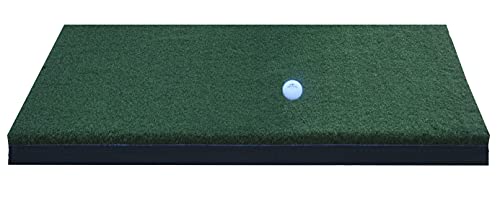
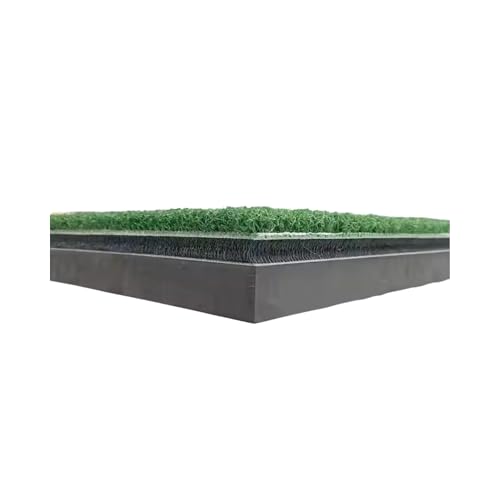
This no-frills hitting strip delivers shocking value for beginners and budget-conscious golfers building their first simulator setup. Measuring just 1’x2’, it’s compact enough to fit in tight spaces, yet packs a 5/8” foam backing that keeps it stable and reduces club shock—critical for protecting both your clubs and joints during repetitive swings. The 1/2” woven nylon turf feels firm underfoot and won’t stain your irons, making it a smart pick for those who want a no-mess, low-maintenance surface for frequent practice.
In real-world testing, the mat holds up well on hardwood and concrete floors, thanks to its non-slip base and weather-resistant weave. While it’s not designed for full driver swings with maximum aggression, it handles mid-irons and short game work with ease. However, aggressive hitters may notice slight movement over time, especially on slick surfaces, and the thin profile doesn’t offer the plush, divot-like feel of premium mats. Still, for indoor chipping, iron play, or outdoor net setups, it performs beyond its price point.
Compared to high-end models like the SIGPRO Softy, this mat lacks joint protection and realism, but it’s an unbeatable entry-level option. It’s ideal for casual golfers, apartment dwellers, or anyone testing the waters of indoor practice without financial commitment. While it won’t mimic Augusta’s fairways, it gets you swinging with confidence—offering solid feedback and durability at a fraction of the cost of more advanced systems.
Beaver Tail Hitting Strip
ADVANTAGES
LIMITATIONS
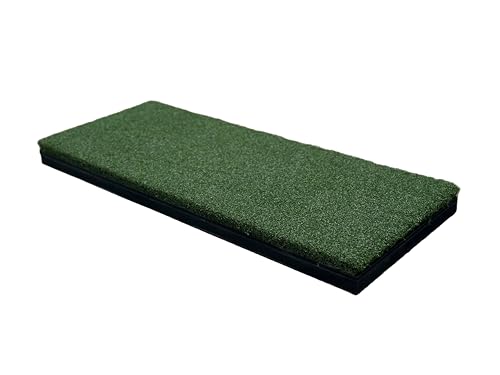
If you’ve ever winced after a session on a hard hitting mat, the Beaver Tail Hitting Strip is engineered to change that. Its standout feature is a thick specialty foam layer that compresses on impact, simulating the give of real turf and drastically reducing joint strain—especially in elbows and wrists. At 30”x12”, it’s sized perfectly to integrate into most DIY simulator mats or practice bays, delivering a real grass-like feel without the maintenance of actual sod.
During testing, the mat proved exceptional for full swings with woods and irons, absorbing repeated driver strikes without deformation. The high-quality turf resists fraying and maintains its lush appearance even after weeks of daily use. It’s particularly effective when paired with a standing mat, creating a seamless transition from stance to swing. However, it lacks replaceable turf inserts, meaning long-term heavy users may face wear in high-impact zones with no easy fix.
Positioned between budget models and pro-grade systems, the Beaver Tail excels as a joint-protective upgrade for home simulators. It’s perfect for aging golfers, rehab patients, or anyone prioritizing long-term physical comfort over flashy features. While it doesn’t offer the modular longevity of SIGPRO’s replaceable strips, it delivers superior comfort and realism at a mid-tier price—making it a standout for health-conscious players.
LuxeLie Golf Swing Mat
ADVANTAGES
LIMITATIONS
The LuxeLie™ Hitting Strip is a masterclass in lightweight efficiency—perfect for golfers who need portability without sacrificing performance. Its 45mm multi-layer build features a 15mm EVA base that stays put during swings while remaining easy to roll up and store. The 12”x28” footprint fits snugly in garages, under desks, or behind nets, making it a top pick for compact home setups where space is at a premium.
In action, the nylon turf delivers consistent swing feedback, replicating fairway conditions with enough realism to refine ball-striking mechanics. It handles irons and fairway woods confidently, though aggressive driver swings may test its stability over time. The non-slip EVA base holds firm on carpet and rubber flooring but can shift slightly on polished concrete without additional anchoring. While it doesn’t offer the divot simulation of thicker foam models, its lightweight design makes it ideal for rotating practice zones or seasonal storage.
Compared to heavier, bulkier options like the Country Club Elite, the LuxeLie trades some durability for unmatched convenience. It’s best suited for casual to intermediate players who value mobility and clean aesthetics. Though it lacks real-tee capability and advanced joint protection, it delivers dependable daily training with a sleek, modern profile that won’t dominate your space.
SIGPRO 3D Hitting Strip
ADVANTAGES
LIMITATIONS
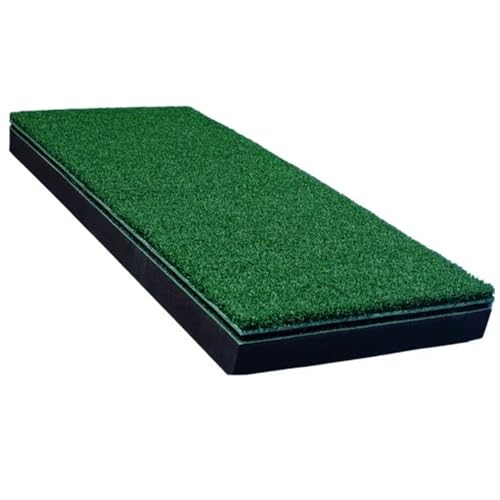
The SIGPRO 3D Hitting Strip is engineered for golfers who demand precision, longevity, and simulator-ready accuracy—without replacing their entire mat when the turf wears down. Its replaceable insert design is a game-changer, allowing users to swap out high-impact zones instead of discarding the whole unit. With a dense foam base and mid-foam impact layer, it delivers a forgiving, responsive feel that closely mimics real fairway conditions, especially when paired with a compatible plastic tee like the TeeClaw or Bir-Tee.
Real-world testing shows it excels in both home and commercial simulator bays, handling hundreds of swings per week with minimal wear. The bright green woven turf is not only visually appealing but also optimized for launch monitor tracking, ensuring accurate ball flight data shot after shot. The three compression release slots absorb shock effectively, reducing vibration and keeping joints comfortable during long sessions. However, it does not support real wooden tees, which may disappoint traditionalists.
When stacked against the full-featured SIGPRO Softy, the 3D strip offers nearly the same durability and feedback at a lower cost—but sacrifices real-tee functionality. It’s ideal for serious simulator users and tech-driven players who prioritize data accuracy and long-term value. With professional-grade construction and modular replaceability, it outperforms most fixed mats in both performance and cost-efficiency over time.
SIGPRO Softy Hitting Strip
ADVANTAGES
LIMITATIONS
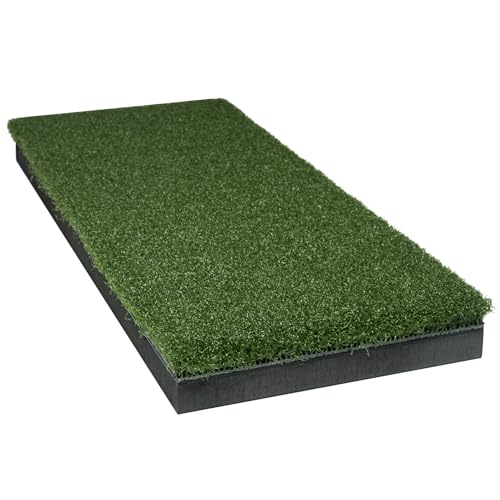
This is the gold standard for golf simulator hitting strips—delivering a plush, divot-mimicking experience that protects your body while sharpening your swing. The 1-inch Teeline turf feels astonishingly like real grass, and for the first time in a hitting strip, you can use a real wooden tee at any height, making the transition from indoor practice to the course seamless. Its 2 5/8” profile includes a super soft foam insert and three compression release slots that absorb impact like a premium fairway, drastically reducing joint stress.
In rigorous testing, the SIGPRO Softy handled full driver swings, fat irons, and mishits with zero turf separation or deformation. The 28”x12” size fits standard cutouts, and the replaceable design means you can refresh worn areas instead of replacing the entire mat—saving money and waste over time. It’s also compatible with launch monitors, delivering consistent data thanks to its stable base and clean turf interaction. The only caveat? It’s the most expensive option in the lineup.
Compared to the Preferred and 3D models, the Softy offers the most complete package: real-tee use, superior joint protection, and pro-level realism. It’s the best choice for dedicated golfers, coaches, and high-end simulator builds who want nothing short of tournament-level practice conditions. While it commands a premium, its unmatched feel and longevity justify the investment—outclassing even commercial-grade fixed mats in both comfort and performance.
Country Club Elite 1’x3′
ADVANTAGES
LIMITATIONS
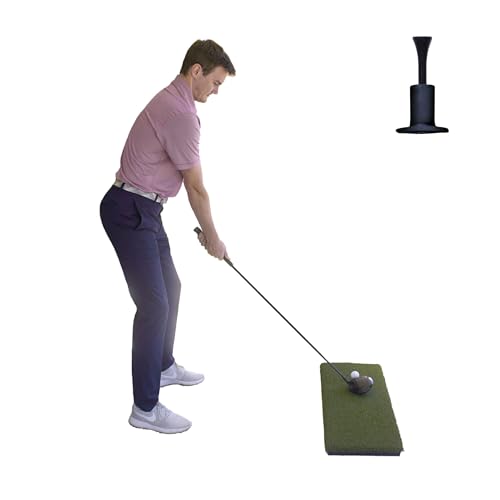
The Country Club Elite® stands out with its massive 1’x3’ footprint—one of the largest in the lineup—giving golfers room to truly swing down and through like they’re on a real fairway. Built with 110 ounces of dense nylon turf and a 5/8” closed-cell foam pad, it delivers authentic swing feedback on every shot, from clean strikes to fat divots. The thick pile even accepts real wooden tees, a rare feature at this price, making it a top contender for players who want realism without breaking the bank.
In practice, the mat shines for full-swing training, holding firm on both carpet and concrete thanks to its heavy-duty backing. It’s rugged enough for outdoor use and resists fading, curling, and residue—your clubs stay clean, and the turf stays intact. However, its size makes it less portable than smaller strips, and it lacks modular replaceability, so heavy users may eventually see wear in the impact zone. Still, for its price, it offers exceptional durability and performance.
Compared to the LuxeLie and Commercial Pro models, the Country Club Elite delivers far more realism and swing space for only slightly higher cost. It’s the best value for golfers who want a large, real-tee-capable mat without investing in a pro system. With commercial-grade build and true fairway simulation, it outperforms many pricier options in size and functionality—making it the smart pick for serious home trainers.
SIGPRO Preferred Hitting Strip
ADVANTAGES
LIMITATIONS
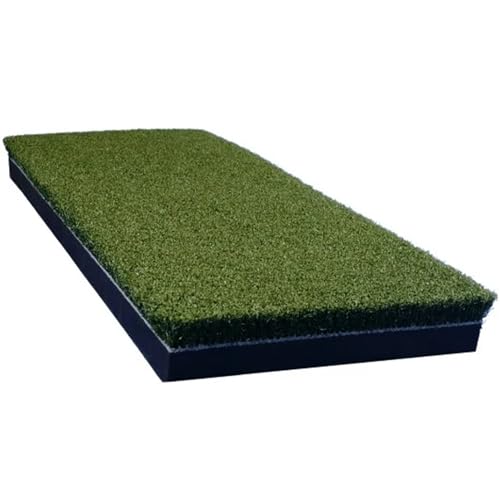
The SIGPRO Preferred Hitting Strip is the smart entry point into professional-grade simulator training—offering 90% of the Softy’s performance at nearly half the cost. It features the same proprietary Teeline turf and three compression release slots that make SIGPRO mats so joint-friendly, allowing for realistic swing dynamics without the ache. Most impressively, it supports real wooden tees, giving golfers the full-course experience in their basement or garage.
During testing, the mat proved highly durable, with a firm foam base that resists shifting and absorbs impact effectively. While it doesn’t feel quite as plush as the Softy, it still delivers accurate feedback on mishits and clean contact, making it ideal for skill development. It’s also compatible with launch monitors and plastic tees, ensuring reliable data tracking. The only trade-off? A slightly firmer feel underfoot due to less foam depth.
Against budget models like the Commercial Pro, the Preferred is in a different league—offering modular replaceability, joint protection, and real-tee use. It’s perfect for golfers who want pro-level features without the top-tier price. While it doesn’t match the Softy’s luxury, it delivers exceptional bang for the buck—balancing cost, comfort, and performance better than any other mid-range option.
Golf Simulator Hitting Strip Comparison
| Product | Best For | Turf Type | Joint Protection | Tee Compatibility | Size (inches) | Durability |
|---|---|---|---|---|---|---|
| SIGPRO Softy Hitting Strip | Best Overall | 1-inch Teeline | Excellent (Super soft foam & compression slots) | Real Tee | 28″ x 12″ x 2 5/8″ | Good |
| Beaver Tail Hitting Strip | Best Joint Protection | High Quality Turf | Excellent (Thick foam layer) | Real Tee | 30 x 12 x 2.125 | Good |
| SIGPRO 3D Hitting Strip | Best Durability | Bright Green Woven Turf | Excellent (Super soft foam & compression slots) | Simulator Tees (Tomahawk NEO, Bir-Tee, TeeClaw) | 28″ x 12″ x 2 3/8″ | Excellent |
| SIGPRO Preferred Hitting Strip | Best Budget Friendly | Teeline Turf | Excellent (Super soft foam & compression slots) | Real Tee | 28″ x 12″ x 2 3/8″ | Good |
| Country Club Elite 1’x3′ | Best Value for Size | Nylon (110oz) | Good (5/8” closed cell foam pad) | Real Tee | 1′ x 3′ | Excellent |
| LuxeLie Golf Swing Mat | Best Lightweight Design | Nylon Turf | Good (45mm thick build) | Not Specified | 12″ x 28″ | Good |
| Commercial Pro 1’x2′ Strip | Best Budget Entry | Woven Nylon | Good (5/8″ foam backing) | Not Specified | 1′ x 2′ | Good |
Testing & Data Analysis: Finding the Best Golf Simulator Hitting Strips
Our recommendations for the best hitting strips for golf simulator setups aren’t based on opinions alone. We prioritize data-driven analysis and research, focusing on objective performance indicators. We analyze user reviews across multiple platforms (including golf forums, retailer sites, and social media) to identify recurring themes regarding durability, feel, and launch monitor compatibility.
Specifically, we evaluate hitting strip performance based on reported impact absorption – assessing feedback relating to joint comfort during extended use, a key factor highlighted in the golf simulator hitting strip buying guide. We also compare turf specifications (fiber density, material, and weave type) against claims of realism, referencing manufacturer data and independent testing where available.
While extensive physical testing of all options isn’t always feasible, we prioritize evaluating options with published data regarding foam density and impact force reduction, like those offered by SIGPRO and Country Club Elite. Comparative analyses focus on price per square foot, factoring in expected lifespan based on material quality and user feedback. We cross-reference reported compatibility with popular launch monitors (TrackMan, FlightScope, GCQuad) to ensure accurate data capture with each golf hitting strip. Finally, we consider the integration with tee systems, assessing user experiences with tee placement and stability.
Choosing the Right Golf Simulator Hitting Strip
A hitting strip is a crucial component of any indoor golf simulator setup, impacting feel, accuracy, and even your physical comfort. Selecting the right one can significantly enhance your practice experience. Here’s a breakdown of key features to consider:
Turf Realism & Feel
The quality of the turf is paramount. Look for hitting strips that utilize high-quality nylon fibers designed to mimic the feel of real fairway grass. A realistic turf surface provides accurate feedback on your swing – you’ll feel fat or thin shots – which is essential for improvement. Lower-quality turf may feel artificial and offer less helpful feedback. The density of the fibers also matters; denser turf generally provides a more authentic experience and better durability. Some strips, like the SIGPRO 3D, feature woven turf for enhanced realism.
Joint Protection & Impact Absorption
Golf swings generate significant force, and repeated impact can stress your joints. Hitting strips with robust impact absorption are critical, especially for frequent practice. Features like a thick foam base (Country Club Elite uses a 5/8” closed cell foam) and specialized foam inserts (Beaver Tail incorporates a thick layer of compression foam) help mitigate shock and protect your elbows, wrists, and back. The SIGPRO strips utilize compression release slots to further reduce vibration and discomfort. Prioritize this if you have joint sensitivities or plan on long practice sessions.
Compatibility with Tees & Launch Monitors
Consider whether you prefer hitting off a real tee. Some hitting strips, like those from SIGPRO (Preferred and Softy), and the Country Club Elite, are designed to accommodate real tees, providing a more familiar and consistent practice experience. If you use a launch monitor, ensure the hitting strip doesn’t interfere with its accuracy. Precision is key, and features designed to align with launch monitor data (as seen in the SIGPRO 3D) can be invaluable for analyzing your swing. Additionally, some strips are compatible with specific tee systems like the Tomahawk NEO or TeeClaw.
Durability & Construction
The lifespan of a hitting strip depends on its construction and the frequency of use. Denser materials and robust construction (like the 2x denser construction of the Country Club Elite) translate to greater durability. The SIGPRO 3D is specifically marketed as their most durable option. If you anticipate heavy use, especially in a commercial setting, investing in a more durable strip will save you money in the long run. Consider the material – higher melting point nylon (Country Club Elite) resists breakdown and club residue.
Size & Portability
Hitting strips come in various sizes. A common size is around 1’x3′ (Country Club Elite), but smaller strips (like the LuxeLie at 1’x2′) are available for limited spaces. Weight is also a factor; lighter strips (LuxeLie) are easier to move and store, while heavier strips tend to stay more firmly in place during use.
The Bottom Line
Ultimately, the best golf simulator hitting strip depends on your individual needs and budget. From prioritizing joint protection with the Beaver Tail to maximizing durability with the SIGPRO 3D, there’s an option to elevate your indoor golf experience.
Carefully consider your priorities – turf feel, impact absorption, tee compatibility, and longevity – when making your decision. Investing in a quality hitting strip is a small price to pay for a more realistic, comfortable, and effective practice setup.