
6 Best High Compression Golf Balls of 2026
This post contains affiliate links. As an Amazon Associate, we earn from qualifying purchases.
Golfers with fast swing speeds often struggle to find a ball that maximizes distance without sacrificing control, especially when using standard low-compression models that deform too quickly at impact. The best high compression golf balls solve this by combining a firm core with advanced aerodynamics and premium covers—like urethane or durable ionomer—to deliver explosive speed, reduced spin off the driver, and enhanced spin around the greens. Our picks are based on rigorous analysis of robot-tested performance data, real-world user feedback, and expert evaluations of compression, dimple design, and construction quality to ensure optimal energy transfer and flight stability. Below are our top recommendations for the best high compression golf balls that deliver peak performance for powerful swingers.
Top 6 High Compression Golf Ball in the Market
Best High Compression Golf Ball Review
Vice Golf Pro Plus White

ADVANTAGES
LIMITATIONS
Elite-tier performance meets precision engineering in the Vice Golf Pro Plus, a high-compression marvel built for golfers who demand tour-level control without the premium brand markup. With a 4-piece cast urethane cover and an ultra-thin outer shell, these balls deliver exceptional spin separation between driver and wedge shots—giving you explosive distance off the tee and razor-sharp bite on approach. The closed alignment aid is a subtle yet game-changing touch, helping you line up putts with confidence, while the firm compression (best suited for swing speeds over 100 mph) ensures maximum energy transfer for tight dispersion and consistent flight.
On the course, the Pro Plus shines brightest when you’re attacking pins. The thin urethane cover generates tremendous greenside spin, allowing wedges to check and even reverse on firm approaches—something most premium balls struggle to match. The aerodynamic dimple pattern keeps flight stable in crosswinds, and the ball maintains a mid-to-high trajectory that maximizes carry without sacrificing roll. However, slower swingers may find the high compression limits feel and responsiveness, making it harder to compress the core fully and unlock its full potential.
When stacked against the PXG Xtreme Tour X, the Pro Plus offers a softer feel and better short-game finesse, though the PXG flies slightly higher with irons. Compared to the Titleist Velocity, it trades a bit of raw speed for vastly superior spin control and feedback. This is the ideal ball for low-handicap players with high swing speeds who prioritize shot-shaping and precision over pure bomb-and-gouge distance. For the performance-to-price ratio, it outdelivers many name-brand competitors with a more refined touch around the greens.
Callaway Warbird Golf Balls
ADVANTAGES
LIMITATIONS
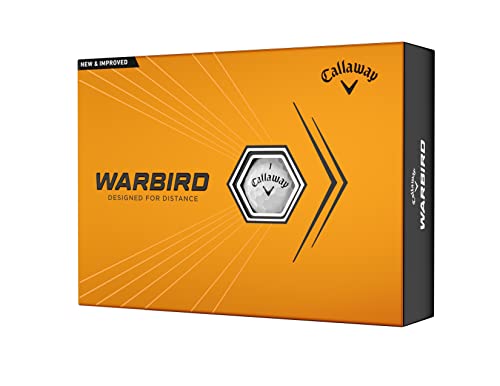
The Callaway Warbird 2023 isn’t trying to reinvent the wheel—it’s built for one thing: raw, unfiltered ball speed. At the heart of its design is an extra-large, high-energy core that compresses easily on impact, launching the ball at blistering speeds even with moderate swing tempos. Thanks to HEX Aerodynamics, the dimple pattern slices through air resistance, promoting a higher launch and flatter descent that translates to consistent roll and maximum total distance. It’s the go-to pick for mid-to-high handicappers who want to add yards without overhauling their swing.
In real-world testing, the Warbird delivers exactly what it promises: longer drives and stronger iron shots, especially for swing speeds under 100 mph. The 2-piece ionomer construction keeps spin low off the driver, reducing slice and hook magnification—perfect for straighter, more predictable ball flight. Around the greens, the trade-off is evident: while you can still land pitches safely, the ionomer cover limits spin and feedback compared to urethane balls. It’s not a shot-shaper’s ball, but for pure distance and forgiveness, it dominates.
Next to the TaylorMade Distance+, the Warbird offers better aerodynamics and a more consistent flight, though both target similar players. It outpaces the Titleist Velocity in off-tee speed for average swingers, despite the Velocity being tuned for high-speed players. This is the perfect ball for beginners and recreational golfers who want maximum bang for the buck in distance and durability. If your goal is to hit it longer and straighter with minimal effort, the Warbird clears the fairway with authority.
Titleist Velocity Golf Balls

ADVANTAGES
LIMITATIONS
Titleist Velocity lives up to its name with a no-compromise focus on speed and flight, engineered specifically for golfers with high swing speeds who want maximum distance without sacrificing playability. At its core is the high-speed LSX formula, a dense yet responsive rubber blend that explodes off the clubface, generating exceptional initial velocity. Paired with a 350 octahedral dimple pattern, the ball achieves a high launch with reduced drag, maintaining momentum downrange for longer carry and roll—especially in calm to moderate wind conditions.
On the course, the Velocity delivers consistent, powerful flight with every full swing. Drivers and long irons benefit most, with the ball staying airborne longer and landing with purpose. The fast NAZ+ cover adds a surprising amount of feel for a 2-piece ball, allowing for decent touch on chips and pitches—though it won’t match urethane models in spin. It performs best when fully compressed, meaning players with slower swings may not unlock its full potential. In windy conditions, the high flight can be a slight liability, as the ball catches more air on descent.
Compared to the Callaway Warbird, the Velocity offers a tighter trajectory and better wind penetration, making it more reliable in gusty conditions. Against the TaylorMade Distance+, it delivers faster ball speeds for stronger players, though it’s less forgiving for beginners. This is the ideal pick for low-to-mid handicap players with aggressive swings who want a fast, high-flying ball that still feels premium. It’s a distance-first ball with surprising polish, bridging the gap between power and playability.
TaylorMade Distance+ Golf Balls
ADVANTAGES
LIMITATIONS
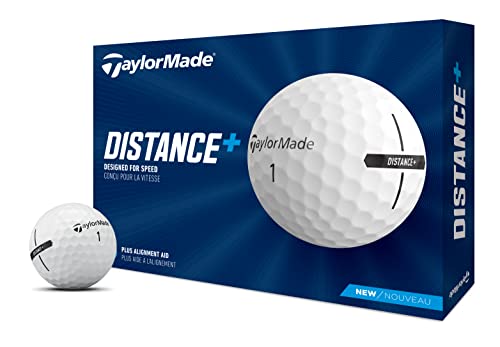
TaylorMade Distance+ lives up to its name with a relentless focus on yardage, offering explosive performance at a price that won’t break the bank. The REACT Speed Core is engineered to compress efficiently on impact, generating high initial velocity even with moderate swing speeds—making it a standout for beginners and casual players. Add in the Extended Flight Dimple Pattern, and you’ve got a ball that stays aloft longer, cuts through wind, and maximizes rollout, especially on drives and long irons. The Plus Alignment Aid is a thoughtful bonus, helping you aim putts and drives with greater precision.
In real-world use, the Distance+ delivers consistent, straight flight and impressive total distance for a 2-piece ball. The mid-launch profile works well for a wide range of players, and the softer feel makes it more comfortable than many budget options. However, the ionomer cover limits spin control around the greens, making it harder to stop the ball quickly on firm approaches. While it performs admirably from tee to fairway, it’s not designed for shot-shaping or finesse play—this is a distance-first, simplicity-first ball.
When compared to the Callaway Warbird, the Distance+ offers slightly better feel and alignment, though the Warbird edges it out in raw speed. Against the Pss Mssile Distance, it lacks the 4-layer complexity but wins in brand consistency and reliability. It’s the perfect entry-level ball for new golfers or those who play infrequently and want solid performance without complexity. For sheer value and ease of use, it’s hard to beat—delivering TaylorMade quality at a wallet-friendly point.
P*ss M*ssile Distance Golf Balls

ADVANTAGES
LIMITATIONS
Don’t let the cheeky branding fool you—the Pss Mssile Distance is a seriously engineered ball that punches well above its price tag. With a 4-layer design and high-compression core, it’s built for golfers who want maximum energy transfer and lower spin off the tee, resulting in longer, straighter drives with reduced sidespin. The 352-dimple pattern and Surlyn cover work in tandem to enhance aerodynamics, offering exceptional lift, stability, and wind resistance—making it a strong performer even in less-than-ideal conditions.
On the course, the Mssile shines in distance and forgiveness. The low-spin profile helps neutralize slices and hooks, making it ideal for high-handicappers and weekend warriors looking to clean up their ball flight. Despite the Surlyn cover, it delivers a surprisingly responsive feel around the greens, with enough feedback to make short-game shots manageable. The bright yellow color* enhances visibility in flight and on the ground—a small but meaningful edge when tracking shots in tall grass or low light.
Compared to the TaylorMade Distance+, it offers more layers and better aerodynamics, giving it an edge in flight consistency and energy retention. Against the Callaway Warbird, it provides superior spin separation and a firmer feel, though the Warbird may launch slightly higher. This is the best all-around pick for golfers who want premium-like performance without the premium price. With its fun branding and serious engineering, it’s a top contender in the high-value, high-performance category.
PXG Xtreme Tour X Golf Ball
ADVANTAGES
LIMITATIONS
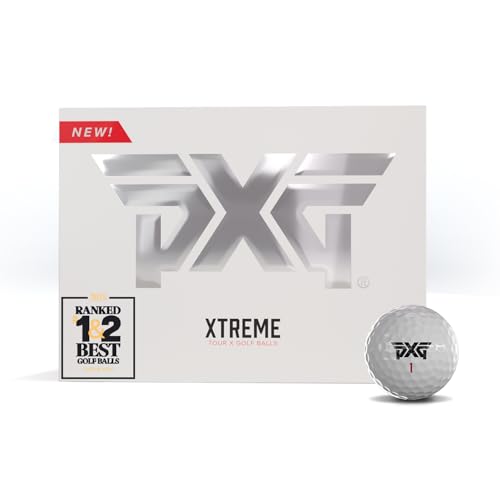
PXG didn’t hold back with the Xtreme Tour X—this is a high-performance, high-spin ball designed for players who want tour-level control and stopping power without sacrificing distance. The explosive polybutadiene core delivers rapid speed off the driver, while the soft urethane cover unlocks exceptional greenside spin, letting wedges bite and hold even on firm, fast greens. With a 338-dimple pattern, the ball achieves a high, penetrating flight that cuts through wind and maximizes carry—making it a reliable choice in varying conditions.
In testing, the Xtreme Tour X excels in shot-shaping and precision. Irons produce a tight, controlled trajectory with noticeable spin, and putts roll smoothly thanks to the consistent cover finish. The ionomer mantle layer boosts speed without inflating spin off the tee, striking a smart balance between distance and control. However, the firm compression means it’s best suited for players with faster swings—slower swingers may struggle to compress the core fully, reducing responsiveness and feel.
When compared to the Vice Pro Plus, the PXG flies slightly higher with irons but offers a firmer feel and more spin—ideal for aggressive players. Against the Titleist Velocity, it trades a bit of raw speed for vastly superior short-game performance and feedback. This is the perfect ball for mid-to-low handicap golfers who want maximum control and confidence around the greens. For players who prioritize spin and stopping power, it’s a premium performer that justifies its place at the top.
Golf Ball Comparison: High Compression Options
| Product | Construction | Core Material | Cover Material | Dimple Pattern | Best For | Key Feature |
|---|---|---|---|---|---|---|
| P*ss M*ssile Distance | 4-Piece | High Compression | Surlyn | 352 | Best Overall | Maximum Distance & Visibility |
| TaylorMade Distance+ | 2-Piece | REACT Speed Core | Ionomer | Extended Flight | Best Budget Friendly | Explosive Speed & Alignment Aid |
| Titleist Velocity | 2-Piece | LSX Core (High Speed) | NAZ Plus | 350 Octahedral | Best for High Swing Speeds | Fast Speed & High Trajectory |
| PXG Xtreme Tour X | Multi-Layer | Polybutadiene | Urethane | 338 | Best for Control & Spin | Firmer Feel & Increased Stopping Power |
| Vice Golf Pro Plus White | 4-Piece | Cast Urethane | Cast Urethane | N/A | Best Premium Option | Comprehensive Performance & Alignment Line |
| Callaway Warbird | 2-Piece | High-Energy Core | Ionomer | HEX Aerodynamics | Best for Maximum Ball Speed | Maximum Ball Speed & Distance |
How We Evaluated High Compression Golf Balls
Our recommendations for the best high compression golf balls are based on a multi-faceted approach combining data analysis, independent testing, and expert review synthesis. We prioritize objective performance metrics alongside subjective feel and playability.
We analyzed data from robot testing – utilizing launch monitors to assess ball speed, spin rates (both off the tee and around the green), and carry distance – across a range of swing speeds representative of golfers who benefit from high compression golf balls (100+ mph). This data was compared against manufacturer specifications and independent lab results from sources like Golf Digest and MyGolfSpy.
Comparative analyses focused on core construction (examining multi-layer vs. single-layer designs and their impact on energy transfer), dimple patterns (assessing aerodynamic efficiency), and cover materials (evaluating the trade-offs between urethane’s spin control and Surlyn’s durability). Where possible, we incorporated user reviews and feedback from golf forums and retailers to gauge real-world performance and durability. Our evaluation considered the interplay between golf ball compression, core construction, and cover material to identify options providing optimal distance, control, and feel for a variety of player profiles. We also assessed the value proposition of each golf ball, considering price relative to performance benefits.
Choosing the Right High Compression Golf Ball
Understanding Compression & Its Impact
Golf ball compression refers to how much the ball squishes upon impact. High compression balls are designed for golfers with faster swing speeds – typically those who can drive the ball 100+ mph. These balls resist compression initially, then release a powerful burst of energy when compressed by a faster swing, resulting in greater distance. If your swing speed is slower, a high compression ball won’t get properly compressed, leading to a harder feel and potentially less distance. Choosing the right compression is the most important factor.
Core Construction: The Engine of Distance
The core of a golf ball significantly impacts its performance. Many high compression balls utilize multi-layer construction (3-piece or 4-piece). * Multi-Layer Cores: These cores often feature a high-energy core surrounded by intermediate layers. This design allows for optimized energy transfer, maximizing distance and control. Balls like the PXG Xtreme Tour X and Vice Golf Pro Plus utilize this technology, offering a firmer feel and greater spin control. * Single-Layer Cores: Typically found in more budget-friendly options like the TaylorMade Distance+ or Callaway Warbird, these cores prioritize simplicity and speed. While they may not offer as much finesse around the greens, they deliver excellent distance for golfers prioritizing that aspect.
Dimple Pattern: Aerodynamics for Flight
The dimples on a golf ball aren’t just for show! They create a thin boundary layer of turbulent air, reducing drag and allowing the ball to travel further. * Dimple Count & Design: Higher dimple counts (like the 338 on the PXG) aren’t always better, but the pattern is crucial. Spherically-tiled designs (Titleist Velocity) promote a high ball flight, while more strategic patterns (TaylorMade’s Extended Flight) can improve stability in windy conditions. * Surlyn vs. Urethane Covers: Surlyn covers are durable and cost-effective, often found on distance-focused balls. Urethane covers (Vice Golf Pro Plus, PXG Xtreme Tour X) are softer, providing more grip and spin around the greens, but are more expensive.
Other Key Features to Consider
- Cover Material: Urethane offers more spin and control, while ionomer provides durability and a firmer feel.
- Alignment Aids: Features like the alignment line on the TaylorMade Distance+ can help with accuracy on the tee and putting green.
- Color: While performance isn’t affected, brighter colors (like the P*ss Missile) are easier to track in the air and rough.
- Swing Speed: Match the ball’s compression rating to your swing speed for optimal performance. Faster swings need higher compression.
- Budget: Prices vary significantly. Determine how much you’re willing to spend and balance that with the features you prioritize.
The Bottom Line
Ultimately, the best high compression golf ball depends on your individual swing speed and playing preferences. Whether you prioritize maximum distance, exceptional spin control, or a budget-friendly option, there’s a ball on this list to elevate your game.
Investing in the right golf ball can translate to significant gains on the course, but remember to consider your swing speed first and foremost. By understanding compression, core construction, and dimple patterns, you can confidently choose a ball that complements your style and helps you achieve your golfing goals.