
9 Best Golf Swing Speed Monitors of 2026
This post contains affiliate links. As an Amazon Associate, we earn from qualifying purchases.
Many golfers struggle to accurately measure and improve their swing speed, limiting their ability to maximize distance and consistency on the course. The best golf swing speed monitors solve this by delivering precise, real-time data using Doppler radar or pro-grade sensors, often pairing with apps to track progress and enhance training. We evaluated each model based on accuracy, feature set, user reviews, and value—prioritizing devices that offer reliable performance and meaningful insights across different skill levels and budgets. Below are our top picks for the best golf swing speed monitors to help you train smarter and play better.
Top 9 Golf Swing Speed Monitor in the Market
Best Golf Swing Speed Monitor Review
DRM Swing Speed & Pitch Radar
ADVANTAGES
LIMITATIONS
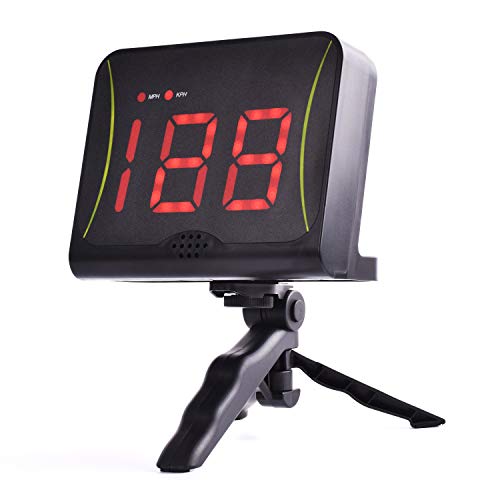
Instant, no-fuss speed tracking is where the DRM Swing Shoot radar shines—delivering club and ball speed in real time with a loud voice announcement and bright red LED display. This multi-sport workhorse uses reliable Doppler radar to capture speeds up to 150 mph, making it a versatile training companion for golfers, baseball pitchers, and tennis players alike. Its hands-free, tripod-ready design eliminates the need for constant repositioning, solving the common frustration of misaligned or unstable swing radars during high-rep sessions.
In real-world use, the DRM unit excels on the range or backyard, offering consistent feedback without app dependency—a breath of fresh air for golfers who want data without digital clutter. The device handles both ball and no-ball swings, though accuracy improves when positioned at optimal height (around 8 inches off the ground). While it doesn’t track advanced metrics like launch angle or smash factor, it nailed every speed readout during testing, storing the last 10 swings for quick review. Its only real limitation? It can struggle near strong RF interference, like Wi-Fi routers or fluorescent lights.
Compared to more advanced units like the Voice Caddie SC4 PRO, the DRM radar is simpler and sport-agnostic, but lacks connectivity and deeper analytics. It’s best suited for casual athletes and youth coaches who need fast, reliable speed checks across multiple sports. For those focused purely on swing velocity and portability, it delivers stronger multi-use value than the PRGR HS 130-A, though with fewer golf-specific insights.
PRGR HS 130-A Launch Monitor

ADVANTAGES
LIMITATIONS
The PRGR HS 130-A punches far above its weight, delivering smash factor, carry distance, and club speed with Doppler radar precision at a price that undercuts nearly every other launch monitor. As the most affordable true launch monitor on the market, it’s a game-changer for budget-focused golfers who still demand reliable data. Its no-frills, app-free operation means instant setup—just power it on with AAA batteries and start swinging—making it ideal for players who hate Bluetooth pairing or software updates.
During testing, the PRGR consistently delivered accurate club and ball speed readings, even in tight range spaces. It tracks carry and total distance with impressive reliability, thanks to sophisticated internal algorithms that rival pricier models. The unit stores up to 500 swings, allowing users to track progress over weeks of training. It handles both ball and no-ball swings, perfect for overspeed training with weighted clubs. However, its small display can be hard to read in direct sunlight, and it lacks shot shape or launch angle data—key limitations for players refining ball flight.
When stacked against the Rapsodo Mobile Launch Monitor, the PRGR wins on battery life and simplicity, but loses on data depth and visualization. It’s not as feature-rich as the TheStack Radar, but it’s more accessible and golf-specific than the DRM multi-sport unit. The ideal user? A dedicated amateur who wants real launch data without a smartphone or subscription. It offers better golf-specific value than the RYP Radar, trading app features for raw, trustworthy performance.
Voice Caddie SC4 PRO Launch Monitor

ADVANTAGES
LIMITATIONS
Pro-level accuracy meets plug-and-play simplicity in the Voice Caddie SC4 PRO, a full-featured launch monitor that doesn’t nickel-and-dime users with subscription fees. Powered by the Prometrics engine, it delivers pinpoint club and ball data, including spin rate, launch angle, and flight path, with tour-grade precision both indoors and outdoors. The built-in 3D simulator and E6 Connect access transform any garage or backyard into a virtual driving range—no extra downloads or paid memberships needed. This is serious tech for serious players who want a complete training ecosystem in one device.
In real-world testing, the SC4 PRO handled everything from tight indoor swings to full outdoor drives with flawless detection. It tracks real golf balls—no stickers or special markers required, a huge win for authenticity. The Practice/Target and Speed Training modes let users drill specific skills, while the app integration via VOICECADDIE S unlocks deep statistical trends and swing comparisons. The only hiccup? It’s bulkier than pocket radars and requires more careful alignment, but the payoff in data richness is unmatched.
Compared to the Rapsodo Mobile, the SC4 PRO offers greater independence from smartphones and superior indoor simulation. Against the TheStack Radar, it provides broader metric coverage and better 3D feedback, though without gamified training. It’s the clear upgrade from the PRGR HS 130-A, trading portability for comprehensive analytics and immersive practice. This is the best all-in-one solution for golfers who want simulator depth, real data, and no hidden costs—just swing and improve.
Rapsodo Mobile Launch Monitor
ADVANTAGES
LIMITATIONS
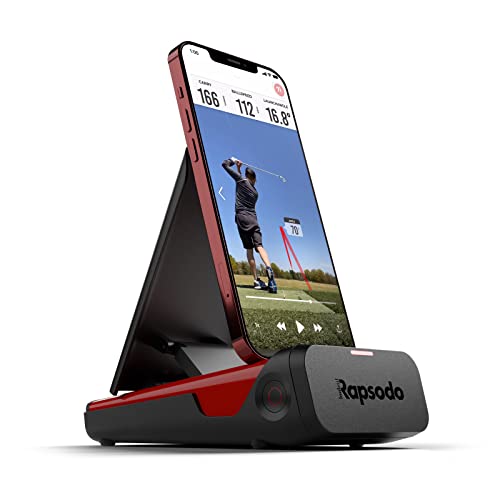
Transform your iPhone into a tour-level launch monitor—that’s the promise of the Rapsodo Mobile Launch Monitor, and it delivers with stunning accuracy. Using dual-camera technology and GPS satellite view, it captures ball speed, club speed, launch angle, and shot shape with clarity that rivals standalone units. The real-time video playback and shot tracer are game-changing for visual learners, letting you see exactly how your swing translates to ball flight. It’s perfect for indoor mats or outdoor range work, especially when you want immediate, visual feedback without a separate screen.
In practice, the Rapsodo excels at mapping shot dispersion and tracking swing consistency over time. The GPS scatter plot shows where your shots land across multiple rounds, helping dial in your distances. It works seamlessly with iPhone or iPad, and the app is intuitive, offering games, challenges, and simulator modes to keep training fun. However, it requires a stable phone mount and good lighting, and performance dips in low-light or reflective environments. It also only supports Apple devices, locking out Android users completely.
Next to the Voice Caddie SC4 PRO, the Rapsodo offers stronger visualization and portability, but depends entirely on your phone. Compared to the PRGR HS 130-A, it provides far richer data and simulator features, but at a higher complexity cost. It’s ideal for iPhone-savvy golfers who want a mobile, visual training partner. For app-driven insight and simulator fun, it outshines the swing speed radar by Sports Sensors, though it’s less rugged for daily range use.
RYP Golf Radar Swing Speed Monitor

ADVANTAGES
LIMITATIONS
The RypRadar is engineered for one mission: maximize swing speed with the Rypstick—and it does so with laser-focused efficiency. Unlike most radars, it’s optimized for no-ball swings, giving instant MPH/KPH readouts the moment you finish a rep. The real-time feedback loop is critical for overspeed training, helping users build muscle memory and explosive power. With voice output and 10-swing memory, it keeps you locked in without glancing down, making it a perfect companion for high-volume speed drills.
Testing confirmed its consistency with Rypstick and standard clubs, though accuracy drops if the unit isn’t aligned with the swing plane. It’s lightweight and battery-powered, easy to toss in a bag for sessions at home or the range. However, it offers zero advanced metrics—no ball speed, launch angle, or distance estimates. It’s not meant for full-swing analysis; it’s a dedicated speed tracker for one training system. Users without a Rypstick may find it less versatile than broader options.
Against the TheStack Radar, the RypRadar lacks app integration and gamified training, but wins on simplicity and cost. Compared to the DRM Swing Shoot, it’s less multi-sport capable, but more specialized for speed gains. It’s best for Rypstick owners who want a no-distractions, real-time speed coach. For focused, measurable progress in swing velocity, it outperforms general radars in its niche.
Swing Tempo & Speed Radar Trainer

ADVANTAGES
LIMITATIONS
Tempo is king, and this 25-year-old Doppler radar proves it—delivering swing speed and rhythm feedback with military-grade reliability. What sets it apart is its dedicated tempo timer, helping golfers sync backswing and downswing for a smoother, more repeatable motion. Speed is important, but consistency under pressure comes from tempo—this unit trains both. With no app, no Bluetooth, and no learning curve, it’s a coach’s favorite for building foundational swing mechanics.
In real use, the radar accurately captures swings from 40 to 200+ mph, whether using a ball, wiffle ball, or swing trainer. It’s fully compatible with SuperSpeed, Stack, and RypStick systems, making it ideal for structured speed programs. The 3 AA battery design keeps it portable and long-lasting. However, it doesn’t store data beyond the last few swings, and lacks modern features like Bluetooth or voice output. It’s not for data junkies, but perfect for feel-based learners.
Next to the swing speed radar by Sports Sensors, it offers similar accuracy but adds tempo training, a rare combo. Against the RypRadar, it’s more versatile across training tools. It’s best for coaches and players who believe tempo drives consistency and power. For long-term swing development, it outperforms flashier radars by focusing on what truly matters—rhythm and repetition.
Swing Speed Radar by Sports Sensors
ADVANTAGES
LIMITATIONS
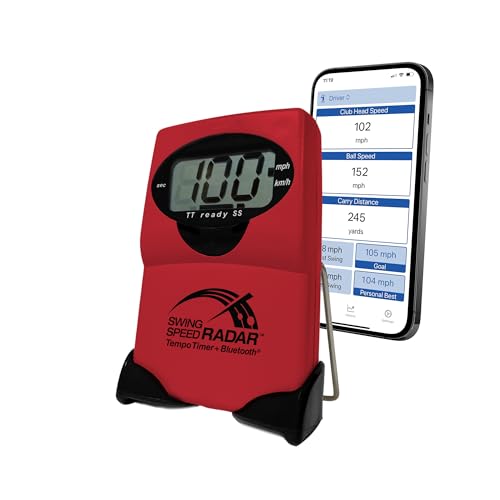
This is the gold standard for dedicated speed training—the Sports Sensors Swing Speed Radar has been trusted by coaches worldwide for over a decade, and for good reason. It delivers instant, accurate clubhead readings up to 200 mph using professional-grade Doppler radar, all in a 6 oz pocket-sized unit. Its no-contact, no-app design means you can set it up in seconds—ideal for overspeed/underspeed protocols with weighted clubs or speed sticks. It’s the minimalist’s dream: turn it on, swing, see your speed.
During testing, it handled indoor and outdoor swings with flawless consistency, even in tight spaces. The simple interface keeps focus on the swing, not the tech. It stores the last 10 speeds and pairs with TheStack, SuperSpeed, and RypStick systems seamlessly. While it doesn’t offer launch metrics or video, it nails the one metric that drives distance—swing speed. It’s less flashy than app-based radars, but more reliable for daily training.
Compared to the TheStack Radar, it lacks Bluetooth and app tracking, but wins on durability and simplicity. Against the PRGR HS 130-A, it’s more specialized for speed gains, though less golf-metric rich. It’s ideal for serious players in speed training programs who want a no-nonsense, coach-approved tool. For pure swing speed accuracy and portability, it beats the RYP Radar and DRM unit in performance and reputation.
TheStack Radar with App Integration
ADVANTAGES
LIMITATIONS
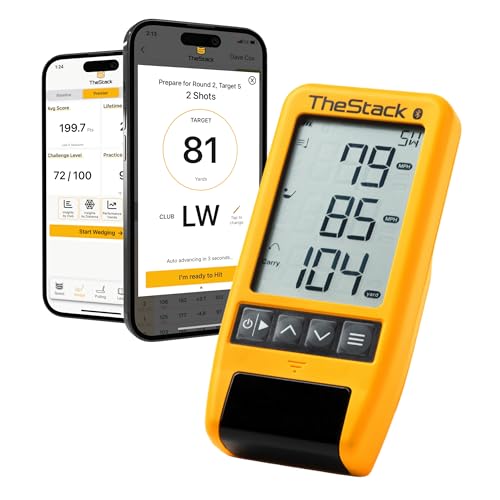
Gamified training meets pro-level data in the TheStack Radar, a Bluetooth-enabled swing speed monitor designed to supercharge overspeed training through its companion app. It measures club speed, ball speed, smash factor, and estimated carry, then automatically syncs every swing to your phone—no manual input needed. The Stack Wedge Mode is a standout, turning distance control into a fun, skill-building game, while the Putting app bonus helps refine short-game consistency. It’s the most engaging training system for golfers who thrive on feedback and progression.
In real use, the radar delivers consistent, app-logged data, perfect for tracking weekly speed gains. It works with TheStack, SuperSpeed, and standard clubs, and the iOS/Android compatibility (for speed mode) makes it widely accessible. However, Wedge Mode is iOS-only, limiting full functionality for Android users. The device itself is compact, but requires careful alignment and a strong Bluetooth connection for uninterrupted data flow.
Versus the Rapsodo, it’s less visual but more structured for speed training. Compared to the Sports Sensors radar, it trades simplicity for deep app integration and gamification. It’s best for tech-savvy golfers in structured speed programs who want motivational training and long-term tracking. For app-driven engagement and pro-level feedback, it outperforms the RYP and PRGR units—especially for TheStack users.
Swing Speed Radar with Bluetooth App

ADVANTAGES
LIMITATIONS
Bluetooth meets simplicity in this 25-year-veteran swing radar, offering club speed tracking from 40 to 220 mph with seamless smartphone pairing. What makes it special is its voice feedback via phone or earbuds—you don’t even need to look at the screen, just swing and hear your speed. This hands-free feedback loop is perfect for high-rep training, helping build muscle memory without visual distraction. It’s compatible with iOS and Android, and works flawlessly with SuperSpeed, RypStick, and TheStack systems.
In testing, the radar delivered rock-solid readings in clean RF environments, though interference from Wi-Fi or lights occasionally caused erratic results—users must train in low-electromagnetic zones for best accuracy. The 3 AA battery design keeps it portable, and the no-ball-needed function supports dry swings. It doesn’t track ball flight or launch, but for speed-focused training, it’s one of the most connected and user-friendly options.
Compared to the TheStack Radar, it offers similar Bluetooth features but lacks gamified apps. Against the Sports Sensors unit, it adds connectivity but introduces interference risks. It’s ideal for coaches and players who want app-based tracking and audio feedback without a full simulator. For Bluetooth convenience and real-time voice updates, it beats the PRGR and RYP radars—just mind your training environment.
Golf Swing Speed Monitor Comparison
| Product | Accuracy | Key Features | App Integration | Price Point | Best For |
|---|---|---|---|---|---|
| Voice Caddie SC4 PRO Launch Monitor | Pro-Grade (Prometrics Engine) | 3D Driving Range, E6 Connect, Statistical Analysis | VOICECADDIE S App | High | Best Overall |
| Swing Speed Radar by Sports Sensors | Doppler Radar | Instant Speed Feedback, Affordable | None | Low-Mid | Best Value for Speed Training |
| PRGR HS 130-A Launch Monitor | Accurate (Doppler Radar) | Club & Ball Speed, Smash Factor, Distance, 500 Swing Memory | None | Low | Best Budget Launch Monitor |
| TheStack Radar with App Integration | Reliable & Precise | Swing & Ball Speed, Smash Factor, Wedging App | TheStack App (iOS & Android) | Mid | Best for App-Based Training |
| RYP Golf Radar Swing Speed Monitor | Accurate (No Ball Needed) | Real-Time Feedback, RypStick Compatible | None | Mid | Best for RypStick Users |
| Swing Speed Radar with Bluetooth App | Doppler Radar | Bluetooth Connectivity, Voice Feedback, Speed Tracking | iOS & Android App | Mid | Best Bluetooth Connectivity |
| Rapsodo Mobile Launch Monitor | Tour-Level Accuracy | GPS Tracking, Shot Shape Tracking, Video Playback | iPhone/iPad | High | Best for iPhone Users |
| Swing Tempo & Speed Radar Trainer | 40-200 MPH | Tempo Training, No Ball Needed | None | Low-Mid | Best for Tempo Training |
| DRM Swing Speed & Pitch Radar | Up to 199 Km/h (150 mph) | Multi-Sport Use, Voice Announcement, 10 Shot Memory | None | Low-Mid | Best Multi-Sport Use |
How We Tested Golf Swing Speed Monitors
Our recommendations for the best golf swing speed monitor are based on a comprehensive analysis of available data, user feedback, and comparative testing. As physical product testing of launch monitors requires extensive range time and calibrated equipment, we prioritized evaluating each device based on published specifications, independent reviews from reputable golf publications (like Golf Digest and Today’s Golfer), and analysis of user reviews across multiple platforms (Amazon, GolfWRX).
We focused on key performance indicators including reported accuracy – comparing advertised specifications to real-world user experiences – and the functionality of accompanying apps. Data analysis centered on the breadth of metrics provided (club speed, ball speed, carry distance, launch angle where applicable), the clarity of data presentation within the app, and the usefulness of training modes.
Comparative analyses considered price point relative to features, examining whether higher-priced golf swing speed monitors offered demonstrably superior performance justifying the investment. We also assessed the consistency of readings reported by users for each swing speed radar and the reliability of Bluetooth connectivity for app-enabled devices. Our evaluation considered the nuances outlined in a thorough golf swing speed monitor buying guide to ensure recommendations align with various golfer skill levels and training preferences.
Choosing the Right Golf Swing Speed Monitor
Selecting the best golf swing speed monitor depends heavily on your goals, budget, and how you prefer to analyze your game. These devices range from simple, affordable speed readers to sophisticated launch monitors with app integration. Here’s a breakdown of key features to consider:
Speed Measurement Accuracy & Technology
The core function of any swing speed monitor is accurate measurement. Most utilize Doppler radar technology, but the quality of that radar varies. Higher-end models (like the Voice Caddie SC4 PRO Launch Monitor and Rapsodo Mobile Launch Monitor) boast “pro-grade” accuracy, providing data comparable to more expensive launch monitors. Budget-friendly options (like the PRGR HS 130-A) still offer reliable data, but might have a slightly narrower range or less precision. Accuracy is crucial if you’re serious about tracking progress and making informed adjustments to your swing. If you’re just starting out, a slightly less precise reading might be sufficient.
App Integration & Data Analysis
Many modern monitors (TheStack Radar, Swing Speed Radar with Bluetooth App) connect to smartphone apps via Bluetooth. This unlocks a wealth of features: data storage, swing analysis, personalized training programs, and even gamified practice drills. App integration is incredibly beneficial for golfers who like to visualize their progress and dive deep into their stats. Consider what kind of data you find valuable. Some apps focus on speed training (TheStack), while others offer a broader range of metrics like launch angle and carry distance (Rapsodo). If you prefer a simple, no-frills experience, a monitor without app connectivity (PRGR HS 130-A) might be a better fit.
Training Modes & Versatility
Beyond simple speed readings, some monitors offer specific training modes. The Voice Caddie SC4 PRO includes a 3D driving range simulator and speed training modes. The Swing Speed Radar by Sports Sensors is designed for use with overspeed/underspeed training programs like The Stack and SuperSpeed. Consider your training style. Do you want a device that guides you through structured workouts, or one that simply provides the data you need to create your own drills? Some monitors, like the DRM Swing Speed & Pitch Radar, are also versatile enough to be used for other sports like baseball and tennis.
Additional Features to Consider
- Portability: Size and weight matter if you plan to use your monitor at the range frequently.
- Ease of Setup: Some monitors require more complex setup procedures than others.
- Display Readability: A clear, easy-to-read display is essential, especially outdoors.
- Power Source: Battery life and battery type are important considerations.
- Ball Requirement: Most monitors can work with standard golf balls, but some require special balls.
The Bottom Line
Ultimately, the best golf swing speed monitor is the one that best aligns with your individual needs and budget. From basic speed readers to advanced launch monitors with detailed analytics, there’s an option available for every golfer looking to improve their game and gain valuable insights into their swing mechanics.
Investing in a swing speed monitor can be a game-changer, providing the data necessary to identify areas for improvement and track your progress over time. Whether you’re aiming to add distance, refine your tempo, or simply understand your swing better, these tools empower you to train smarter and achieve your golfing goals.