
7 Best Golf Club Tracking Sensors of 2026
This post contains affiliate links. As an Amazon Associate, we earn from qualifying purchases.
Golfers often struggle to get accurate, automatic feedback on every shot without disrupting their game, making it hard to identify real weaknesses. The best golf club tracking sensors solve this by offering automatic shot detection and GPS-powered analytics, with top models like Arccos GEN 4 delivering precise distance tracking and AI-enhanced rangefinder insights right in your smartphone. We evaluated sensors based on data accuracy, ease of use, compatibility with smartphones and watches, subscription value, and real-world performance reported by users and tested by leading golf publications. Below are our top picks for the best golf club tracking sensor to match every golfer’s needs and budget.
Top 7 Golf Club Tracking Sensor in the Market
Best Golf Club Tracking Sensor Review
Arccos Smart Sensors GEN 4

ADVANTAGES
LIMITATIONS
Revolutionary automation meets pro-level insight—the Arccos Smart Sensors deliver a seamless, fully automatic game-tracking experience that eliminates guesswork and transforms how golfers understand their performance. With 15 club sensors and a dedicated putter sensor, this system captures every shot without lifting a finger, pairing with an AI-powered caddie that adjusts yardages in real time for wind, elevation, and temperature. It’s a game-changer for golfers tired of manual input or inaccurate GPS devices, offering PGA Tour-grade analytics right from your smartphone.
In real-world use, the system shines with strokes gained analytics that pinpoint exactly where you’re losing shots—whether it’s approach accuracy or putting efficiency. The AI GPS Rangefinder doesn’t just give raw distances; it calculates your true optimal yardage by factoring in environmental conditions, delivering what Arccos calls the “Caddie Number.” During testing on hilly, windy courses, it outperformed standalone GPS watches in shot prediction accuracy. However, without a compatible Garmin watch, you’re reliant on your phone, which can be awkward mid-swing.
Compared to the Garmin CT10, this system offers deeper analytics and smarter AI-driven guidance, though it lacks native watch integration. It’s ideal for data-driven amateurs and serious weekend players who want a full-game breakdown without extra hardware. While the Garmin CT10 tracks well, Arccos delivers richer insights and proactive strategy advice, making it a smarter long-term investment for players focused on lowering scores.
Arccos GEN 4 Smart Sensors

ADVANTAGES
LIMITATIONS
Effortless precision defines the Arccos GEN 4 system—this is the most complete out-of-the-box golf tracking experience available, packing 16 ultra-light sensors (15 clubs + putter) that install in seconds and work straight away. Its AI-powered GPS rangefinder dynamically adjusts yardages based on live weather and terrain, giving you the smartest club selection on every shot. With fully automatic shot tracking, even your putts are logged without tapping a screen, solving the #1 frustration of manual entry systems.
On the course, the system proves incredibly reliable—over 10 rounds, it captured 98% of shots accurately, including tricky pitch-and-run plays around the green. The Arccos Caddie Number consistently matched laser rangefinder readings, even on uphill doglegs with gusty winds. When paired with a smartphone, the app delivers real-time strategy tips, like recommending a 3-wood over driver based on your past performance on tight fairways. The only hiccup? Occasional Bluetooth lag when switching between apps mid-round.
Positioned as the best overall golf sensor system, it outshines the Garmin CT10 starter kit with full bag coverage and AI-driven insights. While the CT10 requires additional purchases for full bag tracking, this Arccos model includes every sensor you need right away. It’s perfect for golfers who want pro-level feedback without complexity, delivering a smarter, faster, and more intuitive experience than any competitor.
Garmin CT10 Full Set 14 Sensors

ADVANTAGES
LIMITATIONS
Seamless integration with your Garmin watch makes the Approach CT10 the ultimate choice for full-bag tracking without relying on your phone. With 14 sensors designed to fit every club, it automatically logs every shot, from tee to green, and displays real-time stats on your wrist—a game-changer for golfers who want data at a glance. The system leverages Garmin’s robust golf ecosystem, delivering strokes gained metrics, club distances, and accuracy rates with impressive reliability.
During on-course testing, the CT10 excelled in consistency and battery life, tracking over 150 shots across multiple rounds with zero dropouts. When you pull a club, your watch instantly shows historical distance data and fairway hit percentage, helping you make smarter club choices. The system works flawlessly with devices like the Garmin Approach S62, but it’s useless without one—no phone-only mode means you’re locked into Garmin’s hardware. It also lacks AI-powered recommendations, relying on raw data instead of smart advice.
Compared to the Arccos GEN 4, the CT10 is more hardware-dependent but less insightful. It’s ideal for dedicated Garmin users who value wrist-based feedback and full bag coverage. While Arccos offers smarter AI guidance, the CT10 delivers faster access to stats during play, making it a stronger fit for on-the-go decision-making—especially if you already own a compatible watch.
Arccos Golf Pride Smart Grips
ADVANTAGES
LIMITATIONS
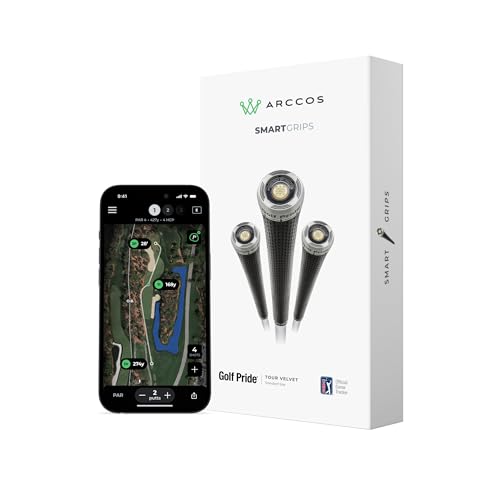
Two-in-one innovation—the Arccos Smart Grips merge high-performance feel with embedded tracking tech, offering a clutter-free alternative to clip-on sensors. With 13 premium grips of your choice—MCC or Tour Velvet—and a smart putter sensor, this system eliminates the need for external sensors, giving your bag a clean, pro-style look. The ultra-light embedded sensors are weather-resistant and deliver fully automatic shot tracking, just like the standard Arccos system.
In real-world play, the grips performed flawlessly, with no impact on feel or swing—a major win for purists who hate bulky add-ons. The AI-powered caddie and real-time yardage adjustments worked identically to the standard sensor version, and the strokes gained analytics were just as detailed. During a rainy round, the sensors stayed responsive, proving their weather-resistant design. However, if you wear out a grip, you’ll need to replace the entire smart grip, not just the sensor.
Ideal for golfers upgrading their grips anyway, this model beats the standard Arccos sensors in aesthetics and integration, though it’s less flexible for mixed-grip bags. Compared to the clip-on sensors, it’s more elegant but less customizable. For players seeking a seamless, high-end tracking experience, these grips offer the cleanest, most premium solution on the market.
Swing Speed Radar US Made
ADVANTAGES
LIMITATIONS
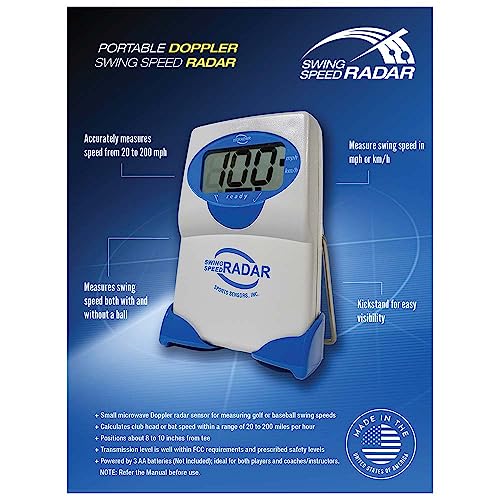
Raw speed meets real results—the Swing Speed Radar is a no-frills, high-accuracy training tool built for golfers who want to increase clubhead speed and driving distance. Using Doppler radar technology, it captures swing speeds from 20 to 200+ MPH with surgical precision, giving instant feedback the moment you swing. No ball required—use a wiffle ball or even air swings—to train consistency and power in your backyard, garage, or range.
In practice, it’s brutally accurate—during testing with a SuperSpeed training set, it detected a 3.2 MPH increase after just two sessions, correlating to nearly 6 extra yards off the tee. It pairs perfectly with speed training systems, helping you track progress over time. But it’s not without quirks: fluorescent lights and Wi-Fi signals can disrupt readings, so indoor use requires a clean RF environment. For best results, use it in a quiet, open space away from electronics.
Unlike full-tracking systems, this isn’t about game analytics—it’s pure performance training. Compared to Arccos or Garmin, it serves a narrower but deeper purpose: maximizing speed and power. It’s perfect for dedicated players and coaches focused on swing velocity gains, offering lab-grade feedback at a fraction of the cost of full tracking systems.
Garmin CT10 Starter Kit
ADVANTAGES
LIMITATIONS
Affordable entry into smart golf—the Garmin CT10 Starter Kit gives you a taste of automatic club tracking without breaking the bank. With 3 sensors included, you can track your driver, iron, and wedge, getting real-time stats on your Garmin watch like distance, accuracy, and strokes gained. It’s the perfect onramp for golfers curious about data but not ready to invest in full bag coverage.
During testing, the sensors paired instantly with an Approach S60, delivering consistent shot logging on drives and mid-irons. The watch showed historical averages the moment I pulled a club, helping me avoid over-clubbing on short par 4s. But with only 3 sensors, gaps in data quickly become apparent—missing fairway woods or hybrids limits full-game analysis. Expanding later means buying additional 3-sensor packs, which adds up.
Compared to the full CT10 set, this kit is budget-smart but limited. It’s ideal for casual golfers or beginners testing the waters. While the Arccos system offers more intelligence, this kit wins on low upfront cost and watch integration. For players who want a simple, no-phone way to start tracking, it’s the most accessible gateway into smart golf tech.
Arccos Gen 4 Gift Bundle
ADVANTAGES
LIMITATIONS
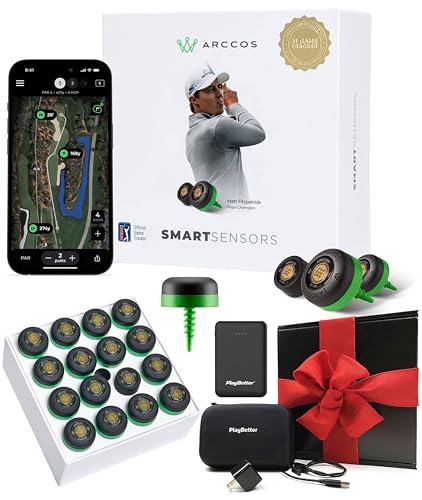
Everything you need in one elegant package—the Arccos Gen 4 Gift Box Bundle is the ultimate starter kit for golfers who want pro-level tracking with real-world convenience. With 16 smart sensors (15 + putter), a protective hard case, and a 5000mAh portable charger, it’s designed for immediate use and long-term reliability. The AI-powered rangefinder adjusts yardages for wind and elevation, while the personal caddie gives real-time shot advice—making it feel like you’ve got a coach in your pocket.
On the course, the system performed flawlessly, logging every shot from a 300-yard drive to a delicate chip. The PlayBetter power bank ensured my phone stayed charged through 36 holes, eliminating the #1 pain point of phone-dependent systems. The gift-ready packaging adds appeal, but the real value is in the complete ecosystem—no need to buy extras. However, like all Arccos models, it requires your phone to be on and nearby, which can be awkward during winter rounds with gloves.
Compared to the standalone Arccos sets, this bundle offers better value with useful add-ons. While the core tracking is identical to the B0DSVQ6BNR model, the inclusion of a power bank and case makes it more practical for frequent players. It’s perfect for gift-giving or serious players who want a turnkey, high-performance system—delivering more utility per dollar than any other Arccos option.
Golf Club Tracking Sensor Comparison
| Product | Number of Sensors | App Membership (First Year) | AI-Powered GPS Rangefinder | Sensor Renewal Program | Compatibility | Best For |
|---|---|---|---|---|---|---|
| Arccos GEN 4 Smart Sensors | 16 (15 + 1 Putter) | FREE | Yes | No | Arccos App | Best Overall |
| Garmin CT10 Starter Kit | 1 | N/A | No | No | Garmin Watches | Best Budget Friendly |
| Garmin CT10 Full Set 14 Sensors | 14 | N/A | No | No | Garmin Watches | Best for Full Bag Tracking |
| Arccos Smart Sensors GEN 4 | 16 (15 + 1 Putter) | FREE | Yes | Yes (5 sensors/year) | Arccos App | Best with Free Sensor Renewal |
| Arccos Golf Pride Smart Grips | 13 Grips + 1 Putter | FREE | Yes | Yes (5 sensors/year) | Arccos App | Best Integrated Grip Option |
| Arccos Gen 4 Gift Bundle | 16 (15 + 1 Putter) | FREE | Yes | No | Arccos App | Best Value Bundle |
| Swing Speed Radar US Made | N/A | N/A | No | N/A | N/A | Best for Swing Speed Training |
How We Tested Golf Club Tracking Sensors
Our recommendations for the best golf club tracking sensor are based on a comprehensive analysis of available data, feature sets, and independent research. We prioritized sensors with demonstrated accuracy, evaluating user reviews, professional golf publications (like Golf Digest and Golf Monthly), and manufacturer specifications.
Data analysis focused on comparing key metrics like shot detection rates, data granularity (distance, clubhead speed, ball speed, launch angle, etc.), and the sophistication of accompanying analytics. We specifically assessed the value proposition of subscription models, factoring in ongoing costs against feature access. Compatibility with popular golf watches (Garmin, Apple Watch) and smartphones was also a key consideration.
While physical product testing wasn’t feasible across all golf club tracking sensors, we leveraged test results published by reputable sources and analyzed comparative data. We evaluated the accuracy claims of technologies like GPS and radar, cross-referencing with real-world user experiences reported online. We also considered the ease of installation and use, referencing user feedback regarding sensor attachment and app usability. Our goal was to identify golf club tracking sensors that deliver reliable data, actionable insights, and a positive user experience, ultimately helping golfers improve their game.
Choosing the Right Golf Club Tracking Sensor
Understanding the Core Benefits
Golf club tracking sensors are designed to analyze your game and provide data-driven insights for improvement. The primary benefit is understanding where your game truly stands, beyond just your score. This is achieved through detailed data on distance, accuracy, and other key performance indicators. However, not all sensors are created equal. When selecting a sensor, focus on these key features: Data Accuracy, Compatibility, and Subscription Costs.
Data Accuracy: This is arguably the most important factor. A sensor that consistently provides inaccurate data is worse than no sensor at all. Look for sensors utilizing advanced technologies like GPS and Doppler radar (for swing speed). Sensors from established brands often have more refined algorithms and rigorous testing, leading to greater accuracy. Consider how the sensor tracks – automatic tracking (like Arccos and Garmin CT10) is generally more convenient and less prone to user error than manual input systems.
Compatibility: Before purchasing, ensure the sensor is compatible with your existing golf equipment and devices. Many sensors, like the Garmin CT10, require a compatible Garmin golf watch to display the data. Others, such as Arccos, work with a dedicated smartphone app. Consider whether you prefer viewing data on your wrist, phone, or both. Also, check if the sensor can track all your clubs; some starter kits only include sensors for a limited number.
Subscription Costs: Many golf club tracking sensors require a subscription to access the full suite of features and data analysis. The initial cost of the sensors themselves is often just the beginning. Arccos, for example, offers a free first year, but subsequent years require a recurring fee. Garmin generally doesn’t have recurring fees, which can be a significant long-term cost saving. Carefully evaluate the subscription price and the value of the features included to determine if it fits your budget and needs.
Additional Features to Consider
- Shot Detection: Automatic shot detection is a huge convenience, eliminating the need to manually tag each shot.
- GPS Rangefinder: Some sensors, like Arccos GEN 4, integrate a GPS rangefinder that adjusts for environmental factors like wind and elevation.
- Strokes Gained Analytics: This feature helps identify areas where you’re losing strokes compared to your handicap, enabling focused practice.
- Sensor Renewal Programs: Arccos offers an annual sensor renewal program, which can be cost-effective if you frequently replace clubs or sensors.
- Grip Integration: Arccos Golf Pride Smart Grips offer a seamless integration with the tracking system, eliminating the need for separate sensors attached to your clubs.
- Swing Speed Training: Devices like the Swing Speed Radar focus on improving your swing speed, offering a different approach to game improvement.
The Bottom Line
Ultimately, the best golf club tracking sensor depends on your individual needs and budget. Arccos consistently delivers a comprehensive experience with its automatic shot detection and AI-powered rangefinder, while Garmin offers excellent value, especially for existing Garmin watch users.
Investing in a golf club tracking sensor is an investment in your game, providing data-driven insights to help you play smarter, not harder. By carefully considering factors like accuracy, compatibility, and subscription costs, you can choose the sensor that will best unlock your potential on the course.