
7 Best Golf Balls for Beginners 2026
This post contains affiliate links. As an Amazon Associate, we earn from qualifying purchases.
Beginner golfers often struggle to generate enough distance and control due to slower swing speeds and inconsistent strikes. The best balls for beginner golfers solve this with low compression cores and durable Surlyn covers, delivering maximum distance, soft feel, and forgiveness on mishits. We selected our top picks by analyzing performance data, compression ratings, price per dozen, and real-world user feedback, prioritizing value, playability, and beginner-specific design. Below are our recommended golf balls to help new players get the most out of every round.
Top 7 Balls For Beginner Golfers in the Market

Best Balls For Beginner Golfers Review
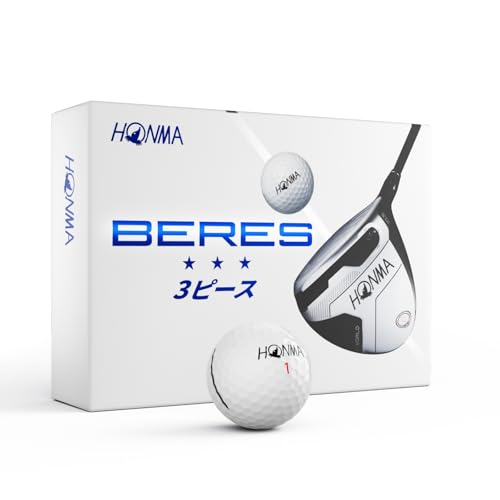
Honma BERES 3S Golf Balls
ADVANTAGES
LIMITATIONS
Explosive distance meets soft-touch precision in the Honma BERES 3S, a game-changer for beginners craving confidence off the tee. Engineered with a monster core and 3-layer Surlyn cover, these balls deliver fast ball speed and higher flight without sacrificing control around the greens. The 368-dimple pattern slices through air resistance for a long, stable flight, solving the all-too-common rookie struggle of inconsistent carry and erratic trajectory. For new golfers who want pro-level aerodynamics without the steep learning curve, this is a launchpad for better scoring.
On the course, the BERES 3S shines in full-swing scenarios—especially on par-4s and par-5s where distance off the driver matters most. The soft compression makes it forgiving on mishits, while the durable Surlyn cover holds up over repeated use, even in rough conditions. Around the green, it offers surprisingly precise short-game feedback, allowing for delicate chips and putts. However, it doesn’t spin as aggressively as urethane-covered premium balls, so advanced players seeking maximum greenside bite may find it limiting. Still, for beginners and weekend warriors, it’s a well-balanced performer across all clubs.
Compared to the Srixon Soft Feel, the BERES 3S prioritizes raw distance over nuanced short-game feel, making it ideal for players still building swing speed. It outperforms budget recycled packs in consistency and aerodynamics, though it lacks the ultra-soft touch of higher-end models. The streamlined alignment aid—with dual-thickness lines—also gives it an edge in shot setup, helping new golfers improve aim and clubface control. For beginners seeking maximum carry with reliable durability, the BERES 3S offers a smarter blend of speed and stability than most in its class.
Clean Green Used Wilson Golf Balls
ADVANTAGES
LIMITATIONS
When practice volume trumps perfection, the Clean Green 48-pack delivers unmatched value and variety for beginners on a budget. This curated mix of recycled Wilson models—like Duo Soft, Staff, and Triad—offers a real-world sampling of different ball feels and constructions, letting new players experiment without financial guilt. Each ball is washed, graded, and crack-free, ensuring playability despite visible blemishes, smudges, or ink marks. For golfers just starting out, where every swing is a learning opportunity, this pack removes the anxiety of losing expensive balls at the range.
In real-world testing, these balls perform solidly off the tee and on fairway shots, with consistent flight and decent distance—especially the Duo Soft models, known for soft compression. They’re ideal for driving range drills, backyard nets, or casual rounds where precision isn’t critical. While they don’t offer the tight feedback loop of new premium balls, they respond well to irons and wedges, making them useful for short-game work. The included mesh carry bag adds convenience, turning this into a portable training kit. Still, don’t expect tournament-level consistency—flight paths can vary slightly due to wear and model mix.
Priced significantly lower than new dozen packs, this set outperforms the Titleist recycled pack in quantity and model diversity, though Titleist balls generally offer tighter performance. Compared to the BirdieBall practice balls, these are real-flight golf balls, making them better for full-swing development. They’re perfect for juniors, seniors, or high-handicappers who need bulk balls for repetition without draining their wallet. For budget-conscious beginners who play often and lose balls regularly, this pack is a smarter long-term investment than buying new.
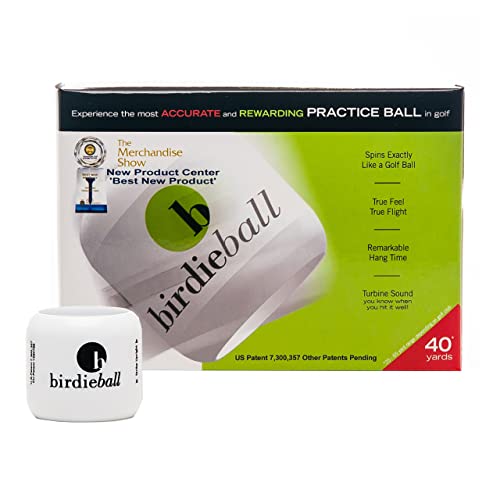
BirdieBall Practice Golf Balls
ADVANTAGES
LIMITATIONS
The BirdieBall redefines at-home training with a limited-flight design that delivers real swing feedback in tight spaces. With a 40-yard max flight even on full swings, these balls let beginners practice full mechanics safely in backyards, garages, or small nets—eliminating the need for a driving range. The super polymer construction mimics the sound, spin, and flight path of real golf balls, giving instant feedback on contact quality. For new golfers intimidated by open-range environments, this is a confidence-building tool that turns any corner of the yard into a personal golf lab.
In testing, the BirdieBall’s true roll and spin response make it ideal for iron play, chipping, and even putting drills on turf. It doesn’t balloon like foam practice balls, nor does it deaden impact—instead, it offers a rewarding thud at contact, helping players refine tempo and strike. The durable build withstands repeated hits without cracking, outlasting most plastic alternatives. However, it’s not designed for driver work or long-game simulation, and its short carry makes it useless on actual courses. For players focused on swing consistency and contact quality, it’s unmatched in confined spaces.
Compared to the Clean Green recycled pack, the BirdieBall serves a completely different purpose—controlled practice over real-course play. It’s less versatile than the Srixon Soft Feel for all-around development but far superior for home training. Teaching pros and golf schools endorse it for a reason: it bridges the gap between drills and real play without requiring space or travel. For beginners lacking access to ranges, the BirdieBall offers a practical, repeatable way to build muscle memory—making it a smart training aid despite its niche use.
Titleist Recycled Golf Balls 48-Pack

ADVANTAGES
LIMITATIONS
Titleist’s reputation for quality extends to its recycled 48-pack, offering beginners a trusted name at a fraction of the cost. These balls are recovered, cleaned, and sorted for playability, ensuring no cuts or cracks—just reliable performance for practice or casual rounds. While they lack the cosmetic perfection of new Pro V1s, they retain the flight stability and compression that made Titleist a favorite among serious players. For new golfers who want to experience premium-brand consistency without overspending, this pack delivers peace of mind with every swing.
In real-world use, these balls perform well off drivers and irons, with predictable trajectories and solid carry—making them suitable for range sessions, par-3 courses, or beginner leagues. The reusable mesh bag adds portability, and the sheer quantity means fewer trips to the store. However, because they’re an assorted mix, you won’t know the exact model or compression, leading to slight variations in feel. They also don’t offer the soft greenside control of new soft-core balls, limiting finesse play. Still, for novices building confidence, the reliability outweighs the inconsistencies.
Compared to the Clean Green Wilson pack, the Titleist set trades brand variety for consistent quality control, often resulting in better flight uniformity. It doesn’t offer the soft feel of the Callaway Supersoft or Srixon Soft Feel, but it beats both in value per ball when practicing frequently. While not ideal for tournament prep, it’s a no-fuss solution for players who lose balls often or need bulk options for drills. For beginners who trust the Titleist name, this recycled pack is a smart, durable entry point into consistent ball performance.
Funny Golf Balls 6-Pack

ADVANTAGES
LIMITATIONS
Injecting fun into fundamentals, the Funny Golf Balls pack turns practice into play with eye-catching designs like basketball, tennis ball, and 8-ball themes. Don’t let the novelty fool you—these aren’t toys. Built with a low-compression core and dual-layer construction, they offer decent distance and minimal spin, making them surprisingly playable for beginners testing their swing. The resin material is tough enough to survive multiple hits, and the standard size ensures compatibility with all clubs. For kids, families, or casual players, it’s a lighthearted way to stay engaged during long practice sessions.
On the range, these balls deliver moderate flight and consistent roll, suitable for short irons and mid-iron shots. They won’t match the aerodynamic precision of dedicated training balls, but they perform well enough for introductory play and backyard drills. The vibrant colors make them easy to spot in tall grass, reducing frustration during outdoor practice. However, the print can wear off with heavy use, and the flight isn’t optimized for advanced feedback. They’re best used as confidence-builders for young or nervous beginners rather than serious skill developers.
Compared to the BirdieBall, these lack the true swing feedback but win in entertainment value. Against the Clean Green pack, they offer less quantity and performance but more gift appeal and visual fun. For dads, kids, or first-time golfers who need motivation to pick up a club, this set works as both a starter ball pack and a conversation starter. While not a replacement for premium training balls, it’s a charming, affordable entry point that makes learning golf feel less intimidating—and more fun.
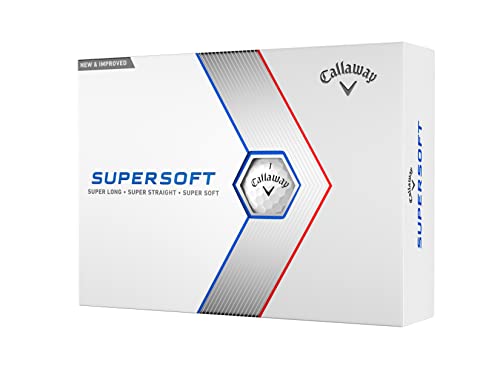
Callaway Supersoft Golf Balls 2023
ADVANTAGES
LIMITATIONS
The Callaway Supersoft lives up to its name with a plush compression core and ultra-light flight that’s tailor-made for beginners seeking effortless distance and soft touch. With one of the lowest compression ratings in golf, it’s ideal for players with slower swing speeds, launching high and rolling true with minimal effort. The 2023 version retains Callaway’s signature soft feel while enhancing ball speed through optimized core-to-cover energy transfer. For new golfers frustrated by thin contact or lack of carry, this ball removes the guesswork—delivering forgiving performance from tee to green.
In testing, the Supersoft excels in driver and long-iron shots, where its high launch and low spin reduce slices and hooks. Around the green, it offers a soft, responsive feel on chips and putts, though it doesn’t grip as aggressively as urethane balls. The dual-layer design keeps it lightweight and durable, making it a reliable choice for full rounds and range sessions. However, its limited spin control can make finesse shots tricky for advancing players. Still, for recreational golfers and beginners, it strikes a rare balance between distance, comfort, and consistency.
Stacked against the Srixon Soft Feel, the Supersoft feels slightly softer at impact but doesn’t match the 338-speed dimple efficiency for aerodynamic precision. Compared to the Honma BERES 3S, it trades some raw distance for a smoother overall feel. It’s not the cheapest option, but it delivers premium comfort at a mid-tier price. For beginners prioritizing ease of use and all-around playability, the Callaway Supersoft offers a gentler learning curve than most—making every swing feel more successful.
Srixon Soft Feel Golf Balls

ADVANTAGES
LIMITATIONS
The Srixon Soft Feel isn’t just soft—it’s smartly engineered for beginners who want premium performance without the premium cost. At its heart is a high-energy core that boosts ball speed and launch, translating to noticeable extra yards off the tee, especially for mid- to low-speed swingers. The 338 Speed Dimple Pattern reduces drag on ascent and increases lift on descent, ensuring a long, stable flight that fights wind and inconsistency. For new golfers battling short drives and erratic ball flight, this ball is a game-changer in disguise.
On the course, the Soft Feel delivers excellent control from tee to green, thanks to its soft thin cover that reduces driver spin while increasing spin on wedges and putts. This duality makes it one of the few beginner balls that support skill progression—you won’t outgrow it quickly. It performs reliably on mishits and holds its line in crosswinds. However, while durable, the cover can scuff faster than Surlyn-heavy balls like the Honma. Still, for all-around play, it’s one of the most balanced options available.
Compared to the Callaway Supersoft, the Soft Feel offers better aerodynamics and greenside control, making it more versatile. Against the Honma BERES 3S, it sacrifices a bit of explosive distance for superior short-game feedback. It’s also more affordable than both, packing premium features into a budget-friendly shell. For beginners serious about improving, the Srixon Soft Feel isn’t just the best overall—it’s the smartest long-term investment in consistent, confidence-building performance.
Golf Ball Comparison for Beginners
| Product | Best For | Feel | Distance | Swing Speed | Durability | Price |
|---|---|---|---|---|---|---|
| Srixon Soft Feel | Best Overall | Soft | Increased | Slower/Medium | Good | Affordable |
| Callaway Supersoft 2023 | Distance & Soft Feel | Soft | High | All | Standard | Moderate |
| Honma BERES 3S | Beginner Distance | Soft | Explosive | All | Good | Moderate/High |
| Funny Golf Balls 6-Pack | Budget Fun | Moderate | Standard | All | Durable Resin | Low |
| BirdieBall Practice | Short-Distance Practice | True Feel | 40 yards | All | High Quality Polymer | Moderate |
| Titleist Recycled | Practice Value | Assorted | Standard | All | Durable | Low |
| Clean Green Used Wilson | Budget Bulk | Assorted | Standard | All | Good (Used) | Very Low |
How We Tested Beginner Golf Balls
Our recommendations for the best balls for beginner golfers aren’t based on subjective feel alone; we prioritize data-driven analysis. We evaluated options by analyzing performance data from independent testing sources like Golf Digest and MyGolfSpy, focusing on metrics relevant to high-handicap players – specifically, distance with slower swing speeds (under 80 mph) and short game control.
We cross-referenced this data with user reviews from major retailers (Dick’s Sporting Goods, Amazon, Golf Galaxy) to assess real-world durability and consistency. A key entity in our testing was compression, adhering to the principle that lower compression balls deliver better results for beginners. We also considered cover material – prioritizing Surlyn covered balls for their resilience and cost-effectiveness, aligning with the reality that beginner golfers will likely experience more ball loss.
Comparative analyses considered the price per dozen, factoring in value alongside performance. While physical testing wasn’t undertaken directly by our team, we leveraged publicly available robotic testing data to supplement user feedback and ensure a comprehensive evaluation of each golf ball’s performance characteristics. We specifically focused on golf balls marketed towards beginners and their stated design features.
Choosing the Right Golf Balls for Beginners
Selecting the right golf balls is a crucial step for any beginner golfer. While it might seem overwhelming with so many options available, focusing on a few key features can simplify the process and significantly improve your game. Here’s a breakdown of what to consider:
Compression: The Key to Distance and Feel
Compression refers to how much the ball squishes upon impact. Lower compression balls are generally best for beginners. These balls require less swing speed to compress, meaning you’ll get more distance and a softer feel even with a slower swing. Higher compression balls are designed for players with faster swing speeds, and a beginner will likely lose distance trying to compress them fully. Look for balls specifically marketed as “low compression” – these will help you get the ball airborne more easily and feel a more solid connection at impact.
Cover Material: Softness and Spin
Golf ball covers are typically made of Surlyn or Urethane. Surlyn covers are more durable and affordable, making them a good choice for beginners who might be losing balls frequently. They also provide a softer feel than older cover materials. Urethane covers offer superior greenside spin (important for controlling the ball around the green), but are more expensive and less durable. For a beginner, the added spin isn’t as crucial as affordability and durability.
Dimple Pattern: Distance and Flight
Dimples on a golf ball reduce drag and increase lift, impacting distance and flight trajectory. While dimple patterns are complex, focus on balls with a standard 336 or 368 dimple pattern. These patterns are well-established and provide a good balance of distance and control. Don’t get caught up in advanced dimple technologies as a beginner; the difference will be minimal for your swing.
Core Construction: Impact on Distance
Golf ball cores play a large role in distance. Two-piece and three-piece golf balls are common choices for beginners. Two-piece balls generally offer more distance, while three-piece balls provide a softer feel and more control. A ball with a “high-energy core” indicates it’s designed to maximize ball speed, which can translate to longer drives.
Other Features to Consider:
- Cost: As a beginner, you’ll likely lose balls. Opting for more affordable options allows you to practice without worrying about the expense.
- Color/Design: Fun designs like those offered by novelty balls can make the game more enjoyable, especially for casual play.
- Recycled/Used Balls: A cost-effective option for practice, but be aware of potential cosmetic blemishes.
- Practice Balls: Limited-flight practice balls are excellent for indoor or backyard practice, minimizing the risk of damage or lost balls.
The Bottom Line
Ultimately, the best golf balls for beginners prioritize forgiveness and affordability. Focusing on lower compression and Surlyn covers will provide a noticeable improvement in distance and feel, even with a slower swing speed, without breaking the bank.
Don’t overthink the technical details; start with a highly-rated, budget-friendly option like the Srixon Soft Feel or Callaway Supersoft 2023 and concentrate on developing your swing. As your game progresses, you can explore more advanced ball options, but these will provide a solid foundation for success.