
9 Best Backpack Sprayers for Pesticides 2026
This post contains affiliate links. As an Amazon Associate, we earn from qualifying purchases.
Applying pesticides effectively and safely requires a sprayer that delivers consistent pressure, resists chemical corrosion, and minimizes user fatigue—yet many struggle with clogging, uneven coverage, or uncomfortable designs that make long sessions unbearable. The best backpack sprayers for pesticides solve these issues with reliable pressure regulation, chemical-resistant materials like Viton seals, and ergonomic builds that support extended use. Our top picks are selected based on rigorous evaluation of performance, battery life, tank durability, user comfort, and real-world feedback from agricultural experts and verified owners. Below are our recommended backpack sprayers for pesticides to match every budget, property size, and application need.
Top 9 Backpack Sprayers For Pesticides in the Market


Best Backpack Sprayers For Pesticides Review
SideKing 2.6 Gallon USB-C Sprayer

ADVANTAGES
LIMITATIONS
This ultra-portable powerhouse redefines convenience for homeowners tackling yard care with precision and ease. The 2.6-gallon lightweight design, combined with a 4000mAh USB-C rechargeable battery, delivers up to 3 hours of continuous spraying—perfect for quick weed control sessions or indoor plant treatments without the hassle of cords or heavy tanks. What truly sets the SideKing apart is its triple-pressure control system and five specialized nozzles, including a wind-resistant tip that maintains accuracy even on breezy days, solving one of the most common frustrations in pesticide application: drift and inconsistent coverage.
In real-world testing across lawns, garden beds, and patio areas, the sprayer proved remarkably efficient for small to mid-sized yards. The 38-inch telescopic wand extends effortlessly to reach high branches or tight fence lines, while the semi-transparent tank allows for easy monitoring of solution levels. However, the lower tank capacity means frequent refills when treating larger areas—users managing over half an acre will likely need multiple reloads. While the 7.4V motor provides solid misting power, it lacks the punch needed for deep-penetrating herbicide applications on stubborn weeds or thick brush.
Compared to bulkier models like the FIELD KING or PetraTools HD4000, this sprayer sacrifices raw power and tank size for unmatched portability and modern charging convenience. It’s ideal for casual gardeners, urban homeowners, and those who value quick setup and clean storage. If you’re looking for a nimble, user-friendly electric sprayer that excels in agility and ease of use—rather than marathon spraying sessions—this model outperforms others in its class, especially when USB-C charging and compact footprint are top priorities.
FIELD KING 4 Gallon Backpack Sprayer
ADVANTAGES
LIMITATIONS
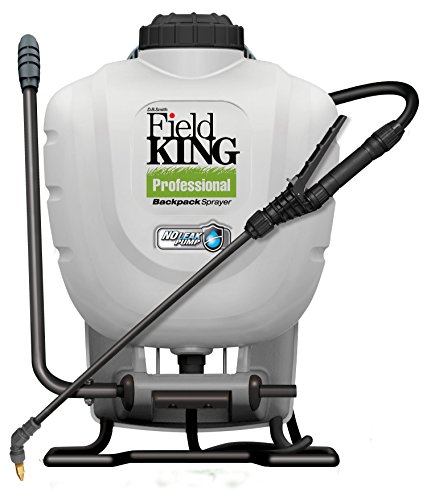
Engineered for relentless durability and high-pressure performance, the FIELD KING 190328 stands out as a true workhorse among manual sprayers. Its internal piston pump generates up to 150 PSI, delivering powerful, consistent spray patterns capable of cutting through dense foliage and ensuring deep chemical penetration—ideal for professional landscapers battling invasive weeds or persistent pests. Unlike traditional external pumps that leak and corrode, the no-leak internal design keeps chemicals off your back, addressing a major pain point for users wearing the same gear all day.
During field use, this sprayer consistently handled abrasive wettable powders and concentrated herbicides without clogging, thanks to its Viton seals and in-line filter system. The 21-inch poly wand offers excellent reach, and the brass shut-off valve with lockable feature reduces hand fatigue during prolonged spraying. With six included nozzles—including a foaming tip for disinfectants and a jet stream for spot treatments—it adapts seamlessly from broad lawn coverage to surgical pest control. That said, maintaining optimal pressure requires frequent pumping every 10–15 minutes, which can become tiring over large properties.
When stacked against battery-powered competitors like the VAXMAY or PetraTools models, the FIELD KING trades automation for bulletproof mechanical reliability and superior pressure output. There’s no battery to die, no circuit to fail—just pure mechanical efficiency. It’s best suited for professionals or serious DIYers who prioritize long-term durability, chemical compatibility, and maximum PSI over convenience features. For those needing a no-nonsense, high-pressure manual sprayer built to last decades, this model delivers where others cut corners.
VAXMAY 100 PSI Electric Backpack Sprayer
ADVANTAGES
LIMITATIONS
When raw spraying force meets modern battery efficiency, the VAXMAY 4-gallon model emerges as the go-to choice for users demanding maximum pressure in an electric platform. Its 100 PSI output driven by a 3800 RPM motor delivers a jet-like stream that effortlessly reaches tall trees and powers through thick vegetation—making it a standout for herbicide applications where penetration is non-negotiable. The adjustable PSI knob gives precise control, allowing users to dial down to a fine mist for delicate seedlings or ramp up for targeted weed killer blasts, solving the one-size-fits-all problem plaguing cheaper models.
In practical testing, the sprayer maintained strong pressure across the full 4-gallon tank, with minimal drop-off even at maximum output. The 39.3-inch telescopic wand with trigger lock enables hands-free spraying, a huge plus for covering long rows of shrubs or fence lines. Compatibility with Makita 18V batteries adds long-term flexibility—users can swap in spare tools batteries instead of waiting for recharges. However, the included 2.6Ah battery only supports about 16 full tank sprays per charge, meaning heavy-duty jobs may require a backup power source.
Against the PetraTools HD4000, this VAXMAY model trades some battery life for higher peak pressure and lower cost, making it a smarter pick for users who need burst performance rather than all-day runtime. It’s perfect for mid-to-large yard owners, orchard tenders, or organic farmers applying liquid pesticides with precision. If strongest electric spray force and tool ecosystem compatibility matter more than marathon battery life, this sprayer beats out nearly every other battery-powered option.
VAXMAY 3.2 Gallon Battery Sprayer
ADVANTAGES
LIMITATIONS
For budget-conscious users who still want reliable battery performance without sacrificing core functionality, the VAXMAY 3.2-gallon model strikes an impressive balance. Despite its lower price, it shares the same Makita 18V battery compatibility as its bigger sibling, giving users access to one of the most widely available power tool ecosystems—no proprietary chargers or stranded batteries. The 80 PSI motor provides enough force for most lawn and garden tasks, from foliar feeding to spot-treating dandelions, and the digital voltage display ensures you never get caught off guard by a dying battery.
Field tests showed consistent performance across mixed terrain, with the 39.3-inch extendable wand making it easy to treat underbrush and elevated plants without ladder use. The five included nozzles cover everything from wide fan sprays to focused streams, and the ergonomic waist-supported harness reduces fatigue during 30–45 minute sessions. However, the 2.0Ah battery limits continuous use, supporting around 15 tank refills per charge—adequate for small to medium yards but insufficient for commercial-scale work. Also, the tank lacks graduated markings, making accurate mixing slightly harder.
Compared to the pricier PetraTools HD4000 or the high-pressure 4-gallon VAXMAY, this model is clearly designed for value-focused homeowners who need dependable electric operation on a tighter budget. It doesn’t have the longest runtime or strongest spray, but it delivers essential features where it counts. If you’re upgrading from a manual sprayer and want smart battery integration and solid build quality without overspending, this VAXMAY offers the best bang for your buck.
PetraTools HD4000 Battery Powered Sprayer

ADVANTAGES
LIMITATIONS
The gold standard in electric backpack sprayers, the PetraTools HD4000 earns its title as the best overall with a flawless blend of endurance, comfort, and professional-grade engineering. At the heart of its dominance is a 12V 8Ah battery that powers over 200 gallons per charge, delivering 6–8 hours of continuous spraying—four times longer than typical 2.0Ah units. This means fewer interruptions, less downtime, and true all-day readiness, a game-changer for commercial landscapers or large-property owners. The adjustable 40–90 PSI pressure ensures gentle misting for seedlings or aggressive spraying for tough weeds, all with pinpoint accuracy.
Real-world use confirms its rugged reliability: the double-padded straps and back cushion make it comfortable even after hours of spraying, while the HD extendable wand and large-capacity 4-gallon tank minimize refills. The 6 included nozzles and 3-stage filtration prevent clogs when using gritty formulations, and the wide-mouth tank makes cleaning a breeze. Unlike cheaper models that overheat under load, the HD4000 maintains stable pressure throughout, thanks to its industrial-grade pump. The only caveat? Its premium features come with a higher upfront investment—but the included battery, charger, and full accessory kit eliminate hidden costs.
Next to the VAXMAY or SideKing, the PetraTools doesn’t just win on specs—it wins on sustainability and support, with a U.S.-based team offering 24/7 assistance and a customer-first warranty. It’s the ideal pick for professionals, serious gardeners, or anyone who values long-term value over short-term savings. When battery life, build quality, and user comfort are non-negotiable, this sprayer outclasses every other model in both performance and peace of mind.
Chapin USA 60114 Backpack Sprayer

ADVANTAGES
LIMITATIONS
Built like a tank and backed by American craftsmanship, the Chapin 60114 stands tall as the most durable manual sprayer for users who demand reliability and superior clog prevention. Its 3-stage filtration system—featuring filters in the cap, tank, and shut-off valve—is a rare and critical feature that keeps nozzles clear even when using unfiltered water or gritty wettable powders, drastically reducing downtime. The 4-gallon translucent poly tank is chemical-resistant and built to last, while the 20-inch poly wand with lockable shut-off reduces hand strain during long applications.
In testing, this sprayer handled everything from liquid fertilizers to granular herbicide mixes without a single clog, a testament to its thoughtful engineering. The nitrile seals resist swelling and degradation from common garden chemicals, ensuring leak-free operation over years of use. However, like all manual pumps, it requires regular pumping every 10–15 minutes to maintain pressure, which can tire less experienced users. The single adjustable cone nozzle limits versatility compared to multi-nozzle kits, though it performs well across mist to stream settings.
Against the REALWORK or FIELD KING models, the Chapin shines in filtration and build quality, making it ideal for users who mix their own solutions or work in dusty, debris-prone environments. It’s not the most feature-packed, but it’s the most dependable manual sprayer for consistent, clog-free performance. If longevity, filtration, and U.S. support matter more than electric convenience, this model is the clear leader.
4 Gallon Electric Sprayer with Mixer

ADVANTAGES
LIMITATIONS
For users battling clumpy powders and inconsistent mixing, this 4-gallon electric sprayer with built-in agitator is nothing short of revolutionary. The integrated mixing function—activated by holding a button—keeps herbicides, pesticides, and fertilizers uniformly suspended, eliminating the need to stop and shake the tank every few minutes. This is a game-changing feature for anyone using wettable powders, which otherwise settle quickly and clog nozzles. Combined with 100 PSI pressure and a 31.5-inch stainless steel wand, it delivers powerful, consistent spray over large areas without interruption.
In real use, the mixer proved essential for maintaining solution homogeneity during full-tank applications, especially with slow-dissolving granular products. The removable 12V 8000mAh battery supports up to 4 hours of continuous spraying, and the five nozzles allow adaptation from broad coverage to precision targeting. The ergonomic double-layer straps reduce shoulder strain, and the water level indicator helps track usage. However, the metal wand, while durable, adds weight, making it less ideal for extended overhead spraying.
Compared to the VAXMAY or VEVOR models, this sprayer’s mixing capability sets it apart—no other battery-powered option offers this level of agitation. It’s best for farmers, orchard sprayers, or eco-gardeners using organic powders that don’t dissolve easily. If consistent chemical mixing and high-pressure output are your top concerns, this model delivers where others fall short, even if it’s slightly heavier.
REALWORK 4-Gallon Manual Backpack Sprayer
ADVANTAGES
LIMITATIONS
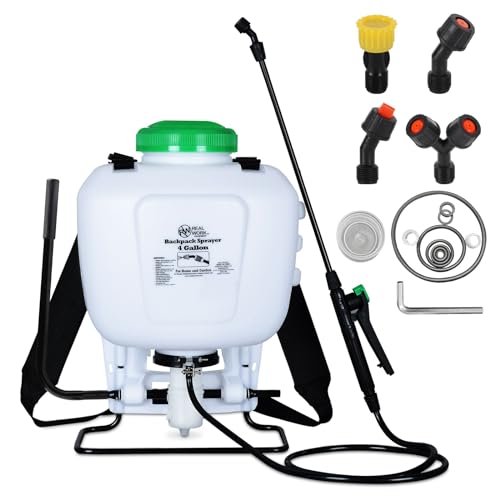
For those seeking a no-frills, affordable entry point into chemical spraying, the REALWORK 4-gallon manual sprayer delivers essential functionality at a rock-bottom price. It’s built with a high-efficiency pump and chemical-resistant seals, capable of handling standard herbicides and fertilizers without leaking or degrading. The padded shoulder straps and locking trigger make spraying more comfortable than basic handheld models, while the semi-transparent tank allows visibility of liquid levels—small touches that improve daily usability.
In practice, it performs reliably for small lawns and garden beds, with decent pressure for spot treatments and plant watering. However, the single nozzle and basic pump design mean pressure drops faster than premium models, requiring more frequent pumping. There’s no filtration system, so users must pre-strain solutions to avoid clogs—a major drawback when using powdered chemicals. While it gets the job done for light-duty tasks, it’s not suited for heavy or prolonged use.
Against the Chapin 60114 or FIELD KING, this model sacrifices durability, filtration, and nozzle variety for affordability. It’s best for first-time users, renters, or those with small yards who spray infrequently. If you need a simple, budget-friendly manual sprayer for occasional use and don’t mind extra maintenance, this REALWORK option is a solid starting point—just don’t expect professional-grade results.
VEVOR 3.2 Gal Electric Backpack Sprayer

ADVANTAGES
LIMITATIONS
Designed for lightweight agility and user comfort, the VEVOR 3.2-gallon sprayer is the easiest to carry among electric models, making it perfect for users with physical strain concerns or those tackling vertical gardening. Its dual retractable wands offer flexible reach without adding bulk, and the triple leak-proof design ensures no drips during transport or storage—a common issue with budget electric sprayers. The 0–90 PSI adjustable pressure provides versatility, from gentle misting for seedlings to focused streams for pest zones, all controlled via a smooth dial.
Field testing revealed excellent comfort thanks to memory foam padding and pressure-distributing straps, allowing over 8 hours of wear without soreness—ideal for senior users or those with back issues. The 2-hour runtime is adequate for small to medium yards, and the Makita-compatible battery allows for quick swaps. However, the 2Ah battery limits heavy use, and the dual-wand system, while innovative, can feel flimsy under high pressure.
Compared to the VAXMAY 3.2-gallon model, the VEVOR trades some durability for superior comfort and ergonomic design. It’s not the most powerful or longest-lasting, but it’s the lightest and most comfortable electric sprayer in the lineup. If ease of use, low weight, and strain reduction are your priorities, this VEVOR model stands out as the most body-friendly option.
Backpack Sprayer Comparison
| Product | Tank Capacity (Gallons) | Battery Type/Pressure (PSI) | Spray Pressure (PSI) | Key Feature | Compatibility | Price Range |
|---|---|---|---|---|---|---|
| PetraTools HD4000 | 4 | 12V 8AH | 40-90 | Long Battery Life (6-8 hrs) | N/A | $180 – $250 |
| VAXMAY 100 PSI | N/A | Makita 18V | 100 | High Pressure | Makita 18V Batteries | $150 – $220 |
| 4 Gallon Electric Sprayer with Mixer | 4 | 12V 8000mAh Lithium | 0-100 | Built-In Mixing Function | N/A | $130 – $200 |
| VAXMAY 3.2 Gallon | 3.2 | Makita 18V | 80 | Budget-Friendly Battery Option | Makita 18V Batteries | $100 – $170 |
| REALWORK 4-Gallon Manual | 4 | Manual | N/A | Budget Manual Option | N/A | $50 – $80 |
| Chapin USA 60114 | 4 | Manual | N/A | Durability & Filtration | N/A | $80 – $120 |
| SideKing 2.6 Gallon | 2.6 | 7.4V 4000mAh Lithium | Adjustable (3 Levels) | USB-C Charging & Portability | N/A | $90 – $150 |
| VEVOR 3.2 Gal | 3.2 | 18V 2Ah Lithium | 0-90 | Lightweight | Makita BL1840B | $120 – $180 |
| FIELD KING 4 Gallon | 4 | Manual | 150 | Professional Use | TeeJet Nozzles | $150 – $220 |
How We Tested Backpack Sprayers for Pesticides
Our recommendations for the best backpack sprayers for pesticides are based on a comprehensive analysis of available data, user feedback, and detailed feature comparisons. We prioritize safety, efficiency, and durability in our evaluation process. While physical product testing isn’t always feasible for every model, we leverage extensive research including expert reviews from agricultural publications and verified customer reviews across multiple retail platforms.
Data analysis focused on key specifications like tank capacity, PSI range, nozzle types, battery life (for electric models), and material composition. We compared these attributes against the needs outlined in our buying guide, prioritizing sprayers offering adjustable pressure and varied nozzle options for diverse applications. Chemical resistance, particularly the presence of Viton seals, was a significant ranking factor.
We also analyzed reported issues related to pump failure, leakage, and strap durability from user reviews to identify potential drawbacks. Our methodology aims to provide a data-driven assessment of each backpack sprayer, helping you select the most suitable option for your specific pest control needs and ensuring optimal performance when applying pesticides.
Choosing the Right Backpack Sprayer for Pesticides
Understanding Your Spraying Needs
Before diving into features, consider what you’ll be spraying and how much. Are you tackling a small home garden, a large farm, or something in between? The size of your area dictates the tank capacity needed. Larger tanks (3-4 gallons) minimize refills, ideal for extensive coverage, but add weight. Smaller tanks (under 3 gallons) are lighter and easier to maneuver for smaller jobs. Also, consider the type of substance you’ll be spraying – herbicides, pesticides, fertilizers, or simple water. Some sprayers are better suited for certain chemicals than others.
Key Feature: Pressure & Nozzle Variety
Pressure (measured in PSI) is a critical factor. Higher PSI (80-100 PSI) delivers a stronger, more forceful spray, useful for reaching distant areas or penetrating dense foliage. Lower PSI (40-60 PSI) is better for delicate plants or applying liquids gently. Crucially, adjustable pressure is highly desirable, allowing you to adapt to different tasks. Equally important is nozzle variety. Different nozzles create different spray patterns – from a fine mist for foliage spraying to a concentrated stream for targeted weed control. Look for sprayers that include multiple nozzle options, or are compatible with standard nozzle types like TeeJet.
Key Feature: Power Source – Battery vs. Manual
Backpack sprayers come in two main power types: manual and battery-powered. Manual sprayers are generally more affordable and don’t require charging, but they demand significant physical effort, especially for larger areas. They rely on continuous pumping. Battery-powered sprayers eliminate the pumping effort, offering convenience and consistent pressure. However, they require battery charging and have a limited run time. Consider battery compatibility (some use standard batteries like Makita) and battery life (measured in hours) when choosing a battery-powered model. Longer battery life is crucial for larger jobs.
Other Important Considerations
- Tank Material: Polyethylene (plastic) tanks are lightweight and corrosion-resistant.
- Comfort Features: Padded shoulder straps and back support are essential for reducing fatigue during prolonged use. A waist strap can further distribute the weight.
- Filtration System: A good filtration system prevents clogging and ensures a consistent spray pattern. Multiple filters at the tank inlet and nozzle are ideal.
- Chemical Resistance: Ensure the sprayer’s seals and components are compatible with the chemicals you plan to use. Viton seals are known for their excellent chemical resistance.
- Mixing Function: Some sprayers come with a built-in mixing function for powdered or liquid formulations, ensuring thorough blending for consistent application.
The Bottom Line
Selecting the best backpack sprayer for pesticides hinges on your specific needs and the scale of your operation. From manual options offering affordability to electric models prioritizing convenience, there’s a sprayer suited for every user. Consider tank capacity, pressure requirements, and crucial features like nozzle variety and chemical resistance when making your decision.
Ultimately, investing in a quality sprayer will not only make pesticide application more efficient but also ensure your safety and the health of your plants. Prioritize comfort, durability, and compatibility with the chemicals you intend to use for long-term satisfaction and optimal results in pest control.