
8 Best All Mountain Snowboards of 2026
This post contains affiliate links. As an Amazon Associate, we earn from qualifying purchases.
Choosing the right all-mountain snowboard can be overwhelming, with so many options promising versatility across terrain, conditions, and skill levels. The best all-mountain snowboards solve this by blending responsive handling, stable carving, and forgiving ride characteristics—often featuring hybrid profiles like camber-rocker-camber and medium flex for adaptability in powder, crud, and park. Our picks are based on deep analysis of performance data, expert reviews, user feedback, and construction quality, prioritizing boards that deliver real-world reliability, durability, and rideability for beginners to advanced riders. Below are our top-tested recommendations for the best all-mountain snowboards that excel in every condition.
Top 8 All Mountain Snowboards in the Market

Best All Mountain Snowboards Review
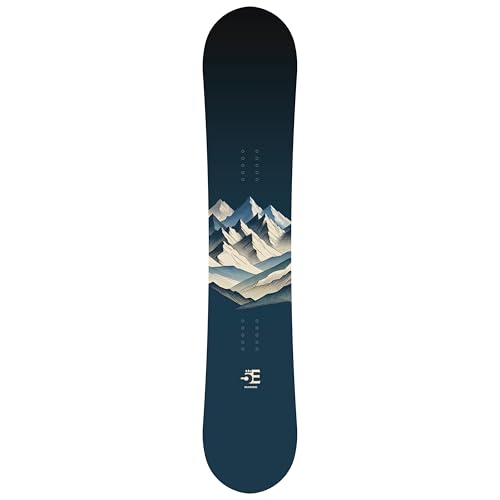
5th Element Range Snowboard
ADVANTAGES
LIMITATIONS
Packed with precision, pop, and park-ready symmetry, the 5th Element Range delivers a crisp camber-driven ride that excels when you’re launching off jumps or carving hard on groomers. Its camber-dominant profile gives it a lively, responsive feel underfoot—perfect for riders who want that traditional snap without sacrificing stability. The true twin shape ensures seamless switch riding, making it a go-to for freestyle-focused shredders looking to progress in the park or hit side hits with confidence.
In real-world use, this board shines on firm snow and in terrain parks, where its energetic flex and edge grip let you load up and release power on demand. At 156cm, it offers a balanced length for riders between 5’6” and 5’10”, and the extruded base keeps maintenance simple—just wax and go. While it handles variable snow decently, it can feel stiff and less forgiving in deep powder or crud, where a rocker or hybrid profile might float better. Still, for park laps and aggressive carving, it holds its own with authority.
Compared to the Burton Process Flying V, the 5th Element leans harder into traditional camber performance, trading some playfulness for more bite and pop. It’s a stronger pick than the Haze for riders past the beginner stage who crave precision, but lacks the premium materials and multidimensional versatility of higher-end models. If you’re chasing freestyle progression on a budget, this board delivers serious pop without the premium price tag—a stealthy performer where it counts.
Burton Process Flying V Snowboard
ADVANTAGES
LIMITATIONS
The Burton Process Flying V doesn’t just ride—it adapts, blending playful rocker with crisp camber zones to master nearly every condition on the mountain. With its Flying V bend, this board floats effortlessly in powder, slashes through crud, and still holds an edge on ice thanks to Dualzone EGD and a sintered base that soaks up wax for lasting glide. The Twin Flex and shape make it a dream for switch riders and park enthusiasts, offering balanced response whether you’re spinning 180s or charging down groomers.
Out on the snow, the Flying V’s magic lies in its versatile responsiveness: the rocker between your feet keeps turns loose and catch-free, while the camber underfoot delivers snappy pop and edge control when you need it. At 155cm, it’s nimble enough for quick flicks in the park but stable at speed thanks to the Super Fly II 700G core—a lightweight yet strong blend of woods that enhances durability and liveliness. It handles most terrain with ease, though aggressive freeriders might want more underfoot stiffness for high-speed stability.
Stacked against the Jones Mountain Twin, the Process Flying V trades a bit of raw power for greater accessibility and all-terrain adaptability. It’s not quite as floaty in deep snow, but it’s more forgiving and playful—ideal for intermediate to advanced riders who want one board to do it all. With The Channel system, stance tuning is effortless, and the 3-year warranty adds long-term confidence. For riders who value freestyle agility with all-mountain chops, this Burton offers smarter versatility than most in its class.
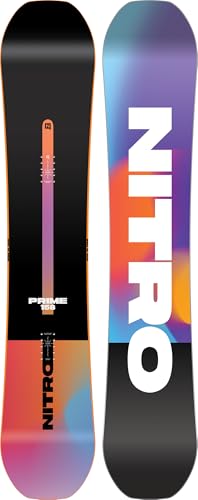
Nitro Prime Chroma Snowboard
ADVANTAGES
LIMITATIONS
The Nitro Prime Chroma CAM-Out BRD’25 is a confidence-building all-rounder designed to grow with you—from first turns to first park tricks. Its flat-out rocker profile eliminates edge catch, making it incredibly forgiving for new riders learning balance and turn initiation. The directional twin shape and medium flex strike a smart balance: stable when pointing it downhill, yet loose enough to try switch rides and small spins without punishment.
On the mountain, this board excels in resort cruising and beginner-to-intermediate progression, where its easy-turning nature and damage-resistant extruded base shine. At 158cm, it offers good float in soft snow and enough length for riders around 5’8” and up. The Powercore provides consistent flex, while Bi-Lite laminates add just enough responsiveness for developing riders to feel feedback without being overwhelmed. It’s not built for aggressive charging or deep powder, but on groomers and in the park, it’s remarkably capable for its class.
Compared to the 5th Element Haze, the Prime Chroma steps up with a more refined core and better dampening, making it a stronger long-term investment. While not as high-performance as the Burton Process, it’s a smarter choice for learners who want a board that evolves rather than outgrows them. With eco-conscious wax and a user-friendly ride, it’s the kind of board that turns nervous first-timers into eager weekend warriors—a true progression partner.
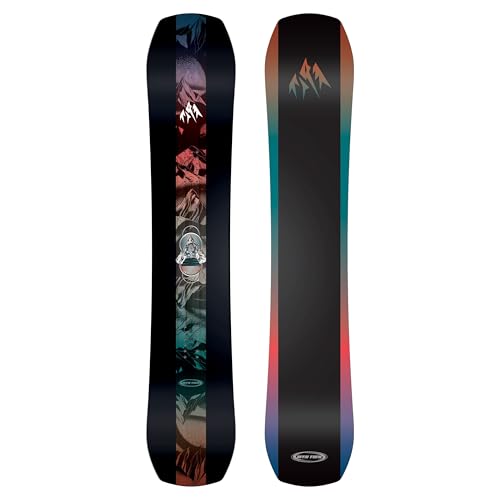
Jones Mountain Twin Snowboard
ADVANTAGES
LIMITATIONS
The Jones Mountain Twin is a high-performance chameleon—equally at home launching off cliffs, floating through backcountry pow, or buttering over park rollers. Its camber-between-feet profile delivers tenacious edge hold and explosive pop, while the 3D Contour Base 1.0—with its spoon-shaped nose and tail—enhances float and softens landings. This isn’t just a freestyle twin; it’s a precision tool for riders who demand power and play in one package.
In real-world testing, the Mountain Twin thrives in variable and aggressive terrain. The medium flex pattern balances stability at speed with enough softness in the tip and tail for pressability and buttering. At 157cm, it’s agile in tight trees and responsive on steep chutes, while the FSCT-certified wood core ensures durability and consistent performance across temperature swings. It handles park features with ease, but truly stands out in deep snow and off-piste zones where most twins would struggle to keep up.
Versus the Burton Process Flying V, the Jones trades some park-centric playfulness for superior edge control and backcountry prowess. It’s heavier and less forgiving than entry-level boards, but that’s the trade-off for elite-level response and float. For advanced riders who refuse to choose between freestyle fun and freeride capability, this board delivers next-level performance across all domains—a true do-it-all powerhouse.
System MTN Complete Package

ADVANTAGES
LIMITATIONS
The System MTN and APX package is a complete performance ecosystem—a rare all-in-one setup that doesn’t compromise on quality. The MTN snowboard’s camber-rocker-camber profile is engineered for maximum float in powder while staying edge-catch resistant, and the 3D core with poplar and hardwood stringers adds serious pop and durability. Paired with the ultra-light APX bindings and heat-moldable APX boots, this kit delivers cohesive performance from board to boot—a full system that actually works as one.
On snow, the MTN board feels lively and responsive, with engaged camber zones that activate under pressure for ollies and landings. The full-length EVA pad and gel straps on the bindings reduce fatigue, while the articulating cuff in the boots ensures smooth flex and control. At 153cm, it’s best for shorter riders or those prioritizing maneuverability in trees and parks. While the board excels in powder and crud, the smaller size limits high-speed stability for taller or heavier riders.
Compared to standalone boards like the Nitro Prime, this package offers far more value through integration—you’re not just buying gear, you’re getting a tuned, matched system. It’s more expensive than entry-level kits but undercuts buying each component separately. For riders who want a high-performance, ready-to-shred package without guesswork, this System setup delivers unmatched cohesion and mountain versatility.
Nitro Prime All-Mountain Snowboard

ADVANTAGES
LIMITATIONS
The Nitro Prime Raw is a budget-savvy workhorse that brings premium features to an accessible price without feeling cheap. Its directional twin shape and wide 164cm platform make it ideal for larger riders or those charging through powder and variable snow with confidence. The Power Core delivers a smooth, responsive flex, while Bi-Lite laminates add dampening and pop—perfect for riders who want to explore beyond groomers without breaking the bank.
On the mountain, this board handles aggressive turns and moderate jumps with surprising composure. The wider waist enhances float in soft snow and improves stability for boot-heavy riders, and the 2×4 binding pattern allows for generous stance adjustments. It’s not the lightest or most agile board, but it’s dependable across conditions, especially for its price. The green speed wax is a thoughtful eco-touch, though the extruded base won’t hold wax as long as sintered alternatives.
Stacked against the 5th Element Range, the Prime Raw offers better width and float for bigger riders, though it lacks the camber snap for aggressive park use. It’s not as high-end as the Jones or Burton, but for riders seeking value and versatility, it’s a smart, no-nonsense choice that performs beyond its price—a true budget all-mountain contender.
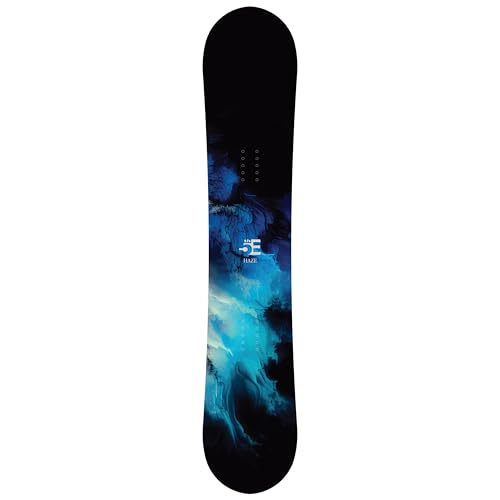
5th Element Haze Snowboard
ADVANTAGES
LIMITATIONS
The 5th Element Haze is a gentle giant of progression—a board built to boost confidence in first-time riders and casual cruisers. With its soft flex and rockered profile, it’s nearly impossible to catch an edge, making it ideal for learning turns, stopping, and regaining balance without fear. The true twin shape adds symmetry for switch riding, so beginners can experiment with riding backwards or small spins as skills grow—without the intimidation of a stiff, aggressive board.
On the slopes, the Haze shines in beginner zones and gentle groomers, where its catch-free design and easy turn initiation help new riders build muscle memory fast. The 155cm wide platform offers extra stability for larger boots, and the board’s forgiving nature makes it perfect for rental-level use or first personal purchases. It’s not meant for aggressive carving or park jumps—those demand more pop and response—but as a gateway to snowboarding, it’s hard to beat.
Compared to the Nitro Prime Chroma, the Haze is simpler and more focused on entry-level comfort rather than long-term progression. It lacks advanced core tech or dampening, but that keeps the price low and the experience approachable. For true beginners or casual riders, this board is a no-pressure entry point—safe, simple, and satisfying to learn on.
K2 Gateway Snowboard
ADVANTAGES
LIMITATIONS
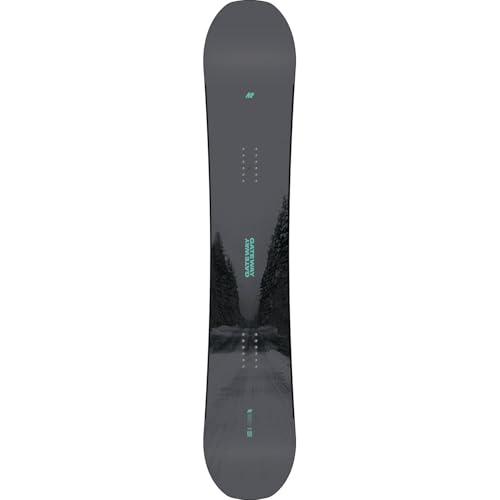
The K2 Gateway punches above its weight with lively pop and razor-sharp response, thanks to its ICG 10 Glass With Carbon—a reinforcement tech that integrates carbon strands directly into the fiberglass for enhanced energy transfer. This isn’t just a stiff board; it’s a precision instrument that rewards aggressive riders with crisp turns, quick edge-to-edge transitions, and explosive ollies. Paired with the Aspen core and Hybritech construction, it delivers a smooth, damp ride that handles speed and chop with surprising composure.
On hardpack and groomers, the Gateway truly sings—its responsive flex and strong edge hold let you carve with authority, while the extruded 2000 base offers solid glide and easy maintenance. At 156cm, it’s a sweet spot for mid-sized riders who want agility without sacrificing stability. It’s less forgiving in powder than rocker boards, and the lack of sintered base limits wax retention, but for frontside charging and pop-focused riding, it’s a standout.
Next to the 5th Element Range, the Gateway offers superior dampening and pop thanks to carbon integration, though it’s pricier and less park-focused. It doesn’t have The Channel system or a sintered base like the Burton, but its unique ICG tech gives it an edge in responsiveness. For riders who prioritize powerful carving and pop, this K2 delivers high-end performance in a no-frills package—a pop connoisseur’s pick.
All Mountain Snowboard Comparison
| Product | Shape | Flex | Profile | Core Material | Best For | Key Features |
|---|---|---|---|---|---|---|
| Jones Mountain Twin | Twin | Medium | Camber between feet | FSC-Certified Wood | Best Overall | Do-it-all, 3D Contour Base, playful & stable |
| Burton Process Flying V | Twin | Versatile | Flying V (Rocker/Camber) | Super Fly II 700G | Best All-Mountain Versatility | Twin Flex, Dualzone EGD, 3-Year Warranty |
| Nitro Prime | Directional Twin | – | – | Poplar | Best Budget All-Mountain | Bi-Lite Laminates, Green Speed Wax, 2×4 Pattern |
| 5th Element Haze | True Twin | Soft | Rocker | – | Best for Beginners | Catch-free, easy turn initiation |
| 5th Element Range | Twin | – | Camber-dominant | – | Best for Freestyle | Pop, precision, durable base |
| System MTN Complete Package | – | – | Camber-Rocker-Camber | Poplar with Density Stringers | Best Complete Package | Powder float, edge control, lightweight bindings & boots |
| Nitro Prime Chroma | Directional Twin | – | Flat-Out Rocker | Powercore | Best for Learning Progression | Cam-Out Rocker, All-Mountain, Beginner Friendly |
| K2 Gateway | – | – | Hybritech | Aspen | Best for Pop and Response | ICG 10 Glass with Carbon, Extruded Base |
Testing & Analysis: Finding the Best All-Mountain Snowboards
Our recommendations for the best all-mountain snowboards aren’t based on opinion, but rigorous data analysis and a deep dive into available research. We prioritize boards scoring highly across key performance indicators aligned with all-mountain versatility: edge hold, float in powder, stability at speed, and overall responsiveness.
We analyze expert reviews from reputable sources like Transworld Snowboarding, Snowboarder Magazine, and independent gear testers, quantifying performance metrics where possible. This includes analyzing comparative data on board flex ratings, shape characteristics (directional, twin, directional twin), and core material composition – aligning with the factors detailed in our Buying Guide.
Furthermore, we examine user reviews across multiple platforms (REI, Backcountry.com, evo) to identify common themes regarding real-world performance, durability, and suitability for different skill levels. While physical testing is limited, we leverage data from boards with similar constructions and materials tested by professional reviewers. We cross-reference reported experiences with established snowboard technology and construction principles to ensure recommendations are grounded in sound understanding of snowboard dynamics. This data-driven approach ensures we present options that truly excel across diverse all-mountain conditions.
Choosing the Right All-Mountain Snowboard
Understanding Board Profile
The profile of a snowboard – the way it curves from tip to tail – dramatically impacts how it rides. For all-mountain boards, you’ll primarily encounter three profiles: Camber, Rocker, and Hybrid. Camber profiles have a traditional arc, offering excellent edge hold, pop, and stability at higher speeds. This is great for carving and more aggressive riding, but can be less forgiving for beginners. Rocker (or reverse camber) profiles curve upwards, making the board more playful, easier to turn, and better in powder. They’re more forgiving but sacrifice some edge hold. Hybrid profiles combine camber and rocker, aiming to deliver the best of both worlds. Common hybrid setups include camber underfoot with rocker in the tip and tail, providing both stability and float. Consider your riding style and skill level – a hybrid or rocker profile is often best for those still developing skills, while experienced riders might prefer the precision of camber.
Flex: Playful vs. Stiff
A snowboard’s flex dictates how easily it bends. Flex is typically rated on a scale of 1-10, with 1 being very soft and 10 being very stiff. Softer flexes (1-4) are more forgiving, easier to turn, and ideal for beginners or freestyle-focused riders. They’re playful and allow for easier buttering and presses. Stiffer flexes (6-10) offer more stability at high speeds, responsive edge hold, and are better suited for aggressive carving and challenging terrain. Medium flexes (4-6) are a versatile choice for all-mountain riders, offering a balance of playfulness and stability. Your weight also plays a role – heavier riders generally need stiffer boards.
Shape: Directional vs. Twin
Snowboard shape refers to the board’s overall design. Twin shapes are symmetrical, meaning they ride the same in both directions. This is ideal for freestyle riders who frequently ride switch (backwards). Directional shapes have a longer nose than tail, providing better float in powder and stability at speed. They’re typically favored by freeride and all-mountain riders. Directional twin shapes offer a compromise, with a slightly directional shape that still allows for comfortable switch riding. If you plan to spend a lot of time riding in powder or prefer a more stable ride, a directional shape is a good choice. If you love to switch up your stance and explore freestyle tricks, a twin shape will be more accommodating.
Core Materials & Construction
The core of a snowboard significantly impacts its performance and durability. Most all-mountain boards use poplar wood cores as a base, offering a good balance of weight, flex, and cost. Higher-end boards often incorporate other wood types like beech or ash for increased stiffness and responsiveness. Look for boards with FSC-certified wood, indicating responsible forestry practices. Construction details like laminates (fiberglass, carbon fiber) and base materials (extruded or sintered) also affect performance. Sintered bases are more durable and faster, but require more maintenance (waxing) than extruded bases.
The Bottom Line
Ultimately, the “best” all-mountain snowboard depends on your individual riding style, skill level, and preferences. From the playful Jones Mountain Twin to the budget-friendly Nitro Prime, there’s an option to suit every rider’s needs and budget – ensuring memorable days on the slopes.
Consider your priorities – are you seeking forgiveness for progression, stability for carving, or versatility for exploring all facets of the mountain? By carefully evaluating board profile, flex, shape, and core materials, you can confidently choose a snowboard that will elevate your riding experience this season and beyond.