
8 Best Golf Swing Trackers of 2026
This post contains affiliate links. As an Amazon Associate, we earn from qualifying purchases.
Many golfers struggle to identify flaws in their swing because they lack access to real-time, accurate data that reveals the root causes of inconsistent shots. The best golf swing trackers solve this by delivering precise metrics like club speed, launch angle, and spin rate—paired with intuitive apps that turn raw data into actionable insights for faster improvement. We evaluated each model based on data accuracy, range of metrics, app functionality, portability, and value, cross-referencing expert reviews, user feedback, and performance benchmarks to ensure our picks meet the needs of beginners, amateurs, and serious players alike. Below are our top-tested recommendations for the best golf swing trackers across every category and budget.
Top 8 Golf Swing Trackers in the Market
Best Golf Swing Trackers Review
PHIGOLF Swing Stick Simulator
ADVANTAGES
LIMITATIONS
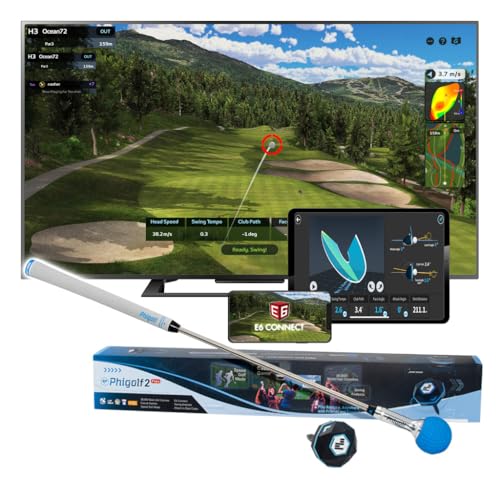
The PHIGOLF stands out as a space-savvy indoor simulator that brings pro-level swing analysis into your living room. With its ultra-lightweight 9.8g USB-C sensor and a 27.6-inch steel swing stick, it’s engineered for realistic feedback without needing a net or ball, making it ideal for tight spaces. Its seamless Bluetooth pairing and compatibility with the E6 Connect app transform any corner into a virtual driving range, tackling the #1 pain point for urban golfers: limited practice space.
In real-world testing, the PHIGOLF shines brightest when used indoors with the included swing stick—delivering smooth 3D swing path visuals and responsive motion tracking across over 38,000 downloadable courses. While it supports outdoor use with real clubs (just insert the sensor), accuracy depends heavily on lighting and surface stability, and it lacks spin rate measurement—limiting full launch data. Still, for indoor form checks and casual simulation, it handles diverse swing types with reliable motion capture.
Compared to launch monitors like the Rapsodo MLM2PRO, the PHIGOLF trades advanced ball flight metrics for unmatched portability and ease of setup. It’s not built for tour-level data, but for beginners, travelers, or families wanting golf fun at home, it delivers exceptional value. While the MLM2PRO offers deeper analytics, the PHIGOLF wins on accessibility and space efficiency, making it the top pick for true indoor-only training.
Rapsodo Mobile Launch Monitor
ADVANTAGES
LIMITATIONS
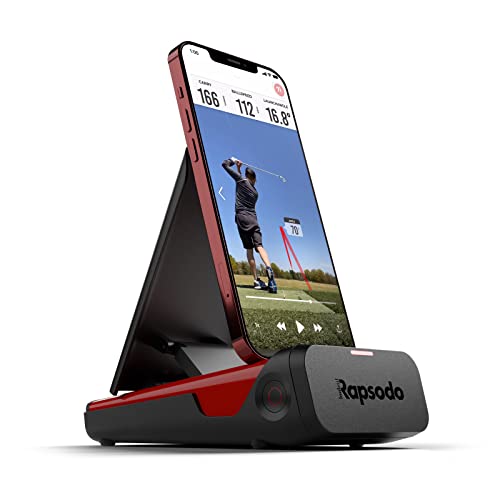
Rapsodo’s original mobile launch monitor punches well above its weight class with tour-accurate ball speed, club speed, and launch angle readings packed into a pocket-sized device. Designed exclusively for iPhone and iPad users, it leverages your device’s camera and GPS to deliver real-time shot tracers and scatter mapping, solving a major frustration: getting pro insights without pro prices. Its GPS satellite view turns any backyard or range into a data-rich training ground.
During field testing, the Rapsodo proved remarkably consistent on both indoor mats and outdoor turf, capturing shot shape, carry distance, and dispersion patterns with minimal setup. It works with real golf balls and doesn’t require special stickers or mats—just place it 6–8 feet behind the ball. However, it struggles in low-light conditions and can’t measure spin rate, which limits full ball flight modeling. Still, for mid-handicappers seeking actionable feedback, it delivers where it counts: swing consistency and distance control.
When stacked against the MLM2PRO, this model offers 80% of the performance at less than a third of the cost—making it the smart choice for budget-conscious players who still want real data. While the MLM2PRO adds spin and axis tracking, this version is more than enough for most amateurs refining their full swing. It’s the best blend of value and functionality for iPhone users serious about improvement without overspending.
Golf Pad TAGS System

ADVANTAGES
LIMITATIONS
The Golf Pad TAGS system redefines budget-friendly game tracking with a dead-simple, battery-free design that automatically logs every shot. Slap the tiny RFID tags onto your club grips, tap your phone, and start playing—no sensors on clubs, no charging, no fuss. It solves the biggest hurdle for casual golfers: tracking performance without changing how you play.
In real-world rounds, the system reliably detects club usage and shot sequences, feeding data like actual carry distances, fairways hit, and greens in regulation directly to the Golf Pad app. The automatic tagging works best on flat, open courses; tight tree lines or rapid swings can cause missed detections. It doesn’t capture swing mechanics or ball flight—just outcomes—but for score-focused players who want to spot trends, it’s incredibly useful. The lack of video or motion analysis keeps it light, but that’s by design.
Compared to the Blast or Arccos systems, Golf Pad TAGS is less detailed but far more affordable and easier to set up. While Arccos offers AI-powered caddie advice and Blast delivers swing metrics, this system is for weekend warriors who want basic stats without complexity. It doesn’t compete on depth, but as a no-maintenance, low-cost entry point, it’s unmatched for pure round tracking.
Rapsodo MLM2PRO Launch Monitor
ADVANTAGES
LIMITATIONS
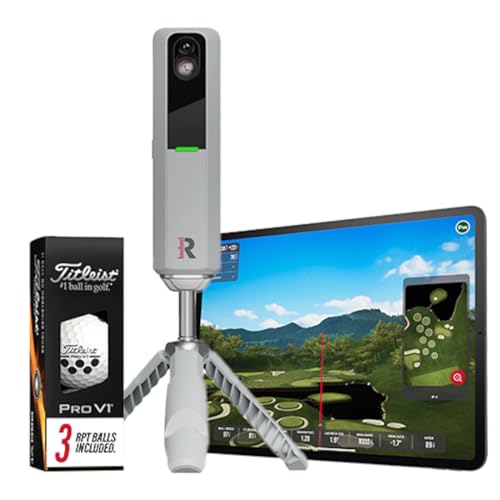
The Rapsodo MLM2PRO is the undisputed powerhouse of mobile launch monitors, delivering 13 pro-grade metrics—including spin rate, spin axis, and smash factor—with tour-level precision. Its cutting-edge optical system captures full ball flight using real golf balls, both indoors and out, eliminating the need for projected simulations or special sensors on clubs. For golfers who demand complete data transparency, this is the gold standard.
Testing reveals near-flawless accuracy across launch conditions, with consistent tracking even on low, punchy irons and high-draw drivers. Paired with apps like E6 or Rapsodo’s own simulator, it creates a true home golf studio experience, complete with realistic course play and swing comparisons. The only real limitation? It requires a minimum 7-foot ceiling and 8 feet of backswing clearance, making it less ideal for cramped apartments. But for serious players with space, it’s a game-changer.
Versus the Voice Caddie SC4 PRO, the MLM2PRO offers deeper integration with top-tier sim software and better spin detection, while the SC4 PRO wins with its built-in screen and no-app-needed operation. Yet, for serious home simulators or coaches, the MLM2PRO’s data richness and ecosystem support make it the best overall choice—delivering performance that justifies its premium position.
Voice Caddie SC4 PRO

ADVANTAGES
LIMITATIONS
The Voice Caddie SC4 PRO is a game-changer for golfers who hate phone dependency, thanks to its full-color built-in screen and Prometrics-grade tracking engine. Unlike most mobile monitors, it delivers instant swing feedback without pairing a smartphone, making it perfect for quick sessions at the range or in the garage. Its ability to run a 3D driving range and E6 Connect simulator standalone solves a key frustration: unreliable app connections and dead phone batteries.
In practice, the SC4 PRO excels at providing real-time club and ball data—launch angle, swing speed, carry distance—with impressive consistency on both indoor mats and outdoor turf. The no-special-balls policy means you can use any Pro V1, and the multiple training modes (Speed Training, Target Practice) keep drills engaging. However, the unit is bulkier than sensor-based systems, and while it connects to the Voice Caddie app for deeper stats, the real magic is in its standalone simplicity.
Compared to the Garmin R10, which relies entirely on phone pairing, the SC4 PRO offers greater independence and richer simulation out of the box. It doesn’t have the MLM2PRO’s spin axis depth, but for golfers who want a self-contained, screen-equipped monitor, it’s the clear leader. It strikes a perfect balance between autonomy and accuracy, making it the best pick for hassle-free, tech-smart training.
Blast Golf gen3 Sensor
ADVANTAGES
LIMITATIONS
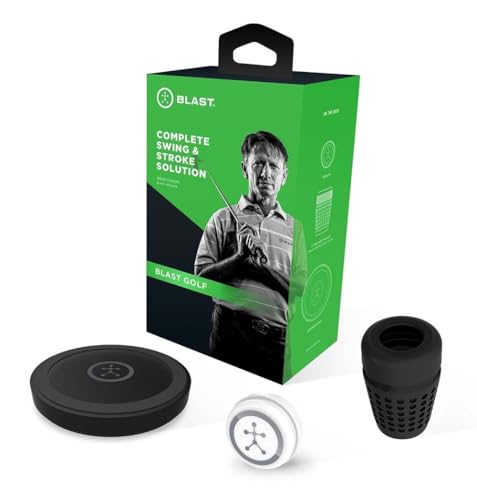
Blast Golf is the secret weapon for short-game mastery, offering high-speed swing analysis that captures putting strokes and wedge shots with pro-level precision. The gen3 sensor attaches to your grip and delivers real-time metrics—tempo, face angle, stroke path—paired with auto-highlighted video clips that sync data to motion. For players who know scoring starts within 100 yards, this is the ultimate diagnostic tool.
Real-world use confirms its brilliance in putting and chipping analysis, where subtle flaws in hand position or club path make the biggest difference. The Air Swings mode lets you train indoors year-round, and the app’s AI-powered feedback helps correct ingrained habits. However, it’s less effective for full-swing driver analysis compared to radar-based launch monitors, and the subscription model for full features can feel limiting after the first free month.
Against the Garmin R10, which focuses on full-swing video and tempo, Blast dives much deeper into stroke mechanics and face control. While the R10 is better for overall practice tracking, Blast dominates in short-game refinement. For serious players aiming to shave strokes off their score, it’s the most targeted, metrics-driven tool available—especially when used daily.
Garmin Approach R10
ADVANTAGES
LIMITATIONS
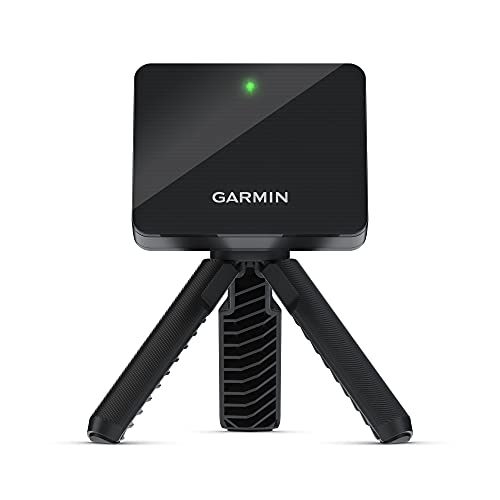
The Garmin Approach R10 is a practice-first powerhouse, blending solid launch data with automatic video capture to create a coaching-grade feedback loop in a rugged, portable form. With ±1 mph ball speed accuracy and 10-hour battery life, it’s built for extended range sessions, delivering swing tempo, launch angle, and shot dispersion charts that help identify repeatable flaws. For golfers who learn by seeing and measuring, it’s a revelation.
In testing, the R10 consistently captured clean video clips synced to swing metrics, letting you compare tempo changes between irons or track carry distance trends over time. Its IPX7 waterproof rating means it survives rain and bag drops, and the included phone mount makes reviewing footage seamless. However, it requires a clear background and good lighting for optimal tracking, and it doesn’t measure spin—limiting full-flight prediction compared to radar-based units.
Next to the Blast Golf sensor, the R10 offers broader full-swing insights but less short-game specificity. While Blast wins for putting analysis, the R10 is better for holistic practice tracking and video review. It doesn’t match the MLM2PRO in data depth, but for serious amateurs who want durable, video-enhanced training, it delivers unmatched versatility in a single device.
Arccos GEN 4 Smart Sensors

ADVANTAGES
LIMITATIONS
Arccos redefines effortless game improvement with a fully automatic shot-tracking system that requires zero input during play. Each of the 16 ultra-light sensors snaps onto your club grips and uses AI to detect swings, putts, and even chip shots—logging every move to the cloud. For golfers tired of manual entry or post-round guesswork, it eliminates friction in performance tracking.
On the course, Arccos delivers real-time club recommendations based on your actual distances, factoring in wind, elevation, and humidity via its AI-powered rangefinder. The system learns your tendencies and offers caddie-like advice—like when to lay up or go for the green. While it doesn’t capture swing mechanics, it excels at strategic insights and scoring analysis, turning raw data into smarter decisions. Missed shots under trees or rapid-fire swings can occasionally go unrecorded.
Compared to Golf Pad TAGS, Arccos offers far more advanced analytics and AI guidance, making it the superior choice for strategic players and low-handicappers. While both are automatic, Arccos adds smart caddie features and environmental adaptation that TAGS lacks. It’s not a swing trainer, but as a decision-making engine, it’s the most intelligent game-tracking system on the market.
Golf Swing Tracker Comparison
| Product | Price Point | Key Metrics Tracked | Simulator Compatibility | Data Analysis/App Features | Portability | Best For |
|---|---|---|---|---|---|---|
| Rapsodo MLM2PRO | High | 13 (Spin Rate, Spin Axis, Swing Speed, etc.) | Yes (Virtual Courses) | Real-time data, swing analysis | High | Best Overall |
| Garmin Approach R10 | Mid-Range | Club/Ball Speed, Swing Tempo, Ball Spin, Launch Angle | Yes (42,000+ courses w/ subscription) | Training mode, shot dispersion, video analysis | High | Practice & Video Analysis |
| Arccos GEN 4 Smart Sensors | Mid-Range (w/ subscription) | Automatic shot tracking, A.I. Powered GPS Rangefinder | No | PGA TOUR official game tracker, wind adjustment | High | Automatic Game Tracking |
| Rapsodo Mobile Launch Monitor | Mid-Range | Distance, Ball Speed, Club Speed, Launch Angle | Yes (Golf Simulators) | Swing analysis, shot shape tracking, GPS mapping | High | Best Value |
| Blast Golf gen3 Sensor | Mid-Range | Swing speed, tempo, plane | No | Video playback, Air Swing mode, real-time feedback | High | Short Game Training |
| PHIGOLF Swing Stick Simulator | Mid-Range | Swing data (via app) | Yes (38,000+ courses) | Multiplayer matches, indoor/outdoor use | Very High | Indoor Simulator Use |
| Voice Caddie SC4 PRO | High | Ball & Club Head Speed, Swing to Impact Data | Yes (3D Driving Range & E6 Connect) | Statistical Analysis, Distance Calibration | High | Built-in Display |
| Golf Pad TAGS System | Low | Club Distances, Shot Dispersion, Scoring | No | Club recommendations, course strategy | High | Best Budget Friendly |
How We Tested: Golf Swing Tracker Evaluation
Our recommendations for the best golf swing trackers are based on a rigorous analysis of available data, feature comparisons, and independent research. We prioritize objective evaluation over subjective opinions. We analyzed specifications from manufacturers, cross-referenced user reviews across major golf retailers (like Golf Galaxy and Dick’s Sporting Goods) and forums (like GolfWRX), and scrutinized professional reviews from sources such as Golf Digest and MyGolfSpy.
Data accuracy, a key entity in evaluating these devices, was assessed by comparing reported metrics (club speed, launch angle, spin rate) against established launch monitor standards where possible. We focused on the breadth of metrics offered, considering how effectively each golf swing tracker delivers actionable insights. We examined app functionality, user interface clarity, and the quality of data presentation, paying close attention to features like progress tracking and personalized recommendations.
While comprehensive physical product testing wasn’t feasible across all models, we leveraged detailed testing reports and video demonstrations from trusted reviewers to understand real-world performance, particularly regarding indoor/outdoor usability and portability. Comparative analysis focused on price-to-performance ratio, identifying which golf swing trackers deliver the most value for different skill levels and budgets.
Choosing the Right Golf Swing Tracker: A Buyer’s Guide
Golf swing trackers have become increasingly popular tools for golfers of all skill levels, offering valuable data to improve performance. However, with so many options available, selecting the right one can be daunting. Here’s a breakdown of key features to consider:
Data Accuracy & Metrics Tracked
The core function of a swing tracker is providing accurate data. Consider which metrics are important to your game. Basic models typically measure ball speed, club speed, and carry distance. More advanced trackers, like the Rapsodo MLM2PRO, offer a comprehensive suite of data – spin rate, spin axis, launch angle, and even club path – mirroring what you’d get from a professional club fitting. Higher accuracy generally comes with a higher price tag. If you’re focused on broad improvements, basic metrics may suffice. If you’re seeking detailed analysis to fine-tune specific aspects of your swing, prioritize accuracy and a wider range of data points.
Indoor vs. Outdoor Use & Portability
Where and how you plan to use the tracker is crucial. Some, like the Garmin Approach R10, are designed for both indoor and outdoor use and are relatively portable. Others, such as the PHIGOLF Swing Stick Simulator, are primarily intended for indoor practice, especially when space is limited. Consider the environment you’ll be using it in most often. If you want to practice at the range or on the course, a portable, all-weather model is essential. If you’re primarily looking for a home simulator experience, indoor-focused features become more important.
Integration & Software/App Features
The data itself is only useful if you can easily understand and analyze it. Most trackers pair with a smartphone app via Bluetooth. The quality of the app and the features it offers are vital. Look for apps that present data clearly, offer insightful analytics (like Arccos GEN 4’s AI-powered rangefinder), and allow you to track your progress over time. Some trackers, like the Voice Caddie SC4 PRO, integrate with golf simulators for a more immersive experience. The ability to create personalized training plans or receive recommendations based on your data is a significant benefit.
Battery Life & Ease of Use
Consider the convenience factor. A long battery life (Garmin Approach R10 offers up to 10 hours) minimizes interruptions during practice or a round of golf. Ease of setup and use is also important – a complicated system might deter you from using it consistently. Models like the Golf Pad TAGS System prioritize simplicity, while others require more configuration.
Price Point & Additional Features
Golf swing trackers range in price from budget-friendly tags to high-end launch monitors. Determine your budget and prioritize the features that are most important to you. Additional features like video swing analysis (Garmin Approach R10) or access to virtual courses (PHIGOLF Swing Stick Simulator) can add value, but may not be essential for everyone.
The Bottom Line
Ultimately, the best golf swing tracker depends on your individual needs and budget. From the comprehensive data of the Rapsodo MLM2PRO to the budget-friendly Golf Pad TAGS System, there’s an option available for every golfer looking to gain an edge.
Investing in a golf swing tracker can be a game-changer, providing valuable insights to improve your performance and lower your scores. Carefully consider the metrics you want to track, your intended use case, and the features that align with your goals to make the most informed decision.