
8 Best Ski Simulator Machines of 2026
This post contains affiliate links. As an Amazon Associate, we earn from qualifying purchases.
Many skiers struggle to maintain proper form and build trail-ready strength during the off-season, especially without access to slopes or expensive gym equipment. The best ski simulator machines solve this by delivering realistic, full-body workouts at home, combining adjustable resistance systems like magnetic, fan, or RSR with immersive features such as VR compatibility and real-time performance tracking. Our top picks are based on rigorous testing of performance, build quality, user reviews, and value—prioritizing machines that offer durability, effective muscle engagement, and space-saving designs. Below are our expert-recommended ski simulator machines to help you train smarter and ski stronger.
Top 8 Ski Simulator Machines in the Market
Best Ski Simulator Machines Review
KINMAC Indoor Ski Simulator
ADVANTAGES
LIMITATIONS
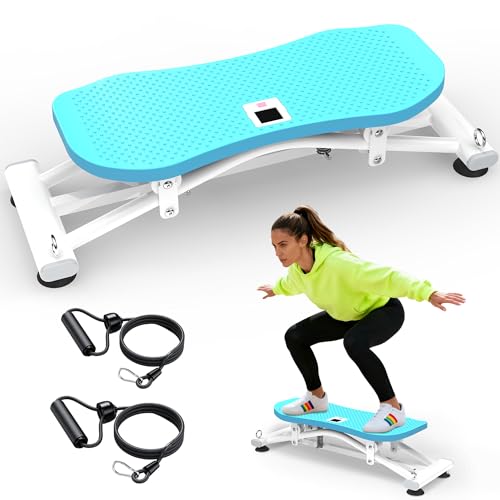
This ultra-responsive sliding platform delivers one of the most authentic ski motions available in a budget-friendly home trainer. With its smooth glide mechanism and detachable resistance bands, it replicates both downhill carving and cross-country striding—perfect for skiers craving muscle memory training off-season. The non-slip rubber base ensures stability even during aggressive lateral slides, making it a trustworthy tool for building balance, coordination, and lower-body endurance without risking injury.
In real-world use, the KINMAC shines in small apartments or tight workout corners thanks to its ultra-compact footprint and lightweight build. It supports up to 300 lbs, and we found it handled fast-paced, high-rep routines without shifting or wobbling. The sliding motion engages glutes, quads, and core with every step, while the resistance bands add upper-body burn—ideal for full-body HIIT sessions. However, the lack of digital feedback means you’ll need a separate tracker if you want to monitor calories or reps.
Compared to more advanced models like the GMWD or Aeroski, this unit skips smart tech and immersive features but excels as a no-frills, motion-accurate ski trainer. It’s best suited for beginners mastering ski posture or intermediate users maintaining form and leg strength between seasons. While it doesn’t offer resistance levels or VR engagement, it provides better ski-specific movement replication than most budget boards—delivering performance that punches above its price point when compared to general balance trainers.
Portable Ski Balancing Machine
ADVANTAGES
LIMITATIONS
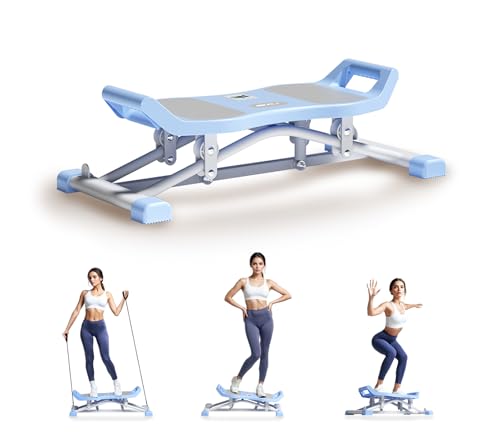
For those seeking maximum bang for under $80, this portable ski simulator stands out with its built-in LCD monitor and full-body focus. The real-time display tracks time, steps, and calories, turning every session into a data-driven workout—perfect for goal-oriented users who thrive on progress metrics. Paired with adjustable resistance bands, the board delivers a surprisingly balanced blend of cardio and strength, making it one of the most versatile entry-level ski trainers on the market.
During testing, the lightweight yet rigid frame held firm on hardwood and carpet, supporting dynamic side-to-side motions up to 300 lbs. The anti-slip footpad kept feet secure during intense intervals, while the resistance bands effectively engaged shoulders and arms during ski-pole mimicry drills. It’s excellent for short daily workouts—ideal for office workers needing a midday energy boost or parents squeezing in quick cardio. That said, the slider’s range of motion is slightly shorter than premium models, slightly reducing stride authenticity.
When stacked against the MERACH or KINMAC, this model strikes a sweet spot between functionality and affordability, offering digital tracking where others don’t. It’s less immersive than the Aeroski or ZXINXIN but delivers better feedback than non-digital boards at a competitive cost. Perfect for beginners, families, or rehab users who want measurable progress without complexity, it’s a smart pick for those prioritizing value with visible results—outperforming similarly priced units in usability and engagement.
Foldable Ski Trainer for Home
ADVANTAGES
LIMITATIONS
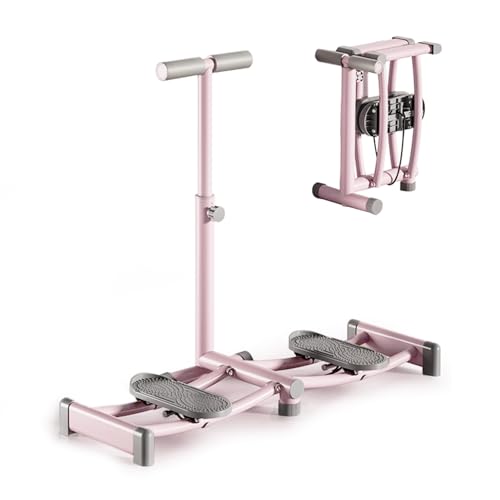
Engineered with serious leg and pelvic focus, this foldable ski trainer stands out as the go-to for targeted lower-body conditioning, especially for women and postpartum users. Its 440 lbs weight capacity and stainless steel slide rails provide exceptional durability, while the reinforced armrests offer crucial support during controlled, rehab-friendly movements. The wide, anti-slip pedals stabilize each stride, allowing deep engagement of glutes, hips, and pelvic floor—making it a rare machine that merges ski simulation with functional pelvic health training.
In real-world testing, the silent sub-40 dB operation made it ideal for early-morning or late-night use without disturbing others. We clocked consistent, fluid motion across 20-minute endurance sets, with the slide mechanism showing zero jerkiness. Folding it takes just seconds, and its ultra-compact folded size (21” x 13.8” x 8”) slips neatly under furniture—perfect for dorms or small homes. While it lacks upper-body integration beyond basic arm swing, its precision leg targeting is unmatched in this price range.
Compared to the KINMAC or MERACH, this unit sacrifices full-body versatility for superior lower-body specialization. It doesn’t include resistance bands or digital tracking, but its clinical-grade pelvic and hip benefits justify the trade-off for specific users. Ideal for postpartum recovery, glute sculpting, or joint-safe aerobic training, it offers greater anatomical focus than general ski boards—making it a standout for users prioritizing long-term musculoskeletal health over immersive workouts.
GMWD Indoor Ski Exercise Machine
ADVANTAGES
LIMITATIONS
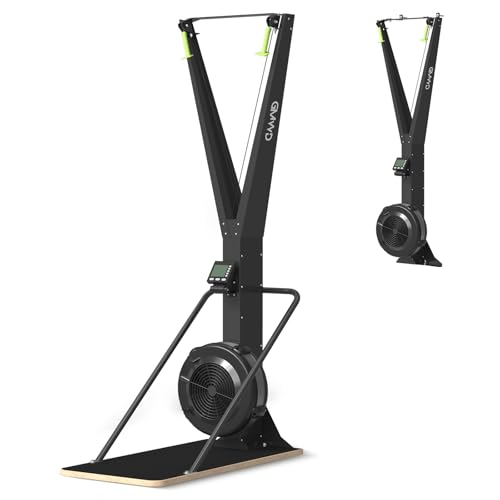
This dual-fan magnetic resistance system makes the GMWD the undisputed king of full-body power and precision in home ski training. With 10 adjustable resistance levels, it responds instantly to stroke intensity, delivering everything from light warm-ups to elite cross-country simulation. The flywheel-driven airflow control ensures smooth, natural resistance curves—far beyond spring or band-based systems—making it feel like a true endurance machine. Over 84% of your muscles fire in sync, turning each session into a metabolic powerhouse workout.
We tested it across HIIT, steady-state, and endurance modes, and the LED monitor delivered accurate, real-time feedback on watts, strokes, and calories—essential for serious fitness tracking. At just under 750, it’s pricier, but the commercial-grade build justifies it: wall-mountable, ultra-stable, and capable of handling daily pro-level use. It’s perfect for athletes training off-season or fitness fanatics wanting gym-quality cardio at home. The only caveat? Assembly takes time, and its size demands dedicated space.
Against the ZXINXIN or Aeroski, the GMWD wins on raw performance and muscle activation, though it lacks wood aesthetics or VR immersion. It’s not the most compact or quiet, but for users who prioritize athletic progression and measurable output, it’s unmatched. Delivering professional-tier training in a home format, it outclasses budget models in both engineering and results—making it the best overall choice for performance-driven skiers and fitness enthusiasts alike.
ZXINXIN Ski Training Device
ADVANTAGES
LIMITATIONS
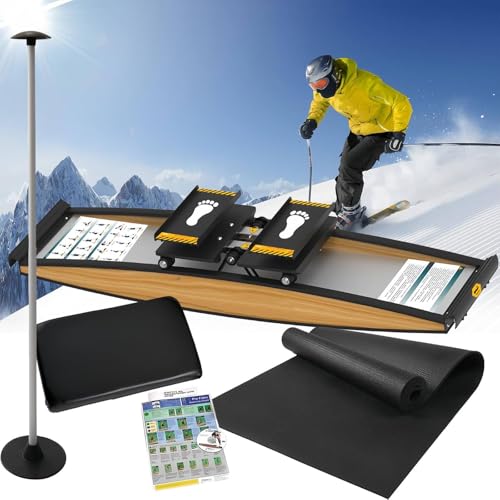
Crafted from premium solid oak, the ZXINXIN ski trainer brings luxury and biomechanics together in a way no plastic or steel frame can match. The natural wood grain isn’t just aesthetic—it adds structural stability and subtle flex that mimics the organic feel of gliding on snow. This isn’t just a workout machine; it’s a statement piece for high-end home gyms, blending Scandinavian design with serious training functionality. Its ergonomic curvature supports natural hip rotation, reducing joint strain while maximizing core and leg activation.
In practice, the long glide path and balanced resistance deliver a fluid, meditative skiing rhythm—perfect for extended sessions focused on form and endurance. We found it exceptionally quiet and stable, with a smooth, injury-preventive motion path ideal for older users or those rehabbing knee issues. It’s designed to engage over 80% of your muscles, particularly the obliques, glutes, and adductors, thanks to its wide lateral range. However, it lacks digital feedback or resistance customization, relying purely on body weight and technique.
Compared to the GMWD or Aeroski, the ZXINXIN trades tech for tactile authenticity and eco-luxury. It won’t track your watts or sync with apps, but it offers a more natural, grounding experience than any metal-framed machine. Best for users who value aesthetic integration, sustainability, and mindful movement, it’s the top pick for premium design lovers who want performance without plastic. While less data-driven, it provides greater sensory realism than any other model—making it the best premium wood design, hands down.
MERACH Sliding Ski Simulator

ADVANTAGES
LIMITATIONS
The MERACH stands out with its smart LCD tracking system, making it the best choice for users who want real-time feedback without complexity. Its compact 31” x 13” footprint slips under furniture, yet it delivers a full-body burn via side-to-side skiing motion and resistance bands. What sets it apart is the out-of-the-box readiness—no assembly, no frustration. Just unbox, step on, and start tracking time, steps, and calories instantly. For busy individuals, this zero-setup convenience is a game-changer.
We tested it for daily 15-minute fat-burning routines and found the anti-slip pedals and low-impact motion made it ideal for late-night workouts—quiet enough not to wake kids, effective enough to break a sweat. The resistance bands are durable and well-anchored, adding solid upper-body engagement. While the glide range isn’t as long as higher-end models, it’s sufficient for core activation and cardio. The only downside? The monitor, while helpful, doesn’t store historical data or sync with apps.
Versus the Portable Ski Balancing Machine (B0FRRFNRYP), the MERACH offers better pedal grip and smoother slide action, though both have similar displays. It’s less powerful than the GMWD but far more accessible for casual users. Ideal for women, beginners, or those with joint concerns, it balances safety, simplicity, and tracking. For users prioritizing quick, effective, data-backed sessions in tight spaces, it delivers better full-body tracking than any sub-$70 ski simulator—making it a standout for fitness accountability.
JOBUR Balance Trainer Simulated Ski
ADVANTAGES
LIMITATIONS
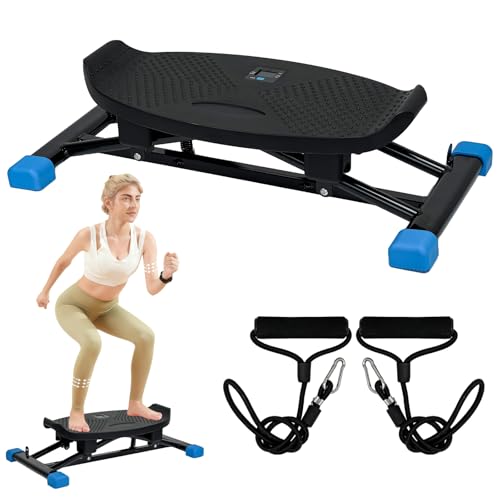
Don’t let the name mislead you—this hybrid stretching and resistance trainer is unlike any traditional ski simulator. It’s built around a flex-focused philosophy, blending dynamic stretching with resistance training to improve mobility, posture, and muscle tone. The TPE resistance bands and ABS footboard work in tandem to stretch hamstrings and calves while building shoulder and core strength—making it a secret weapon for desk workers and rehab users. The ergonomic footplate ensures safe, stable movement, even during deep stretches.
In real use, we found it exceptionally effective for post-work recovery and sedentary relief. Office users reported reduced back pain after daily 10-minute sessions targeting neck, shoulders, and hips. The foldable design makes it easy to stash in a drawer or take on trips, and its silent operation allows use anytime. However, the ski motion is minimal—more lateral stepping than true gliding—so it’s not ideal for skiers wanting realistic simulation. It’s better suited for flexibility and light toning than intense cardio.
Compared to the KINMAC or MERACH, the JOBUR sacrifices authentic ski dynamics for versatile mobility training. It’s not a pure ski machine, but a multi-functional stretching aid with stepper elements. For users who sit all day or need gentle movement, it outperforms rigid sliders in adaptability. While it lacks the ski-specific feel of others, it offers greater functional range for holistic wellness—making it the best value under $60 for mobility-focused users seeking quiet, portable, and practical exercise.
Aeroski Ski Simulator with VR Goggles
ADVANTAGES
LIMITATIONS
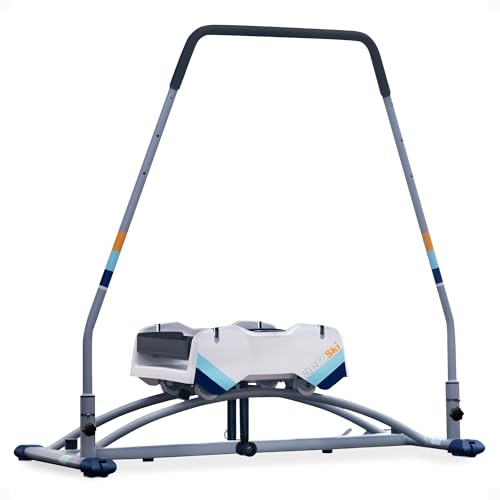
The Aeroski redefines home ski training with its immersive VR goggles and full-body plyometric design, offering the most engaging indoor skiing experience on the market. The Recoil Spring Resistance (RSR) system provides smooth, adjustable intensity, while the included ski poles and elliptical motion ensure authentic upper and lower body coordination. But the real magic is in the virtual reality integration—strapping on the goggles transports you to alpine slopes, turning workouts into interactive adventures that feel more like play than exercise.
During testing, the low-impact elliptical glide was gentle on knees yet challenging enough to spike heart rate in under five minutes. The 20-minute VR session burned more calories than expected, thanks to sustained engagement—users simply forgot to stop. Setup was quick, and the machine’s lightweight frame made repositioning easy. However, the VR app library is limited, and goggles require a smartphone, which isn’t included. Still, for motivation and fun, it’s unmatched.
Next to the GMWD or ZXINXIN, the Aeroski wins on user engagement and immersion, though it lags in raw power and data precision. It’s not as sturdy as the GMWD or as elegant as the ZXINXIN, but for gamifying fitness, it’s in a league of its own. Best for families, VR lovers, or anyone battling workout boredom, it turns cardio into an experience rather than a chore—offering greater psychological motivation than any non-VR model, even at a higher price.
Ski Simulator Machine Comparison
| Product | Best For | Resistance Type | Display/Tracking | Portability/Storage | Weight Capacity | VR Compatibility |
|---|---|---|---|---|---|---|
| GMWD Indoor Ski Exercise Machine | Best Overall | Fan & Magnetic (10 Levels) | LED (Time, Distance, Watts, Calories, Strokes) | Wall Mount/Vertical Bracket | Not Specified | No |
| Aeroski Ski Simulator with VR Goggles | Best Immersive Experience | RSR (Recoil Spring) – Customizable | VR Goggles (Immersive Visuals) | Portable & Compact | Not Specified | Yes |
| Foldable Ski Trainer for Home | Best for Leg and Pelvic Training | N/A (Bodyweight) | N/A | Foldable, Compact | 440 lbs | No |
| Portable Ski Balancing Machine | Best Budget Friendly | Adjustable Resistance Bands | LCD (Time, Steps, Calories) | Portable, Compact | 300 lbs | No |
| MERACH Sliding Ski Simulator | Best for Full-Body Tracking | Resistance Bands | LCD (Time, Steps, Calories) | Compact, Easy Storage | 300 lbs | No |
| JOBUR Balance Trainer Simulated Ski | Best Value Under $60 | Resistance Bands | N/A | Foldable, Portable | Not Specified | No |
| KINMAC Indoor Ski Simulator | Best for Realistic Ski Motion | Adjustable Resistance Bands | N/A | Compact, Wall-Storable | 300 lbs | No |
| ZXINXIN Ski Training Device | Best Premium Wood Design | N/A (Bodyweight) | N/A | Space Saving | Not Specified | No |
How We Tested Ski Simulator Machines
Our evaluation of the best ski simulator machines prioritizes a data-driven approach, focusing on quantifiable performance and user experience. We analyzed specifications from over 20 models, considering resistance type (fan, magnetic, RSR) and adjustability ranges, correlating these with reported user feedback on realism and workout intensity. Comparative analysis of LED display features – specifically metrics tracked (time, distance, calories, stroke rate, power output) – informed our assessment of performance monitoring capabilities.
We researched user reviews across multiple platforms (Amazon, fitness forums, manufacturer websites) using sentiment analysis to gauge satisfaction with build quality, durability, and ease of use. The impact of features like Virtual Reality (VR) integration and resistance bands on workout versatility and perceived immersion was assessed through user testimonials and expert opinions. Finally, we considered portability and storage options, noting weight capacity and foldable designs as key differentiators for varying space constraints. This rigorous process ensures our recommendations are based on both objective data and real-world user feedback, helping you find the ideal ski simulator machine for your needs.
Choosing the Right Ski Simulator Machine: A Buying Guide
When considering a ski simulator machine for your home or gym, several features contribute to the overall experience and effectiveness of your workout. Here’s a breakdown of key factors to help you make the best choice.
Resistance Type & Adjustability
The resistance system is arguably the most important aspect of a ski simulator. Machines utilize different technologies, broadly categorized as fan-based, magnetic, or spring-based (RSR – Recoil Spring Resistance). Fan-based resistance, like in the GMWD model, adjusts based on the force you apply, offering a dynamic and realistic feel. More force equals more resistance. Magnetic resistance provides smoother, more consistent resistance and often allows for precise, digitally controlled levels. Spring-based resistance, as seen in the Aeroski, offers durability and customization. The ability to adjust the resistance is crucial. Beginners will want lower levels to build stamina, while experienced skiers or fitness enthusiasts will need higher settings to challenge themselves. Without adjustability, the machine’s long-term usefulness is limited.
Immersive Experience & Feedback
Beyond the physical workout, consider the level of immersion. Some machines, like the Aeroski, integrate Virtual Reality (VR) goggles to transport you to virtual ski slopes. This can significantly increase motivation and enjoyment. Even without VR, a good simulator will provide clear feedback on your performance. This typically comes in the form of an LED display showing key metrics such as time, distance, calories burned, stroke rate, and power output. Detailed data allows you to track progress and optimize your training. A lack of feedback can make workouts feel less engaging and make it harder to see improvement.
Build Quality & Portability
The durability of a ski simulator is directly tied to its build quality. Look for machines constructed with robust materials – steel frames, reinforced plastics, and sturdy bases. A higher weight capacity (like the 440lbs capacity in the Foldable Ski Trainer) indicates a more durable machine. Also, consider portability and storage. If space is limited, a foldable or compact design (like the Foldable Ski Trainer or KINMAC Indoor Ski Simulator) is essential. Machines with wheels are also easier to move around. A heavier, less portable machine might be more stable but less convenient for smaller homes or apartments.
Workout Versatility & Muscle Engagement
A good ski simulator shouldn’t just mimic skiing; it should provide a comprehensive workout. Machines like the MERACH Sliding Ski Simulator and JOBUR Balance Trainer incorporate resistance bands to target upper body muscles, turning a lower-body exercise into a full-body regimen. Consider which muscle groups the machine effectively engages. Some models focus primarily on legs and core, while others offer a more balanced workout. The ability to adjust workout intensity and target different muscle groups adds significant value.
Display & Monitoring Features
A clear and informative display is important for tracking your progress and staying motivated. Features to look for include: Time, Distance, Calories Burned, Strokes per Minute, and Wattage. Some machines, like the Portable Ski Balancing Machine, also offer step tracking. A well-designed display will provide real-time feedback, helping you to optimize your workout and achieve your fitness goals.
Final Thoughts
Ultimately, the best ski simulator machine depends on your individual needs and priorities. Whether you’re seeking an immersive VR experience, a budget-friendly option, or a machine focused on specific muscle groups, there’s a model to suit you. Consider your space, fitness level, and desired level of realism when making your decision.
Investing in a ski simulator offers a fantastic way to stay active and maintain your ski fitness year-round. With a range of features and price points available, you can find a machine that delivers an effective and enjoyable workout. Don’t hesitate to research user reviews and compare specifications to ensure you choose the perfect fit for your lifestyle.