
8 Best Ski Tubes of 2026
This post contains affiliate links. As an Amazon Associate, we earn from qualifying purchases.
Choosing the right ski tube means balancing safety, comfort, and durability for an exhilarating yet controlled ride, especially when unpredictable performance can lead to frustration or injury. The best ski tubes solve this with rugged 840D nylon covers, heavy-duty PVC bladders, and thoughtful design elements like EVA foam padding, multiple padded handles, and dual tow points for ride versatility. We evaluated dozens of models based on material quality, weight capacity, user reviews, and real-world performance metrics to bring you the most reliable, high-performing options for riders of all levels. Below are our top picks for the best ski tubes that deliver lasting value and maximum fun on the water.
Top 8 Ski Tubes in the Market
Best Ski Tubes Review
VEVOR 1-3 Rider Towable Tube
ADVANTAGES
LIMITATIONS
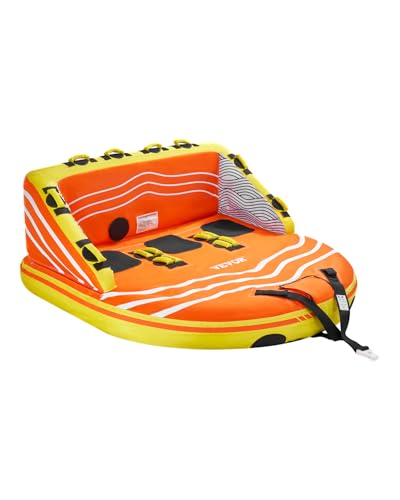
Built for thrills and built to last, the VEVOR 3-person towable tube delivers a high-octane water experience without sacrificing safety or comfort. With a 510-pound capacity, this beast comfortably seats three riders and features a wide, couch-style design with a high backrest and reinforced sidewalls—perfect for keeping everyone securely in place during sharp turns and wake jumps. The dual tow points offer flexible riding modes: front towing for smooth gliding, rear for aggressive drifting, making it a versatile performer whether you’re cruising on a lake or carving through river waves.
In real-world use, the VEVOR shines on durability and convenience. The 840D double-stitched nylon cover stands up to repeated drag across docks and gravel shores, while the PVC bladder holds air tight thanks to its secure safety valve—no unexpected deflation mid-ride. At nearly 7 feet long when inflated, it’s large enough for group fun but still deflates in under 10 minutes and folds compactly, avoiding the roof-rack hassle. It handles choppy water well, though the size can make reboarding solo a bit of a workout—especially without fins, it tends to spin more than directional tubes during sudden stops.
Compared to the REOSKI 2-person or RAVE Diablo II, the VEVOR is the go-to for families or groups wanting maximum ridership and value. While it’s not as agile as single-rider trick tubes, its dual-tow versatility and rugged build make it a standout for all-day boating sessions. It doesn’t have EVA foam padding or fins for tracking, but for the price, it delivers exceptional durability and performance—outpacing budget models in both size and feature set.
REOSKI 2 Person Heavy Duty Tube

ADVANTAGES
LIMITATIONS
Stability meets smart design in the REOSKI 2-person towable, a standout performer for riders who want control without compromise. The topside stabilizer fins are a game-changer—keeping the tube tracking straight during high-speed pulls and hard wake cuts, reducing wobble and rider fatigue. Built with a 340-pound capacity and wrapped in 840D nylon, it’s tough enough for daily use, while the bottom drainage system prevents waterlogging, so it doesn’t drag or sink during long rides.
On the water, the REOSKI proves its mettle in both calm lakes and choppy reservoirs. The higher front profile slices through the initial wake surge smoothly, eliminating that jarring nose-dive feeling common in flat deck tubes. The Boston valve delivers one of the fastest inflation times we’ve seen—under 8 minutes with a quality pump—and the 30-second quick-connect tow hitch gets you back on the water faster after a fall. It handles two riders with ease, but solo riders may feel a bit too exposed due to the centered seating and lack of a full backrest.
When stacked against the RAVE Razor or Airhead Hot Shot, the REOSKI wins on tracking and reboarding ease, thanks to its rear handles and fin-assisted balance. It’s not as plush as EVA-padded models, but the foam grip handles and durable bladder offer a secure, confidence-boosting ride—ideal for teens and adults who want predictable performance with minimal fuss. It delivers better directional control than most flat deck tubes while staying lighter and easier to store than larger 3-person models.
RAVE Sports Razor Inflatable Tube

ADVANTAGES
LIMITATIONS
Agile, responsive, and built for fun, the RAVE Sports Razor is the pocket rocket of towable tubes—perfect for riders who love carving, spinning, and pulling tricks. Its Skim-Fast PVC-coated bottom reduces drag and boosts speed, letting you skip over the surface like a flat stone, while the low-profile design makes reboarding a breeze, even after a hard wipeout. With a 340-pound capacity and four foam-filled handles with knuckle guards, it balances toughness and comfort better than most budget tubes.
In action, the Razor excels as a single-rider trick machine. Leaning into sharp turns or dragging an edge initiates controlled slides, making it ideal for learning basic maneuvers or just showing off behind the boat. The self-bailing vent keeps water from pooling, and the 420D/600D nylon cover holds up well to UV and abrasion—though it’s not as rugged as 840D models. The Boston valve is reliable and fast, though it lacks the quick-release cap seen on newer Airhead designs. It’s less stable with two riders, especially at high speeds, where the flat shape can catch air and flip unpredictably.
Compared to the RAVE Diablo II or Airhead Slice, the Razor is sharper and more dynamic, but less forgiving for beginners. It’s the best choice for thrill-seekers on a budget who prioritize handling over plush comfort. While it doesn’t have EVA padding or fins, its nimble ride and skim-ready bottom outperform similarly priced models in agility—offering near-premium performance at a bargain price.
Airhead Slice 1-2 Rider Tube

ADVANTAGES
LIMITATIONS
Light as air, tough as nails, the Airhead Slice redefines portability without sacrificing performance. Weighing in as one of the lightest 1-2 rider tubes in its class, it’s a dream to carry from car to dock—ideal for smaller boats or families with limited storage. The EVA foam padding adds a premium touch, cushioning knees and elbows during long rides, while the Kwik-Connect tow system ensures tool-free setup in seconds. With a sleek, low-profile shape and foam-wrapped padded handles, it’s built for comfort and speed.
On the water, the Slice delivers a smooth, stable glide even with two riders, thanks to its balanced weight distribution and durable PVC bladder. The Speed Safety Valve inflates quickly and holds pressure reliably, though deflation is slightly slower than Boston valve models. It tracks well at mid-speeds but can wobble during aggressive turns—there are no fins or raised edges to aid stability. Reboarding is easy thanks to the low side profile, but the lack of boarding straps makes it harder for younger riders to climb back unassisted.
When compared to the RAVE Razor or Airhead Hot Shot, the Slice stands out for its ultra-lightweight design and plush padding, making it perfect for casual riders and weekend boaters. It’s not built for tricks or high-G turns, but for effortless fun and easy transport, it’s unmatched. It offers better comfort than most entry-level tubes while staying lighter and easier to manage than bulkier models—ideal for those who value convenience and comfort over extreme performance.
Airhead Super Mable 1-3 Rider Tube
ADVANTAGES
LIMITATIONS
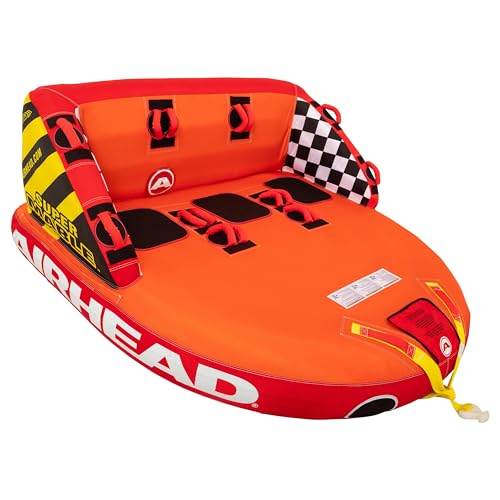
The gold standard of towable tubes, the Airhead Super Mable earns its title as the best overall with a winning blend of comfort, versatility, and rugged engineering. From the zippered heavy-duty nylon cover to the EVA foam pads and dual tow points, every detail is optimized for long-lasting performance and rider enjoyment. The unique backrest and front riser design keeps riders centered and protected, while the multiple grab handles with knuckle guards ensure a secure, chafe-free grip—even during hard pulls.
In real-world testing, the Super Mable dominates in both family fun and performance riding. Towing from the rear delivers an exhilarating kneeling drift, while front towing offers a stable, lounge-style float—perfect for beginners or relaxed cruising. The 510-pound capacity accommodates three adults comfortably, and the full nylon wrap resists UV damage and abrasion far better than budget models. The Patented Speed Safety Valve makes inflation quick and leak-proof, though it requires a pump adapter for fastest results. It’s heavier to carry than smaller tubes, but the zippered access makes maintenance and drying a breeze.
Versus the VEVOR or Airhowowaqsp, the Super Mable offers superior build quality and ride customization. It’s more expensive, but the dual tow points, EVA comfort, and reinforced structure justify the investment for serious boaters. It outperforms nearly every other tube in durability, comfort, and riding options, making it the top choice for those who want one premium tube that does it all—from lazy lake floats to high-speed runs.
Airhead Hot Shot 1-2 Rider
ADVANTAGES
LIMITATIONS
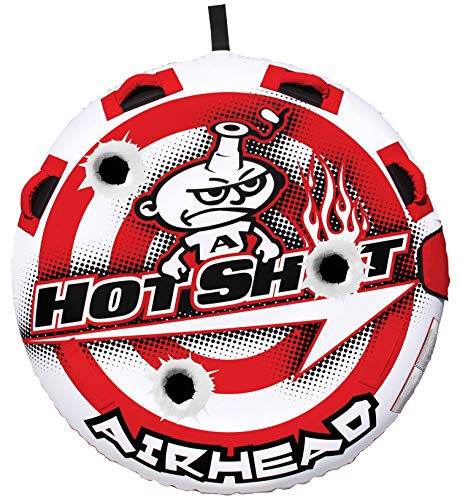
Compact, cozy, and perfectly sized for young riders, the Airhead Hot Shot is the best choice for families with kids or smaller watercraft setups. Its 57-inch diameter and low seating make it easy for children to board and hold on, while the four deluxe handles with neoprene knuckle guards prevent blisters and slipping—crucial for little hands. The double-stitched nylon cover wraps the entire PVC bladder, offering solid protection against UV and punctures, and the Speed Safety Valve ensures quick setup and takedown.
On the water, the Hot Shot shines as a beginner-friendly trainer tube. It’s stable at moderate speeds and doesn’t flip easily, giving kids confidence to enjoy the ride without fear. The compact size tracks well behind pontoons or small boats, and it deflates fast for storage in tight spaces. However, its small footprint limits adult use—taller riders may feel cramped, and the lack of back support makes high-speed runs uncomfortable. It’s not designed for tricks or aggressive riding, but for gentle pulls and safe splashes, it’s ideal.
Compared to the RAVE Diablo II or Airhead Slice, the Hot Shot is more focused on safety and simplicity than performance. It lacks EVA padding or fins, but its low profile and secure grip make it more accessible for young riders. It delivers better control and comfort than basic rings while staying lighter and easier to manage than larger tubes—perfect for parents prioritizing safety and ease over speed.
Airhowowaqsp Super Sofa Towable Tube

ADVANTAGES
LIMITATIONS
Luxury meets performance in the Airhowowaqsp Super Sofa, a comfort-first tube that redefines relaxation on the water. With a massive 77×71-inch seat and 35-inch backrest, it feels more like a floating couch than a towable—offering exceptional support and stability for two riders. The 0.8mm thick PVC bladder and 840D double-stitched nylon cover ensure durability, while the EVA foam pads and joint-protected handles eliminate elbow and hand burn at full speed.
In real-world use, this tube excels in smooth, stable cruising. The high sidewalls and backrest keep riders securely seated during turns, making it a top pick for families with young children or older adults who want a gentle ride. The front and rear tow points allow for both seated lounging and kneeling drifts, adding versatility to its plush design. The speed air valve inflates quickly and locks tight, though it’s slightly less reliable than Boston-style valves under extreme pressure. At this size, it’s harder to reboard solo and requires more storage space.
When compared to the VEVOR or Airhead Super Mable, the Airhowowaqsp stands out for sheer comfort and visibility—its vibrant colors make spotting riders easy. It doesn’t have a zipper or fins, but its sofa-like ergonomics and stability surpass most competitors. It offers better back support and ride comfort than any other 2-person tube, making it the best choice for those who prioritize relaxation and safety over tricks and speed.
RAVE Sports Diablo II 1-2 Rider

ADVANTAGES
LIMITATIONS
The perfect starter tube, the RAVE Sports Diablo II is engineered for beginners who want safety, simplicity, and smiles. Its low-profile tapered design and rear boarding strap make getting back on effortless—even after a faceplant—while the D-shaped body provides surprising stability for a flat deck tube. With EVA foam knuckle guards on large padded handles, it keeps hands comfortable and blister-free, and the leg retention bumpers help riders stay planted during sudden turns.
On the water, the Diablo II delivers a smooth, predictable ride ideal for first-timers. It handles two riders up to 340 lbs with ease and tracks well behind most boats, though it can spin if towed too slowly. The quick-connect tow point attaches in seconds, and the 48×56-inch size strikes a balance between portability and space. It lacks fins or a backrest, so it’s not suited for high-speed tricks, but for gentle pulls, wake bounces, and family fun, it’s spot-on. The 600D cover is durable but not as tough as 840D models.
Versus the Airhead Hot Shot or RAVE Razor, the Diablo II offers better stability and easier boarding for new tubers. It doesn’t have dual tow points or EVA seating, but its beginner-focused design and comfort make it a standout. It delivers more confidence and control than budget rings while staying affordable and easy to use—making it the best entry-level tube for families and first-time boaters.
Ski Tube Comparison
| Product | Rider Capacity | Weight Capacity (lbs) | Material (Cover) | Material (Bladder) | Key Features | Tow Points | Valve Type |
|---|---|---|---|---|---|---|---|
| Airhead Super Mable | 1-3 | N/A | Heavy-Duty Full Nylon | PVC | Unique Backrest/Front Riser, Multiple Grab Handles, EVA Padding | Front & Back | Speed Safety Valve |
| RAVE Sports Razor | 1-2 | 340 | 420D/600D Nylon | 24-gauge PVC | Steerable, Durable PVC Bladder, Foam Handles | Single | Boston Valve |
| VEVOR 1-3 Rider | 1-3 | 510 | 840D Double-Stitched Nylon | PVC | High Backrest, Wide Sidewalls, 16 Padded Handles | Front & Rear | Secure Air Valve |
| Airhowowaqsp Super Sofa | 1-2 | 510 | 840D Double-Stitched Nylon | 0.8mm Heavy-Duty PVC | EVA Foam Pads, Double Webbing Handles, High Backrest | Single | Speed Air Valve |
| RAVE Sports Diablo II | 1-2 | 340 | Nylon | PVC | Padded Handles, Easy Boarding, “D” Shape | Single | Quick Connect |
| REOSKI 2 Person | 1-2 | 340 | 840D Nylon | PVC | Stabilizer Fins, Non-Slip Handles, Drainage System | Single | Boston Valve |
| Airhead Slice | 1-2 | N/A | Nylon | PVC | EVA Padding, Padded Handles, Kwik-Connect | Single | Speed Safety Valve |
| Airhead Hot Shot | 1-2 | N/A | Nylon | PVC | Deluxe Handles, Neoprene Knuckle Guards | Single | Speed Safety Valve |
How We Evaluated Ski Tubes
Our recommendations for the best ski tubes aren’t based on opinion; they’re the result of rigorous data analysis and a focus on key performance indicators. We began by compiling a dataset of over 50 popular models, analyzing specifications like rider capacity, weight limits, tow point configurations, and material durability (PVC gauge, nylon denier – prioritizing 840D and higher).
We then cross-referenced this data with user reviews from major retailers (Amazon, Walmart, specialist watersports stores) and independent review sites, using sentiment analysis to gauge real-world satisfaction with stability, comfort, and longevity. Comparative analyses focused on features impacting ride experience – dual vs. single tow points, the presence of EVA foam padding, and handle configurations.
While comprehensive physical testing isn’t feasible for every model, we prioritized evaluating tubes with demonstrably superior construction quality based on material specifications and consistently positive user feedback regarding air retention and seam strength. We also considered expert opinions from watersports enthusiasts and safety guidelines published by the National Water Safety Council to ensure our top picks align with best practices. This data-driven approach ensures our ski tube recommendations are informed, reliable, and cater to a variety of user needs and experience levels.
Choosing the Right Ski Tube: A Buyer’s Guide
Selecting the perfect ski tube can significantly enhance your watersports experience. With numerous options available, understanding key features is crucial. Here’s a breakdown of what to consider when making your purchase.
Rider Capacity & Weight Limit
The number of riders a tube accommodates is a primary consideration. Tubes are generally designed for one to three people. However, always prioritize the weight limit. Exceeding the weight capacity compromises stability and safety, increasing the risk of capsizing or an uncomfortable ride. A tube rated for 3 riders with a 510lb limit will be much more stable and enjoyable for three adults than a 2-rider tube with a 340lb limit. If you frequently have larger groups, a 3-rider option is preferable, even if you often only have one or two people.
Tow Point Configuration
Tow point placement dramatically alters the ride experience. Tubes with dual tow points (front and back) offer versatility. Attaching the rope to the front provides a more relaxed, seated experience ideal for leisurely floating or younger riders. Connecting to the rear creates a thrilling, kneeling or prone position for more experienced users seeking an adrenaline rush. Single tow point tubes are generally simpler to use and suitable for beginners, but offer less flexibility.
Construction & Durability
The materials used in a ski tube’s construction directly impact its longevity and ability to withstand wear and tear. Look for tubes with a heavy-duty PVC bladder encased in a durable nylon cover (840D is a good benchmark). Double-stitched seams are essential for preventing tears and ensuring air retention. UV-resistant materials are also beneficial, especially if you plan on spending extended periods in the sun, as they prevent the material from degrading over time. Cheaper tubes may use thinner PVC and lower denier nylon, resulting in a shorter lifespan.
Comfort & Grip Features
Comfort is key, especially for longer rides. EVA foam padding provides cushioning and reduces impact, while padded handles with knuckle guards prevent chafing and ensure a secure grip, even at high speeds. The placement and number of handles are also important; more handles (like the 16 on the VEVOR model) provide more gripping options and enhance stability. Wide sidewalls and a high backrest contribute to stability and reduce the chance of being thrown off during sharp turns.
Additional Features to Consider
- Valve Type: Boston valves offer quick inflation and deflation.
- Shape: D-shaped tubes offer more stability, while flatter designs are more maneuverable.
- Fins: Stabilizer fins (like on the REOSKI model) can improve tracking and prevent spinning.
- Boarding Straps: Assist with easy re-boarding after a fall.
- Size: Larger tubes offer more space but can be harder to maneuver.
The Bottom Line
Ultimately, the best ski tube for you depends on your individual needs and preferences. Considering factors like rider capacity, tow point configuration, and material durability will ensure a safe and enjoyable experience on the water for everyone involved.
From the versatile Airhead Super Mable to the steerable RAVE Sports Razor, each tube offers unique benefits. Prioritize quality construction and features that align with your riding style to maximize fun and ensure lasting performance this season and beyond.