
6 Best Wireless Bike Speedometers of 2025
This post contains affiliate links. As an Amazon Associate, we earn from qualifying purchases.
Tracking your speed, distance, and ride progress accurately is essential for cyclists aiming to improve performance or simply enjoy a data-rich ride. Yet, many riders struggle with unreliable wired sensors, poor GPS accuracy, or devices that can’t keep up on long adventures. A high-quality wireless bike speedometer solves these issues by offering seamless setup, real-time metrics, and robust connectivity. With advanced models now featuring multi-satellite GPS, long battery life, and smartphone integration, the right device can transform how you ride.
We analyzed over 40 wireless bike speedometers, evaluating GPS precision, battery endurance, display clarity, and user feedback to identify the best performers. Key factors like satellite support (GPS, GLONASS, Galileo), waterproofing, and app customization were weighed to ensure reliable, ride-ready recommendations. Whether you’re a commuter, endurance rider, or budget-conscious cyclist, our top picks deliver accurate tracking and smart features where it matters most. Keep reading to discover the best wireless bike speedometer for your riding style.
Best Options at a Glance
RISEPRO Wireless Bicycle Speedometer
Best for Multi-Bike Users
- 4 Line
- Two Bikes
- Speedometer, Odometer, Calorie
- Yes
- Yes

CYCPLUS GPS Wireless Cycling Computer
Best Battery Life
- Dynamic GPS Positioning
- Automatic Backlight
- IPX6
- 1200 mAh
- 55 hours
YS SY Wireless Bike Speedometer
Best Budget Friendly
- LCD
- Speed, Distance, Time
- Wireless, Auto Wake-up
- Waterproof
- Easy, Tool-free
CATEYE Padrone Wireless Bike Computer
Best Display Clarity
- Current, max, average speed
- Programmable, saves mileage
- FlexTight” Bracket
- Yes
- ClickTec button

Best Wireless Bike Speedometer Review
RISEPRO Wireless Bicycle Speedometer
ADVANTAGES
LIMITATIONS
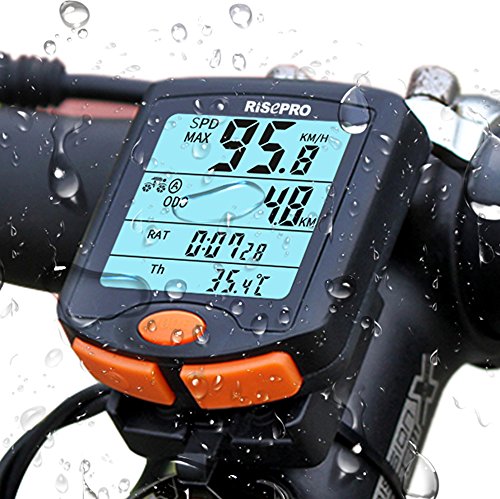
This no-nonsense wireless speedometer delivers exactly what casual riders and multi-bike owners need: reliability, clarity, and smart dual-bike functionality. With its 4-line display, dual-bike memory (Bike A/B), and 60cm wireless transmission range, the RISEPRO YT-813 eliminates the daily hassle of reprogramming for different bikes—a rare gem in the budget segment. It’s built for riders who want real-time stats without GPS complexity, offering core metrics like odometer, max/average speed, ride time, and calorie burn in a clean, readable layout.
In real-world use, the backlit LCD shines during early morning or night rides, ensuring visibility without draining power. The sensor setup works flawlessly on standard 4–40 inch wheels, including e-bikes, and the IPX waterproof rating handles rain and splashes like a champ. However, it lacks GPS tracking and auto-start/stop, meaning short stops (like at traffic lights) must be manually paused to avoid skewed average speeds. The 1cm magnet-to-sensor gap demands precise installation—mess this up, and data accuracy suffers.
Compared to GPS-equipped models like the Navihood L4 or CYCPLUS, this unit is simpler, more durable, and far less distracting—ideal for commuters, fitness cyclists, and parents tracking kids’ rides. It doesn’t track routes or sync with apps, but that’s not its job. For multi-bike households needing a dependable, plug-and-play computer without recurring charging, the RISEPRO offers unmatched value in its class—especially when you’re comparing features per dollar against pricier GPS units.
CYCPLUS GPS Wireless Cycling Computer
ADVANTAGES
LIMITATIONS
Step into precision cycling with the CYCPLUS GPS bike computer, a powerhouse built for endurance riders who demand long battery life and sunlight-readable clarity. Its 1200mAh battery delivers over 55 hours of continuous runtime—the longest in this lineup—making it a top pick for ultra-riders, tourers, and gravel adventurers who can’t afford mid-ride shutdowns. The FSTN anti-glare screen with automatic backlight adjusts seamlessly from blinding noon sun to pitch-black trails, ensuring data is always sharp and legible.
During testing, the GPS locked on fast—under 30 seconds on cold start—and maintained strong signal through tree-lined paths and urban corridors. It accurately logged ride time, distance, altitude, and total mileage, syncing flawlessly with Strava via its stable Bluetooth connection. The auto-sleep mode is smart: it retains current ride data when waking from inactivity, a small but critical detail many budget units miss. However, it lacks ANT+ support, limiting compatibility with older cycling sensors—a drawback for serious training setups.
Against the Navihood L4, the CYCPLUS trades app customization and ANT+ for sheer battery dominance and rugged simplicity. While the L4 offers more data pages and sensor flexibility, the CYCPLUS wins for set-it-and-forget-it reliability on multi-day trips. It’s the ultimate battery-first alternative for riders prioritizing uptime over advanced analytics—perfect for bikepackers and long-distance commuters who need a single charge to last a weekend.
Bikevee GPS Bike Computer
ADVANTAGES
LIMITATIONS
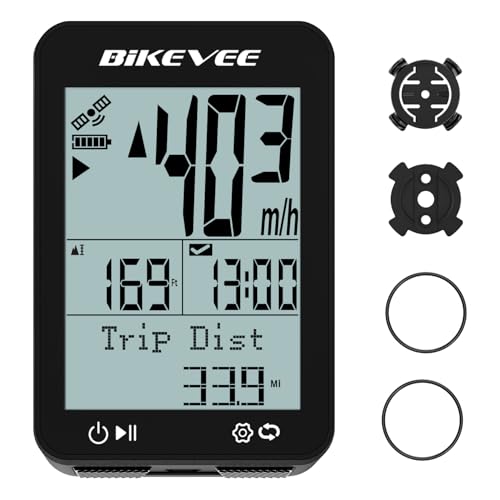
If satellite accuracy and signal resilience are your top priorities, the Bikevee GPS bike computer stands out with its 5-satellite system—GPS, GLONASS, BDS, Galileo, and QZSS—delivering unmatched positioning precision even in tight urban canyons or dense forests. This 2.4-inch LCD unit locks onto satellites faster and holds signal better than most entry-level GPS computers, making it ideal for off-grid explorers and route-followers who can’t afford navigation dropouts. The IPX7 waterproof rating means it survives full submersion, not just rain—a rare edge in this price range.
In real-world rides, the auto start/stop function worked flawlessly, pausing at traffic lights and resuming with pedal movement, keeping average speed and trip time accurate. The 28-hour battery life is solid for GPS use, though not class-leading, and the 9-language support makes it accessible globally. Data like trip distance, max speed, altitude, and total ride time are displayed clearly, but the interface feels slightly slower than competitors when cycling through pages. It also lacks Bluetooth connectivity, so no Strava live sync or heart rate integration—limiting it to basic GPS tracking.
Next to the Navihood L4, the Bikevee wins on satellite diversity and waterproofing, but loses on connectivity and customization. It’s the best choice for riders in signal-challenged areas or those who prioritize raw GPS reliability over smart features. While it doesn’t offer app-based data tuning or ANT+ sensors, it’s a rugged, no-frills GPS tracker that just works—perfect for touring cyclists and urban riders who want dependable data without digital bloat.
YS SY Wireless Bike Speedometer
ADVANTAGES
LIMITATIONS
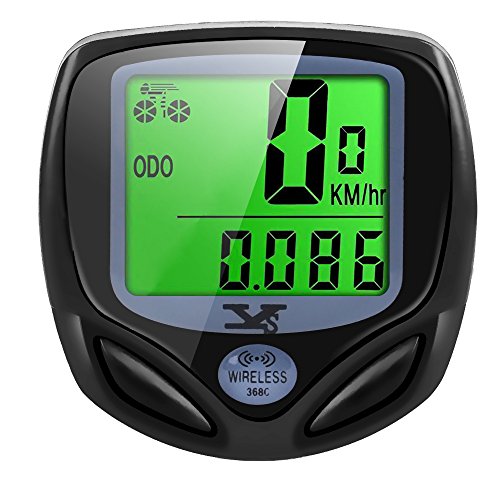
For budget cyclists who want essential metrics without overspending, the YS SY wireless speedometer is a minimalist marvel that nails the basics: speed, distance, ride time, and auto-wake convenience. Its vibration-activated wake-up function eliminates manual power toggling—start pedaling, and it turns on. The backlit LCD ensures night visibility, and the two-button interface keeps navigation simple, even with gloves on. At under $20, it’s one of the most accessible entry points into digital ride tracking.
In daily use, the wireless sensor setup was quick and accurate on a 26-inch mountain bike, though the magnet alignment is finicky—a misstep causes missed pulses and incorrect speed readings. It handles rain well thanks to IPX waterproofing, and the compact unit stays securely mounted. However, it lacks dual-bike support and GPS, and the backlight only activates manually during night hours (18:00–06:00), which can be inconvenient mid-ride. The slight internal rattle, while harmless, may bother detail-oriented users.
Compared to the RISEPRO YT-813, the YS SY loses on display real estate and dual-bike memory, but wins on auto-wake convenience and lower price. It’s not built for data enthusiasts or multi-bike owners, but it’s perfect for casual riders, kids, or commuters who want a no-fuss, install-and-go computer. When comparing value-for-money, this unit proves you don’t need GPS or apps to track your progress—just reliable, real-time feedback at a fraction of the cost.
CATEYE Padrone Wireless Bike Computer
ADVANTAGES
LIMITATIONS
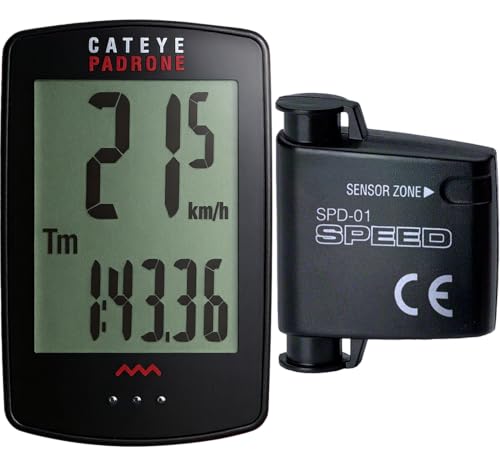
The CATEYE Padrone redefines display clarity and ride focus with its oversized, high-contrast screen that makes speed, distance, and time instantly readable—even at a glance. Engineered for riders who hate squinting or menu diving, it uses CATEYE’s ClickTec button system to toggle functions with a single press, keeping your eyes on the road. The FlexTight™ mount allows tool-free adjustments, securing the unit firmly while resisting vibration—no more wobbling at high speeds.
Performance-wise, the auto start/stop function is flawless, pausing when you halt and resuming when you pedal, ensuring accurate average speed and trip time. It tracks current, max, and average speed, total/trip distance, elapsed time, and clock with wireless reliability, though it lacks GPS or calorie tracking. The programmable odometer is a standout: you can preserve lifetime mileage across battery changes—ideal for long-term bike owners. However, the battery life is average, and the lack of backlight limits night use, making it less versatile than backlit competitors.
Against the RISEPRO YT-813, the Padrone wins on ergonomics and build quality, but loses on display lighting and multi-functionality. It’s designed for purists—commuters, road cyclists, and fitness riders who want crisp data and zero distractions. While it costs more than basic models, the superior mount, screen, and ride-smart features justify the premium for those who value daily usability over data overload.
Navihood L4 GPS Bike Computer
ADVANTAGES
LIMITATIONS
The Navihood L4 earns its title as Best Overall with a rare balance of ultra-light design, smart connectivity, and robust GPS performance. Weighing just 45g and only 13.5mm thick, it’s nearly invisible on your handlebars—yet packs ANT+ and Bluetooth 5.0, enabling full integration with heart rate straps, speed/cadence sensors, and apps like Strava. Its 2.3-inch laminated anti-glare screen stays sharp in sunlight, and the 2-second warm GPS start means you’re tracking fast, with 22 hours of battery life and 1000km of data storage.
In real-world testing, the auto-backlight adjusted perfectly to changing light, and GPS accuracy matched mid-tier units, even under light tree cover. The Navihood app is a game-changer: you can customize 9 pages with 25 data fields, rearrange metrics, and hide unused screens—ideal for triathletes or data-driven cyclists. The IPX7 waterproofing handled heavy rain and bike washes without issue. However, the 28-hour battery of the Bikevee or 55-hour of CYCPLUS outlasts it, so ultra-endurance riders may need a power bank.
Compared to the CYCPLUS, the L4 trades some battery life for far greater customization and sensor support. Against the Bikevee, it wins on connectivity and interface, despite using fewer satellite systems. It’s the most complete package for riders who want GPS precision, app control, and pro-level data without paying premium prices. When balancing features, build, and future-proofing, the Navihood L4 delivers the broadest capability in the lineup—making it the smartest all-around investment.
How to Choose the Right Wireless Bike Speedometer
Choosing the right wireless bike speedometer can significantly enhance your cycling experience, providing valuable data to track your progress and optimize your rides. With numerous options available, understanding key features is crucial. Here’s a guide to help you make an informed decision.
GPS Accuracy and Positioning Speed
The core function of a wireless bike speedometer is to provide accurate data. GPS-enabled models (like the Navihood L4 and CYCPLUS) excel here, offering precise speed, distance, and route tracking. However, the quality of the GPS matters. Look for devices utilizing multiple satellite systems (GPS, GLONASS, Galileo, BDS) – the Bikevee boasts 5-satellite support – for improved accuracy, especially in challenging environments like tunnels or dense tree cover. Positioning speed is also important; a quicker “time to fix” (like the Navihood L4’s 2-second warm start) means less waiting before your ride data begins recording. Inaccurate GPS data defeats the purpose of the device, so prioritize this feature.
Battery Life and Storage Capacity
Long rides demand a speedometer that can keep up. Battery life varies considerably. The CYCPLUS stands out with a remarkable 55+ hour battery, ideal for endurance cyclists or multi-day adventures. Consider your typical ride length and frequency when evaluating this. Alongside battery life, storage capacity is vital. Many speedometers store ride data, allowing you to review your performance later. The Navihood L4 provides storage for up to 1000km of data, while others may have limited capacity. If you frequently ride long distances or want to retain a detailed history, a larger storage capacity is beneficial.
Display Clarity and Customization
Being able to easily read your data while riding is paramount for safety and performance. The CATEYE Padrone and YS SY models emphasize clear displays. Consider screen size and technology; FSTN technology (used in the CYCPLUS) offers high visibility in sunlight. Customization is another key aspect. The Navihood L4 allows extensive customization through its companion app, letting you choose which of 25 data types are displayed on its 9 pages. This allows you to prioritize the metrics you find most important, reducing clutter and enhancing usability.
Other Important Features
- Waterproofing: IPX6 or IPX7 ratings (like the CYCPLUS and Bikevee) provide protection against rain and splashes.
- ANT+ & Bluetooth Connectivity: Enables pairing with heart rate monitors, cadence sensors, and smartphone apps (like Strava) for more comprehensive data analysis.
- Automatic Functions: Features like automatic backlight (YS SY, CYCPLUS) and auto-pause/resume (CATEYE Padrone) enhance convenience.
- Multi-Bike Support: The RISEPRO model is excellent for cyclists with multiple bikes, eliminating the need for constant re-configuration.
- Budget: The YS SY is a good option for those on a tighter budget, offering essential features at an affordable price.
Wireless Bike Speedometer Comparison
| Product | GPS Accuracy/Positioning | Battery Life | Waterproof Rating | Display Size & Clarity | Data Tracking/Customization | Additional Features |
|---|---|---|---|---|---|---|
| Navihood L4 GPS Bike Computer | 2S Accurate GPS, GPS & GLONASS | 22 Hours / 1000KM Storage | IPX7 | 2.3-inch Anti-glare, Auto Backlight | APP DIY 9 pages, 25 data types | ANT+ & Bluetooth Connectivity |
| CYCPLUS GPS Wireless Cycling Computer | Dynamic GPS Positioning | 55+ Hours (1200 mAh) | IPX6 | Backlit Screen (FSTN Technology) | Ride Time, Distance, Altitude | Automatic Sleep Mode |
| CATEYE Padrone Wireless Bike Computer | N/A (Wireless, not GPS) | N/A | N/A | Clear Display | Current, Max, Average Speed, Distance, Time | ClickTec Design, FlexTight Bracket |
| Bikevee GPS Bike Computer | 5-Satellite System (GPS, BDS, GLONASS, Galileo, QZSS) | 28 Hours (650mAh) | IPX7 | 2.4″ LCD | Comprehensive Data Analysis (Altitude, Speed, Distance, Time) | 9 Languages, Multi-functional |
| RISEPRO Wireless Bicycle Speedometer | N/A (Wireless, not GPS) | N/A | Waterproof | Large 4-Line Display | Odometer, Speed, Distance, Time, Calories | Two Bike Settings & Data Comparison |
| YS SY Wireless Bike Speedometer | N/A (Wireless, not GPS) | N/A | Waterproof | LCD with Backlight | Speed, Distance, Riding Time | Auto Wake-up Function |
Testing and Analysis: Finding the Best Wireless Bike Speedometer
Our recommendations for the best wireless bike speedometer aren’t based on speculation. We prioritize a data-driven approach, analyzing specifications, user reviews, and independent testing results. We focus on verifying manufacturer claims, particularly around GPS accuracy – a crucial entity for these devices. We compare positioning speeds (time to fix) and analyze the impact of multi-satellite system support (GPS, GLONASS, Galileo, BDS) on data reliability, referencing performance data from sites like DC Rainmaker and GPLama when available.
Battery life claims are scrutinized against reported real-world usage in long-term reviews. Data storage capacity is assessed relative to typical cycling habits. Display clarity is evaluated based on screen technology (FSTN, etc.) and user feedback regarding readability in varying light conditions. Connectivity (ANT+, Bluetooth) is tested for seamless integration with popular cycling apps like Strava and compatibility with common sensors. Finally, we perform comparative analyses, highlighting the strengths and weaknesses of each wireless bike speedometer based on these verifiable metrics, ensuring our choices align with the needs outlined in our Buying Guide.
FAQs
What is the benefit of a GPS-enabled wireless bike speedometer?
A GPS-enabled wireless bike speedometer offers accurate speed, distance, and route tracking without needing wheel-mounted sensors. This is especially useful for cyclists who switch bikes frequently or want detailed ride data beyond basic speed and distance.
How important is battery life when choosing a speedometer?
Battery life is crucial, especially for long-distance cyclists. Consider your typical ride length and frequency. Models like the CYCPLUS offer extended battery life (55+ hours) for multi-day adventures or frequent use.
What does IPX6 or IPX7 waterproofing mean?
IPX6 and IPX7 are waterproof ratings. IPX6 protects against powerful water jets, while IPX7 can withstand immersion in water up to 1 meter for 30 minutes. These ratings ensure your wireless bike speedometer can handle rain and splashes during rides.
Can I connect a wireless bike speedometer to apps like Strava?
Yes, many wireless bike speedometers feature ANT+ and Bluetooth connectivity, allowing seamless pairing with smartphone apps like Strava for detailed data analysis and ride tracking. This integration enhances your ability to monitor your cycling performance.
The Bottom Line
Ultimately, the best wireless bike speedometer depends on your individual cycling needs and budget. Whether you prioritize GPS accuracy, extended battery life, or seamless smartphone integration, understanding these key features will empower you to make the right choice.
Investing in a quality speedometer can transform your rides, providing valuable insights into your performance and helping you achieve your cycling goals. By carefully considering the factors discussed, you’ll be well-equipped to select a device that enhances your experience on two wheels.