
7 Best Triathlon Bike Shoes of 2026
This post contains affiliate links. As an Amazon Associate, we earn from qualifying purchases.
Triathletes know that every second counts, especially during transitions where bulky or fussy bike shoes can cost precious time. The best triathlon bike shoes solve this with streamlined designs, featuring quick-closing systems like Velcro straps or Powerstraps and breathable, sock-friendly uppers that ensure comfort and speed. We evaluated top models based on performance metrics, user reviews, and expert testing—focusing on stiffness, weight, ventilation, and transition efficiency—to bring you the most reliable picks across categories. Below are our top recommendations for the best triathlon bike shoes, chosen to match your race goals, fit preferences, and budget.
Top 7 Triathlon Bike Shoes in the Market
Best Triathlon Bike Shoes Review
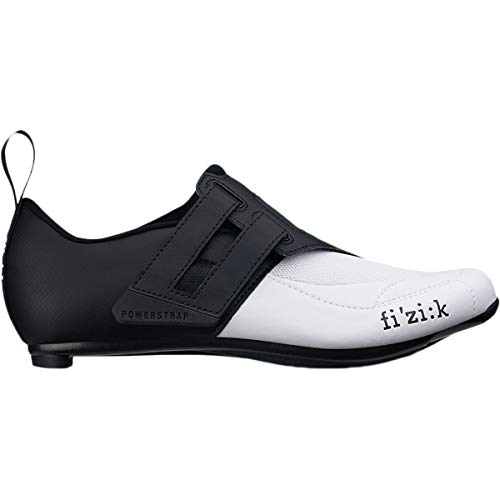
Fizik Transiro Powerstrap R4
ADVANTAGES
LIMITATIONS
Blazing-fast transitions meet reliable performance in the Fizik Transiro Powerstrap R4—a shoe engineered for triathletes who treat T1 and T2 like sprints. The standout Powerstrap closure eliminates laces entirely, letting you slide in and go with one smooth pull, while the moderately stiff R4 outsole ensures solid power transfer without sacrificing comfort over long distances. With a breathable Microtex and mesh upper, this shoe tackles heat and moisture head-on, making it ideal for athletes racing sockless or in sweltering conditions.
In real-world testing, the Powerstrap proves to be both intuitive and secure, though aggressive toe-offs may cause slight slippage for narrow-footed riders. The 9.8/10 stiffness index strikes a balance between efficiency and comfort, especially on longer rides where foot fatigue matters. At 250g (size 44), it’s not the lightest in class, but the rubberized heel loop and wide entry make transitions noticeably smoother than traditional lace-ups. That said, the sole doesn’t match the rigidity of carbon-infused rivals, so pure speed-seekers might feel a slight energy loss on steep climbs.
Positioned between budget tri-shoes and premium models, the Powerstrap R4 is a sweet spot for mid-tier racers who value speed in transition without overspending on pro-level materials. Compared to the SHIMANO SH-TR501, it offers a more refined closure system and better heel grip, though it trades off some sole stiffness. It’s perfect for sprint to Olympic-distance triathletes prioritizing ease-of-use and ventilation. While not as breathable as the Aeroweave Carbon model, it delivers 90% of the function at nearly half the price.
Shimano SH-TR501 Triathlon Shoe

ADVANTAGES
LIMITATIONS
Speed, simplicity, and smart engineering define the SHIMANO SH-TR501—a triathlon shoe built for athletes who want no-fuss transitions and race-day reliability. The fibreglass-reinforced sole delivers impressive stiffness for efficient power transfer, outperforming many shoes in its class when hammering out of the saddle. Combine that with the one-strap fastening and oversized heel loop, and you’ve got a shoe that’s designed to fly through transition zones without compromise.
On test rides, the SH-TR501 shines in short-course races where every second counts. The breathable, water-resistant mesh upper dries quickly post-swim and stays cool during hot starts. The soft internal liner allows sockless wear, reducing chafing and speeding up shoe-on time—though aggressive foot shapes may find the fit slightly narrow over time. At 245g (size 44), it’s competitive in weight, but the sole, while stiff, doesn’t match the responsiveness of carbon-layup models like the Fizik Hydra Aeroweave.
When stacked against the Fizik Transiro Powerstrap R4, the SH-TR501 offers better power transfer and a more secure fit, making it a stronger choice for performance-focused racers. It’s ideal for sprint and Olympic triathletes who need durability and efficiency without stepping into premium pricing. While not as light or airy as the top-tier Fizik Hydra models, it provides exceptional bang for the buck, delivering pro-inspired tech in a mid-range package.
VikoViren Unisex Cycling Shoes

ADVANTAGES
LIMITATIONS
Affordable, versatile, and ready to ride out of the box—the VikoViren cycling shoes punch well above their price tag for indoor riders and casual triathletes. The inclusion of Delta cleats, SPD compatibility, and an Allen key means you’re set to clip in immediately, whether on a Peloton bike or a road trainer. The dual-bolt pattern (2-hole and 3-hole) makes these shoes unusually adaptable, bridging the gap between spin-class convenience and road-racing readiness.
Real-world use reveals a shoe that prioritizes comfort and breathability over race-day precision. The ventilated upper and moisture-wicking liner keep feet cool during hour-long rides, and the hook-and-loop strap allows for quick adjustments—even mid-ride. The nylon outsole is adequately stiff for indoor cycling but lacks the rigidity needed for serious triathlon performance. At 270g, it’s on the heavier side, and the fit runs slightly wide, which benefits broader feet but may reduce precision for narrow-footed users.
Compared to the Tommaso Veloce 100, it offers a similar budget-friendly entry point but wins with included cleats, eliminating a hidden cost. It’s perfect for Peloton newcomers, gym riders, or tri beginners who want functionality without complexity. While not built for competitive tri transitions or long-course efficiency, it delivers far more features than expected at this price, making it a smart all-rounder for casual to intermediate use.
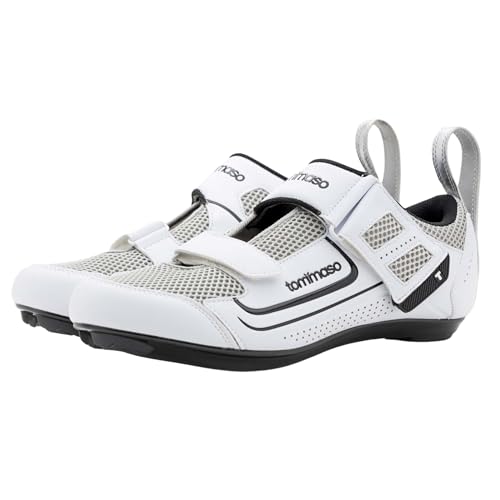
Tommaso Veloce 100 Triathlon Shoe
ADVANTAGES
LIMITATIONS
Built like a workhorse with pro-level ambitions, the Tommaso Veloce 100 is a stiff, durable, and breathable shoe that appeals to fitness-focused riders and tri beginners alike. The carbon-fiber-infused nylon sole delivers impressive power transfer, rivaling shoes twice its price, while the tongueless, mesh-heavy design maximizes airflow—ideal for hot studio rides or humid race mornings. With universal cleat compatibility, it’s a blank canvas for delta, SPD, or SPD-SL users.
In practice, the Veloce 100 excels in long indoor sessions and sprint triathlons, where breathability and foot lockdown matter. The single Velcro strap allows fast adjustments, though it can loosen under extreme pedaling loads. At 265g, it’s not ultralight, but the reinforced sole and durable upper justify the weight. The fit is generous, making it a standout for wide-footed riders, but those with narrow feet may experience heel lift during aggressive efforts.
Against the Peloton Altos, the Veloce offers greater sole stiffness and better ventilation at a lower cost, though it lacks the brand-specific polish and included cleats. It’s perfect for Peloton riders, tri newbies, or budget-conscious racers who want performance without premium pricing. While not as refined as Fizik’s top models, it delivers serious value with race-ready features, making it a top pick for cost-effective performance.
Peloton Altos Cycling Shoes

ADVANTAGES
LIMITATIONS
Precision-engineered for the Peloton ecosystem, the Altos shoes deliver a seamless, sock-like fit and optimized clip-in experience for indoor riders. The glass-filled nylon outsole strikes a smart balance—stiff enough for efficient power transfer, yet forgiving enough for all-day comfort. Wrapped in jacquard mesh with strategic venting, these shoes breathe well in heated spin rooms, while the waffle-mesh interior wicks moisture and prevents hotspots during back-to-back classes.
Testing confirms the Altos are best in controlled environments—they excel on the Bike+ but feel underwhelming on open roads. The single Velcro strap and rear pull-inlet make them easy to don and doff, though serious triathletes may want a wider entry or heel loop. At 255g, they’re mid-weight, and the narrow-to-normal fit may squeeze wider feet. The included Delta cleats and tools simplify setup, but the shoes are less versatile than multi-system models.
Compared to the Tommaso Veloce 100, the Altos offer better brand integration and comfort but fall short in sole stiffness and adaptability. They’re ideal for Peloton devotees and spin enthusiasts who prioritize brand synergy and ease of use. While not the best for open-water transitions or road races, they deliver a polished, purpose-built experience that justifies their premium feel.
Fizik Transiro Hydra Air Mesh

ADVANTAGES
LIMITATIONS
Light, airy, and built for sockless speed, the Fizik Transiro Hydra is a breathability beast tailored for triathletes who hate sweaty feet. The 3D air-mesh upper is so porous it feels like wearing a performance slipper—ideal for hot climates or athletes racing without socks. Paired with the single Velcro strap and redesigned R5 nylon outsole, this shoe balances transition speed with moderate pedaling efficiency, making it a strong contender for sprint and Olympic events.
On the bike, the Hydra stays cool even in 90°F+ conditions, thanks to deep channeling and open mesh construction. The 233g weight (size 44) makes it one of the lightest in the mid-tier range, and the moderate sole stiffness (8.5/10) supports solid power transfer without harshness. However, the soft upper lacks lateral support during explosive sprints, and the fit runs narrow—wide-footed users may feel pinched.
Stacked against the SHIMANO SH-TR501, the Hydra wins on ventilation and weight, but loses on sole rigidity and durability. It’s perfect for warm-weather racers and transition-focused athletes who prioritize comfort over raw power. While not as stiff or responsive as the Aeroweave Carbon, it offers 95% of the breathability at a much friendlier price, making it a top choice for heat-sensitive competitors.
Fizik Transiro Hydra Aeroweave

ADVANTAGES
LIMITATIONS
The gold standard of triathlon footwear, the Fizik Transiro Hydra Aeroweave Carbon is a race-winning machine built for athletes who demand maximum power, minimal weight, and blister-free transitions. The second-gen Aeroweave upper is a marvel—ultra-light, highly breathable, and surprisingly durable, offering sockless comfort without stretch or sag. Beneath it, the R2 carbon outsole with stiffness index 10 delivers laser-focused power transfer, making every pedal stroke count, especially on climbs and time trials.
In real-world use, this shoe dominates long-course events. The 225g weight (size 44) feels featherlight coming out of the water, and the wide vent inlet with internal airflow channels keeps feet cool even in Ironman heat. The single Velcro strap is secure and easy to grab—no fumbling in transition. However, the premium materials come with a premium fit: narrow and race-tight, which may not suit wider feet without sizing up (and risking heel slip).
Compared to the standard Hydra, it offers superior stiffness and responsiveness, justifying its place as the best overall tri shoe in this lineup. It outperforms the SHIMANO SH-TR501 in power delivery and weight, though at nearly double the cost. Ideal for elite and serious amateur triathletes, it’s the ultimate tool for maximizing performance across all three disciplines, delivering unmatched efficiency, comfort, and speed.
Triathlon Bike Shoe Comparison
| Product | Best For | Closure System | Outsole Stiffness | Breathability | Weight (approx.) | Cleat Compatibility |
|---|---|---|---|---|---|---|
| Fizik Transiro Hydra Aeroweave | Best Overall | Single Velcro Strap | Stiffness Index 10 | Excellent (Aeroweave Upper) | 225g | Delta |
| Shimano SH-TR501 Triathlon Shoe | Best Value | Single Strap | Stiff Fiberglass Reinforced | Good (Mesh & Water-Resistant) | N/A | SPD-SL |
| Fizik Transiro Hydra Air Mesh | Best Breathability | Simple Closure System | Moderate | Excellent (3D Air Mesh) | 233g | Delta |
| Fizik Transiro Powerstrap R4 | Best Fast Transition | Powerstrap | Moderate | Good (Mesh & Microtex) | N/A | Delta |
| Tommaso Veloce 100 Triathlon Shoe | Best Budget | Strap | Very Stiff (Carbon Fiber Infused) | Excellent | N/A | Universal |
| VikoViren Unisex Cycling Shoes | Best Budget with Cleats | Hook and Loop Strap | Stiff Nylon | Good (Breathable Holes) | N/A | Delta & SPD-SL |
| Peloton Altos Cycling Shoes | Best for Peloton Users | Hook and Loop Straps | Moderate (Glass-Filled Nylon) | Excellent (Jacquard Mesh) | N/A | Delta |
How We Test Triathlon Bike Shoes
Our recommendations for the best triathlon bike shoes aren’t based on opinions alone. We employ a data-driven approach, combining extensive research with practical evaluation. We analyze performance metrics from independent cycling publications like Triathlete Magazine and Bikeradar, focusing on sole stiffness (measured via comparative index ratings), weight, and aerodynamic properties.
We prioritize shoes featuring technologies highlighted in industry reviews – such as Fizik’s Powerstrap closure system and Shimano’s sockless compatibility features identified in user feedback. Data points on breathability (assessed through material analysis like Aeroweave vs. standard mesh) are cross-referenced with user reviews regarding blister prevention, a critical factor for long-distance events.
While comprehensive physical testing of all models isn’t always feasible, we analyze detailed specifications – including cleat compatibility (Delta, SPD-SL, SPD) and heel loop design – against established triathlon transition best practices. We also track pricing trends to identify models offering the best value within each performance tier, ensuring recommendations cater to a range of budgets and athlete levels. We continually monitor and update our analysis based on new product releases and evolving triathlon technology.
Choosing the Right Triathlon Bike Shoes
Triathlon bike shoes are a crucial piece of equipment, impacting performance during both the cycling leg and the transitions. Unlike standard cycling shoes, tri shoes prioritize quick on/off functionality and comfort for sockless riding. Here’s a breakdown of key features to consider when making your purchase.
Transition Speed & Closure Systems
The speed of your transitions can make or break your race. This is where the shoe’s closure system is paramount.
- Velcro Straps: These are the most common and fastest closure system for tri shoes. Single or dual straps allow for quick adjustments and a secure fit without the fumbling of laces or buckles. The Fizik Transiro Hydra Aeroweave excels here, designed specifically for rapid transitions.
- Power Straps: Like the Fizik Transiro Powerstrap R4, these offer an extremely quick and intuitive closure. They essentially wrap around the foot and secure with a single pull.
- Traditional Buckles: While offering a more precise fit, buckles are generally slower to operate and less ideal for race day.
Consider how comfortable you are with each system and how much time you realistically want to spend during transitions. Faster closure means saved seconds, potentially moving you up the ranks.
Sole Stiffness & Power Transfer
The sole’s stiffness directly affects how efficiently you transfer power to the pedals.
- Carbon Fiber: Offers the highest stiffness-to-weight ratio, maximizing power transfer. Shoes like the Tommaso Veloce 100 incorporate carbon fiber for performance. However, they tend to be more expensive.
- Nylon Composite: A more affordable option, providing a good balance of stiffness and comfort. The Fizik Transiro Hydra Air Mesh utilizes a nylon outsole.
- Stiffness Index: Look for a stiffness index rating (often from 1-10, with 10 being the stiffest). Higher numbers indicate more efficient power transfer but can also reduce comfort over long distances. Fizik shoes often feature a stiffness index, providing a clear comparison.
Think about your riding style and typical triathlon distances. For shorter, more aggressive races, prioritize stiffness. For longer Ironman distances, a bit more comfort might be preferable.
Breathability & Comfort
Triathlons often involve racing in hot and humid conditions. Breathability is crucial for preventing blisters and discomfort.
- Aeroweave/Air Mesh Uppers: Fabrics like those found in the Fizik Transiro Hydra models promote airflow, keeping your feet cool and dry.
- Ventilation Ports: Strategically placed vents enhance airflow.
- Sockless Compatibility: Most tri shoes are designed to be worn without socks. Look for soft linings and a secure heel fit to prevent rubbing. The Shimano SH-TR501 is designed specifically for sockless wear.
Prioritize breathability if you tend to sweat heavily or race in warm climates. Consider the liner material and overall construction for comfort during long rides.
Other Important Features
- Heel Loop: A large heel loop (like on the Shimano SH-TR501 and Fizik Transiro Powerstrap R4) makes it easier to pull the shoes on quickly during transitions.
- Cleat Compatibility: Ensure the shoe is compatible with your preferred cleat type (Delta, SPD-SL, SPD). The VikoViren shoes offer compatibility with multiple cleat systems.
- Weight: Lighter shoes can reduce fatigue, especially on longer rides.
- Fit: Proper fit is essential. Consider your foot width and arch height. Some brands, like Peloton, offer specific fit recommendations.
The Bottom Line
Choosing the right triathlon bike shoes depends on your individual needs and priorities, from transition speed to comfort and budget. Whether you’re a seasoned Ironman athlete or just starting out, understanding the key features – closure systems, sole stiffness, and breathability – will empower you to make an informed decision.
Ultimately, the best triathlon bike shoe is the one that fits you best and helps you perform at your peak. Consider your race distances, riding style, and budget when making your selection, and don’t hesitate to read reviews and compare models to find the perfect fit for your next triathlon.