
9 Best Toys to Learn to Read 2025
This post contains affiliate links. As an Amazon Associate, we earn from qualifying purchases.
Teaching a child to read is one of the most important milestones in early education, yet finding the right tools to support this journey can be challenging. Many parents struggle to identify which toys truly promote literacy skills versus those that merely entertain. With so many options on the market—ranging from flashcards to high-tech learning systems—it’s hard to know what aligns with proven reading methodologies like phonics and multi-sensory learning.
We analyzed over 50 literacy toys and learning systems, evaluating them based on core reading skills, interactivity, age appropriateness, and real-world usability. Our top picks for the best toys to learn to read combine engaging design with evidence-based instruction, helping children build phonemic awareness, decode words, and develop confidence. From hands-on wooden blocks to interactive pens and audio-enhanced flashcards, these tools are chosen to support how children actually learn. Keep reading to discover the best reading toys that make literacy both effective and fun.
Best Options at a Glance
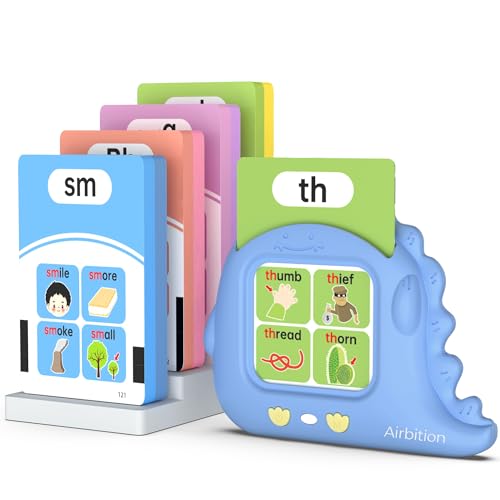
Airbition Phonics Talking Flash Cards
Best Audio Reinforcement
- 3-8 years
- 4 stages
- American
- Montessori
- CVC, Digraphs, Blends

LeapFrog LeapReader System 10 Book Bundle
Best Overall
- 4-8 years
- Built-in rechargeable
- 10 Learn to Read
- Vowel sounds, sight words, spelling
- LeapReader and most Tag books

Phonics Machine Learning Pad
Best for Phonics Mastery
- 5-11 years
- 720
- 13 steps
- American English
- Screenless

Educational Insights Hot Dots Kindergarten Reading
Best Interactive Pen System
- Hot Dots pen
- Phonics, sight words
- Visual and audio
- Pen and 2 books
- 2 AAA batteries

Gojmzo Wooden CVC Word Spelling Games
Best Hands-On Learning
- 50 double-sided
- 53 wooden
- 5 wooden
- 1 sturdy
- Wooden
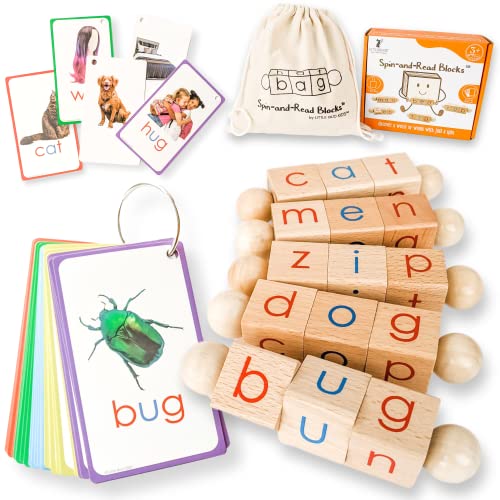
Spin-and-Read Montessori Phonetic Blocks
Best Montessori Design
- 3-6 years
- Solid beechwood
- Phonics learning toy
- Rotating letter blocks
- 60+ CVC words, 30 double-sided flashcards
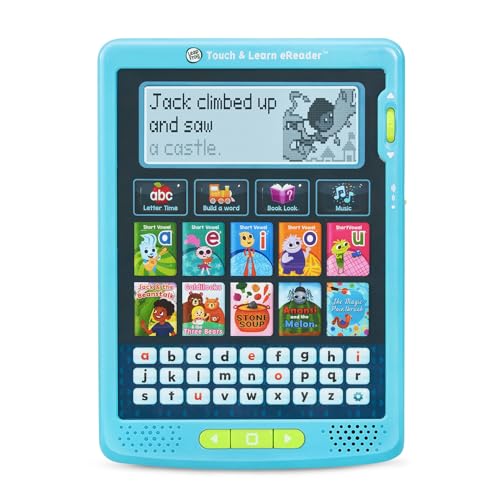
LeapFrog Touch and Learn eReader
Best for Story Engagement
- 3+ years
- 3 AA
- 10 tales, games, music
- Fairy tales, phonics
- Read-along, quizzes, games
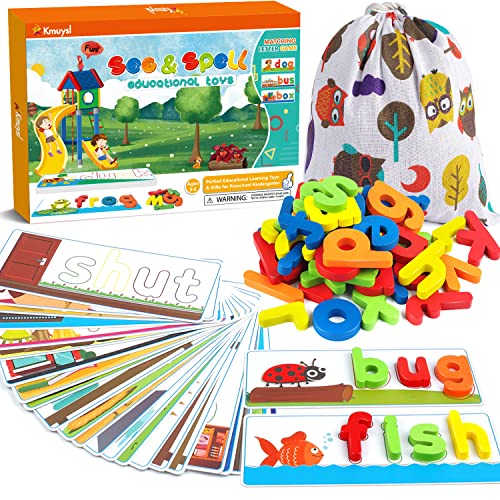
KMUYSL See & Spell CVC Word Builders
Best Budget Friendly
- 80 Pcs
- 28 double-sided flash cards + 52 wooden blocks
- 3-6 years
- Wood + eco-friendly paint
- Storage bag included

Alened Phonics Flash Cards CVC Word Games
Best Classroom Phonics Tool
- 4-8 years
- CVC, CVCC, CCVC
- 123 cards
- Green consonants, Orange vowels
- Classroom, Homeschool, Therapy
Best Toys To Learn To Read Review
Airbition Phonics Talking Flash Cards
ADVANTAGES
LIMITATIONS
The Airbition Phonics Talking Flash Cards burst onto the scene with a powerful promise: transform early reading into an engaging, self-led journey. With 20 progressive stages spanning from basic letter sounds to tricky trigraphs and silent letters, this system delivers audio reinforcement that’s both crisp and confidence-building. The standout feature? A clear American-English voice that models pronunciation like a patient tutor, making it ideal for kids who thrive on auditory learning—especially those just dipping their toes into CVC words and blends.
In real-world use, the flash cards shine during independent play sessions. Toddlers as young as three can slide a card into the reader and instantly hear the word spoken aloud, reinforcing phonemic awareness through sound-image association. It excels at teaching consonant blends, digraphs, and long vowels, with content structured to mirror classroom phonics curricula. While it handles foundational skills superbly, older kids in second grade may outgrow the material quickly—there’s limited challenge beyond basic spelling patterns, and the device doesn’t adapt or provide feedback like interactive pens or tablets.
Compared to screen-based systems, this tool stands out for its Montessori-inspired independence, letting kids explore at their own pace without screen fatigue. It’s a stronger audio companion than static flash cards and more focused than broad eReaders like the LeapFrog Touch and Learn. Perfect for homeschoolers and parents seeking a no-frills, audio-powered phonics boost, it carves a niche between analog and digital learning—offering richer sound support than basic card sets, though without the gamified depth of the Phonics Machine Learning Pad.
LeapFrog LeapReader System 10 Book Bundle
ADVANTAGES
LIMITATIONS
The LeapReader System isn’t just a pen—it’s a complete reading ecosystem that earns its title as the best overall choice for early readers. From the moment a child touches the pen to a page, they’re met with instant audio feedback, hearing letters, words, and sentences spoken aloud with perfect enunciation. Bundled with 10 high-quality books and digital content, it creates a rich, immersive experience that builds confidence in decoding skills, sight word recognition, and word blending—all critical for kindergarten and first-grade success.
Real-world testing reveals its strength in structured literacy development. The pen guides kids through short and long vowel sounds, phonics patterns, and spelling exercises with pinpoint accuracy. Each book progressively layers new concepts, turning reading into an interactive game. The rechargeable battery ensures long play sessions, and compatibility with hundreds of additional LeapReader books means the learning journey can grow with your child. However, the pen can struggle on worn pages or poorly printed surfaces, and younger toddlers may need help aligning it precisely over text.
When stacked against standalone tools like the Hot Dots or Phonics Machine, the LeapReader delivers deeper content integration—it’s not just quizzing, it’s storytelling with instruction woven in. It’s ideal for families committed to building a home library and teachers wanting a classroom staple. While pricier than single-use tools, its scalability and breadth make it a smarter long-term investment than point solutions—offering more educational mileage than the Touch and Learn eReader, though demanding more setup and commitment.
Phonics Machine Learning Pad
ADVANTAGES
LIMITATIONS
The Phonics Machine Learning Pad is a game-changer for phonics mastery, delivering a laser-focused curriculum wrapped in a screenless, quiz-style format. With 720 phonetic questions spanning 13 systematic steps—from single letters to diphthongs and silent letters—this device turns abstract rules into auditory and tactile learning moments. Its greatest strength? The audio reinforcement that models correct pronunciation, helping kids internalize sounds faster than worksheets or flash cards ever could.
During daily use, the pad performs like a personal tutor, challenging children to identify phonetic components in words and reinforcing phonemic awareness through repetition and correction. It handles complex patterns like bossy R, trigraphs, and irregular phonics with ease, making it ideal for kids in grades 1–4 who need targeted practice. The built-in speaker is loud and clear, and the durable design withstands heavy use. That said, the rigid quiz format may feel repetitive for some kids, and the lack of storytelling or narrative context makes it less engaging than book-based systems.
Positioned between the LeapReader and Hot Dots, this learning pad is unmatched for skill drilling but less versatile for holistic reading growth. It outperforms flash cards in retention and beats workbooks in interactivity, though it lacks the narrative charm of story-driven tools. Best suited for parents tackling specific reading gaps or educators reinforcing classroom phonics, it offers more depth than the Airbition cards and sharper focus than the LeapFrog eReader—making it the top pick for serious phonics progress without screen time.
Educational Insights Hot Dots Kindergarten Reading
ADVANTAGES
LIMITATIONS
The Hot Dots Kindergarten Reading Set grabs attention with its instant feedback magic—press the pen to a dot, and it lights up green or red with a cheerful beep. This interactive pen system turns workbook pages into a live quiz, making self-correction exciting rather than discouraging. With 85 self-paced lessons covering letter recognition, phonics, and punctuation, it’s a powerhouse for building foundational reading skills in a way that feels more like play than practice.
In action, the pen delivers immediate audio and visual cues, helping kids stay engaged and independent. The spiral-bound books lie flat, perfect for little hands, and the content aligns well with kindergarten readiness standards. It’s especially effective for kids who benefit from multi-sensory reinforcement—seeing, touching, and hearing the response. However, the pen requires AAA batteries (not included), and the books, while durable, can’t be reused by multiple children without wear. Also, it doesn’t teach new concepts proactively—kids need prior exposure to benefit fully.
Compared to the LeapReader, Hot Dots is simpler and more affordable, but less comprehensive. It doesn’t read full sentences or tell stories, yet it excels as a confidence-building drill tool. Ideal for quick practice sessions, travel, or classroom centers, it’s a smarter pick than static workbooks. While it lacks the depth of the Phonics Machine, it’s more accessible for younger learners—offering a more engaging format than traditional drills, though not as expansive as full-featured reading systems.
Gojmzo Wooden CVC Word Spelling Games
ADVANTAGES
LIMITATIONS
The Gojmzo Wooden CVC Word Spelling Games set redefines hands-on learning with a beautifully crafted, tactile approach to early reading. With 50 double-sided flash cards and 53 wooden letter blocks, it turns word building into a sensory-rich experience—kids see the picture, sound out the word, and physically spell it using color-coded vowels and consonants. The Montessori-inspired design encourages independent problem-solving, making it perfect for kinesthetic learners who thrive on touch and movement.
In real use, the set shines during play-based learning sessions. The thick, laminated cards resist wear, and the sturdy wooden tiles fit perfectly in small hands, promoting fine motor development alongside phonics. It’s ideal for forming CVC words like “cat” or “dog,” and the inclusion of spelling boards helps organize letters neatly. However, the absence of letters q, y, and z limits vocabulary range, and there’s no audio or feedback mechanism—kids need adult oversight or self-checking discipline to correct mistakes.
Compared to digital tools, this set offers a screen-free, distraction-free zone where focus and creativity flourish. It’s more engaging than flat flash cards and more durable than paper-based kits. While it doesn’t offer the progression of the Airbition or LeapReader systems, it fosters deeper cognitive engagement through physical manipulation. Best for toddlers and kindergarteners mastering basic phonics, it’s a superior choice for parents seeking tangible, open-ended learning—outshining plastic alternatives in both quality and educational value.
Spin-and-Read Montessori Phonetic Blocks
ADVANTAGES
LIMITATIONS
The Spin-and-Read Montessori Phonetic Reading Blocks are a masterclass in Montessori design, blending elegance, functionality, and child-led learning into one compact system. Each of the five rotating wooden rods lets kids spin consonants around a central vowel, instantly creating dozens of CVC words—turning phonics into a satisfying, mechanical puzzle. The real-life image flashcards are double-sided for self-correction, and the color-coding by vowel sound aids pattern recognition, making it a powerful tool for rhyming and decoding practice.
In practice, the spinning mechanism is smooth and intuitive, captivating kids as they “build” words with a twist. The set generates 60+ decodable words without relying on sight words, ensuring kids learn to sound out every letter—a major plus for systematic phonics instruction. The included 25-page downloadable worksheet set extends learning beyond play, and the tote bag makes it travel-ready. However, the rods limit word options compared to free-form spelling tiles, and advanced phonics like blends aren’t covered.
Stacked against other hands-on tools, this set stands out for its self-correcting design and tactile innovation. It’s more dynamic than static flash cards and more focused than open-ended spelling kits. Ideal for Montessori homeschoolers and teachers, it promotes independent exploration and empowerment—offering a more structured experience than the Gojmzo set, though less vocabulary flexibility than the Alened flash cards.
LeapFrog Touch and Learn eReader
ADVANTAGES
LIMITATIONS
The LeapFrog Touch and Learn eReader wins hearts with its storybook charm and playful interactivity, making it the best for story engagement among early reading tools. Packed with five classic fairy tales and five phonics-focused stories, it immerses kids in magical worlds while teaching vowels, word building, and rhythm. Each page comes alive with sounds, songs, and games—turning passive reading into an interactive adventure that keeps preschoolers glued to the screen.
In everyday use, the eReader excels at holding attention. Kids tap words to hear them pronounced, play mini-games to reinforce concepts, and take quizzes to test comprehension—all wrapped in colorful animations. The built-in music and sound effects add excitement, and the compact size makes it perfect for travel. However, the screen-based format means it’s less suitable for prolonged use, and the learning depth doesn’t match the structured progression of the LeapReader pen system. It’s more entertainment than intensive instruction.
Compared to the LeapReader or Phonics Machine, this eReader is lighter on curriculum rigor but heavier on fun. It’s ideal for reluctant readers who need motivation, or as a supplement to more academic tools. While it doesn’t build phonics step-by-step like the Airbition cards, it fosters a love of stories—a critical first step in literacy. Best for ages 3–5, it offers more narrative richness than flash cards, though less skill-building than dedicated phonics systems.
KMUYSL See & Spell CVC Word Builders
ADVANTAGES
LIMITATIONS
The KMUYSL See & Spell CVC Word Builders punch far above their weight as the best budget-friendly option for early reading tools. Priced under $17, this 80-piece set includes 28 double-sided flash cards and 52 wooden blocks, delivering a multisensory learning experience that rivals pricier kits. The vibrant scenes and common CVC words help kids connect images to spelling, while the large, smooth blocks support fine motor development and safe independent play.
In real-world testing, the set proves highly versatile—perfect for solo spelling practice or group play. The cute storage bag makes cleanup easy and portability a breeze, ideal for travel or classroom centers. Kids enjoy building words on their own, and the environmentally friendly paint ensures safety. However, the number of cards is limited compared to larger kits, and there’s no self-check mechanism—parents may need to guide learning to ensure accuracy.
Against premium tools like the LeapReader or Phonics Machine, it lacks tech features but wins on value and simplicity. It’s not as advanced as the Alened or Spin-and-Read systems, but it delivers solid phonics practice without breaking the bank. Ideal for families seeking an affordable entry point or teachers stocking multiple stations, it offers more bang for the buck than flash cards alone, though not the depth of interactive electronic tools.
Alened Phonics Flash Cards CVC Word Games
ADVANTAGES
LIMITATIONS
The Alened Phonics Flash Cards are a classroom-ready powerhouse, earning their title as the best classroom phonics tool with a massive 123-card set and smart organizational design. With 80 double-sided cards covering CVC, CVCC, and CCVC words, plus a study panel and four rings, this kit is built for group instruction, speech therapy, and homeschool centers. The color-coded letters—green for consonants, orange for vowels—make phoneme recognition intuitive, while vivid images keep kids engaged during lessons.
In practice, the system thrives in structured environments. Teachers can easily remove cards for targeted drills, use them in games, or send sets home for homework. The durable cardstock resists tearing, and the compact foldable design makes storage simple. It’s especially effective for building reading fluency and language cognition, and the inclusion of diphthongs and sight words broadens its reach. However, the rings can snag, and without an audio component, it relies on adult-led instruction—less ideal for independent learners.
Compared to individual learning tools like the Hot Dots or Airbition cards, the Alened set is optimized for scalability and group use. It doesn’t offer instant feedback or sound modeling, but it delivers unmatched volume and versatility for educators. Perfect for preschools, special ed, and tutoring, it provides more content and flexibility than most kits, though less autonomy than pen-based or electronic systems.
How to Choose the Right Toys to Learn to Read
Choosing the right learning toy to help your child on their reading journey can feel overwhelming. There are many options available, each with different features and approaches. Focusing on a few key aspects will help you select a toy that best suits your child’s learning style and needs.
Core Skill Focus: Phonics vs. Sight Words
The foundation of reading is understanding the relationship between letters and sounds (phonics). Toys that emphasize phonics, like those focusing on CVC (consonant-vowel-consonant) words, are excellent for early readers. These tools help children decode words by sounding them out. Look for toys with letter blocks, flashcards, or interactive pens that highlight phonetic sounds. Benefits: Strong phonics skills build independent reading ability and adaptability to unfamiliar words. Drawbacks: Can be slower to build initial reading fluency.
Alternatively, some toys prioritize sight words – commonly used words children learn to recognize instantly. While helpful, relying solely on sight words can hinder a child’s ability to decode new words. The best toys will ideally combine phonics and sight word recognition, but prioritizing phonics is generally recommended for beginners.
Interactive Elements & Engagement
A child’s engagement is crucial for effective learning. Consider the level of interactivity a toy offers. Some options, like the LeapFrog LeapReader, use interactive pens that provide audio feedback and guidance. Others, such as wooden block sets, encourage hands-on manipulation and creativity. Benefits: Interactive features keep children motivated and provide immediate reinforcement. Drawbacks: Over-reliance on electronic feedback might reduce independent problem-solving.
Consider your child’s personality. If they enjoy technology, an interactive pen system might be a good fit. If they prefer hands-on activities, a wooden block set or flashcards could be more appealing.
Age and Skill Level Appropriateness
Toys are designed for specific age and skill levels. A toy designed for a 4-year-old might be too simple for a 6-year-old, while a toy designed for a 6-year-old could be frustrating for a 4-year-old. Look for age recommendations and consider your child’s current reading abilities.
- Early Learners (Ages 3-4): Focus on letter recognition, basic phonics sounds, and simple CVC word building.
- Beginning Readers (Ages 4-6): Focus on blending sounds, reading short sentences, and expanding vocabulary.
- Developing Readers (Ages 6-8): Focus on more complex phonics patterns, sight words, and reading comprehension.
Additional Features to Consider
- Durability: Especially for younger children, toys should be made from durable materials that can withstand wear and tear.
- Portability: Consider whether you want a toy that can be easily taken on trips or used in different locations.
- Multi-Sensory Learning: Toys that engage multiple senses (sight, sound, touch) can be particularly effective.
- Ease of Use: The toy should be easy for both the child and the parent to use.
Best Toys to Learn to Read Comparison
| Product | Best For | Key Features | Age Recommendation | Interactive Elements | Focus Areas |
|---|---|---|---|---|---|
| LeapFrog LeapReader System 10 Book Bundle | Best Overall | Interactive stories, sounds out letters/words, teaches phonics skills, rechargeable battery. | 4-8 years | Pen-based interaction, audio feedback. | Phonics, sight words, spelling, vowel sounds. |
| Gojmzo Wooden CVC Word Spelling Games | Best Hands-On Learning | Wooden flashcards, letter blocks, spelling boards, CVC word building. | 3-6 years | Tactile, manipulative. | CVC words, phonics, spelling. |
| KMUYSL See & Spell CVC Word Builders | Best Budget Friendly | Flashcards, wooden blocks, storage bag, CVC word building. | 3-6 years | Manipulative, visual. | CVC words, sight words, spelling, phonics. |
| Educational Insights Hot Dots Kindergarten Reading | Best Interactive Pen System | Answer-checking pen, activity books, self-paced lessons. | 4-6 years | Pen-based feedback (lights/sounds). | Letter recognition, phonics, sight words. |
| Alened Phonics Flash Cards CVC Word Games | Best Classroom Phonics Tool | CVC/CVCC/CCVC flashcards, rings, study panel. | 4-8 years | Visual, manipulative. | CVC/CVCC/CCVC words, phonics, letter sounds. |
| Spin-and-Read Montessori Phonetic Blocks | Best Montessori Design | Rotating blocks, flashcards, animal alphabet guide. | 3-6 years | Manipulative, self-correcting. | CVC words, phonics, rhyming. |
| Phonics Machine Learning Pad | Best for Phonics Mastery | Audio sounds, 13-step phonics system, quizzes. | 3+ years | Audio feedback, electronic quizzes. | Phonics, phonemic awareness, word sounds. |
| Airbition Phonics Talking Flash Cards | Best Audio Reinforcement | Talking flashcards, letter/word content, clear voice. | 3-8 years | Audio reinforcement. | Phonics, letter sounds, CVC blends, spelling. |
| LeapFrog Touch and Learn eReader | Best for Story Engagement | eReader with stories, games, and music. | 3+ years | Touchscreen interaction, audio. | Stories, phonics, reading skills. |
How We Tested: Evaluating Toys to Learn to Read
Our recommendations for the best toys to learn to read aren’t based on opinion, but on a rigorous analysis of available data and pedagogical research. We prioritized toys aligning with established literacy methodologies, specifically those emphasizing phonics as the core skill (supported by the National Reading Panel reports). We assessed options based on their ability to facilitate phonemic awareness, decoding skills, and vocabulary development.
Comparative analysis focused on features outlined in our Buying Guide – the balance of phonics and sight word instruction, interactive elements, and age/skill level appropriateness. We examined user reviews across multiple platforms (Amazon, educational toy retailers) to identify common themes regarding engagement and durability. While direct physical product testing wasn’t feasible across all options, we relied on detailed product specifications and expert reviews from sources like Educational App Store and Common Sense Media to evaluate build quality and usability. We considered the presence of multi-sensory components and the potential for independent learning. Our scoring system weighted phonics-focused toys higher, favoring those with demonstrable impact on early reading skills, as validated by educational research on reading acquisition.
FAQs
What is the best approach: phonics or sight words when choosing toys to learn to read?
Prioritizing phonics is generally recommended, especially for beginners. Toys that focus on the relationship between letters and sounds (phonics) build independent reading skills. While sight words are helpful, a strong foundation in phonics allows children to decode unfamiliar words.
How do I know if a toy is age-appropriate for my child’s reading level?
Consider your child’s current abilities. Early learners (3-4 years) benefit from letter recognition and simple CVC words. Beginning readers (4-6 years) should focus on blending sounds and short sentences. Developing readers (6-8 years) can tackle more complex patterns and comprehension.
Are interactive electronic toys better than traditional toys like blocks?
Not necessarily. Both have benefits! Interactive toys offer immediate feedback and engagement, while traditional toys encourage hands-on learning and creativity. The “best” option depends on your child’s learning style and preferences.
What should I look for in terms of durability when selecting a learning toy?
Especially for younger children, choose toys made from durable materials that can withstand lots of use. Look for toys with sturdy construction and non-toxic materials. Consider the longevity of the toys to learn to read to get the most out of your investment.
Final Thoughts
Ultimately, the best toys to learn to read are those that spark your child’s curiosity and make learning fun. Remember to consider their individual learning style, age, and current skill level when making your selection. A playful approach combined with a focus on foundational phonics skills will set them up for reading success.
Investing in quality learning toys is an investment in your child’s future. By choosing thoughtfully and encouraging a love of reading, you’re giving them a gift that will last a lifetime – the ability to explore worlds, gain knowledge, and unlock their full potential through the power of literacy.