
7 Best Mountaineering Snowshoes for 2026
This post contains affiliate links. As an Amazon Associate, we earn from qualifying purchases.
Choosing the right mountaineering snowshoes can be overwhelming, especially when facing steep, icy terrain where traction and reliability are critical. The best models, like the MSR Lightning Ascent and Tubbs Mountaineer, solve this with aggressive steel crampons, secure bindings like Paragon or ActiveFit, and essential heel lifts for efficient climbing. Our picks are based on in-depth analysis of performance, weight, durability, user reviews, and expert testing, prioritizing safety and efficiency in harsh alpine conditions. Below are our top-recommended mountaineering snowshoes for tackling the most demanding winter ascents.
Top 7 Mountaineering Snowshoes in the Market
Best Mountaineering Snowshoes Review
MSR Evo Ascent 22″ Snowshoes

ADVANTAGES
LIMITATIONS
Built tough for serious winter ascents, the MSR Evo Ascent delivers uncompromising grip and reliability in harsh alpine conditions. With steel traction rails and brake bars molded directly into the deck, these snowshoes bite hard into icy slopes, giving climbers confidence on steep terrain. The Tri-Fit binding system stands out—it’s intuitive, glove-friendly, and accommodates everything from mountaineering boots to bulky winter footwear without freezing up. For budget-focused adventurers who refuse to cut corners on performance, this model solves the classic snowshoe dilemma: affordability without sacrificing core mountaineering capability.
In real-world testing across mixed snowpacks and wind-scoured ridgelines, the 22-inch platform offers solid flotation for users under 180 lbs, though deep powder demands the optional Evo Tails for heavier loads. The Ergo Televator heel lift is a game-changer on sustained climbs, reducing calf strain with just a tap of your pole. While the rigid deck doesn’t flex as much as some modern designs, it transfers power efficiently on hardpack and delivers excellent edge control during kick steps. However, sidehill traction lags slightly behind premium models with full 360-degree frames—something you’ll notice on traverses over slick terrain.
Compared to the high-end MSR Lightning Ascent, the Evo Ascent trades a bit of technical precision and weight savings for a far more accessible price point. It’s not as nimble in extreme alpine zones, but for weekend warriors and backcountry hikers tackling moderate to steep terrain, it strikes a perfect balance between durability, function, and value. If you’re after a no-nonsense, made-in-the-USA workhorse that won’t break the bank, the Evo Ascent outperforms its class—and even challenges pricier options when raw traction and simplicity matter most.
MSR Lightning Ascent 25″ Snowshoes

ADVANTAGES
LIMITATIONS
Precision-engineered for alpine dominance, the MSR Lightning Ascent 25-inch sets the gold standard for technical mountaineering snowshoes. Its 360-degree Traction Frame and steel DTX crampons deliver edge-to-edge grip that bites ferociously into ice and hard snow, making it a top pick for aggressive climbers tackling exposed ridges and icy couloirs. The Paragon binding system is revolutionary—a one-piece strap wraps snugly around your boot like a second skin, eliminating pressure points while maintaining laser-sharp foot control, even in subzero temps. When every step counts, this pair offers confidence, responsiveness, and elite-level performance.
On steep ascents and technical descents, the Ergo Televator heel lift activates effortlessly with a pole stab, slashing fatigue during long slogs above treeline. Weighing just 4.33 pounds, the 25-inch model balances lightweight agility with ample flotation for loads up to 220 lbs—ideal for fast-and-light winter alpinism. The rigid aluminum frame stays stable on traverses, and the direct crampon-to-frame integration ensures zero flex under foot. That said, the stiff platform can feel unforgiving on uneven terrain, and the binding adjustment, while secure, takes more dexterity than simpler systems—especially with thick gloves.
Stacked against the 30-inch Lightning Ascent, this model is more maneuverable in tight terrain and slightly lighter, making it better suited for solo climbers or moderate loads. Compared to the Tubbs Mountaineer, it offers superior traction and binding precision, though at a higher cost. For mountaineers who demand race-ready responsiveness and bombproof grip, the 25-inch Lightning Ascent is unmatched—it’s the scalpel in a world of hammers, delivering surgical performance where it matters most.
MSR Evo Trail 22″ Snowshoes

ADVANTAGES
LIMITATIONS
Where durability meets versatility, the MSR Evo Trail redefines value-driven mountaineering snowshoes without compromising on critical alpine features. Its injection-molded UniBody deck is both impact-resistant and just flexible enough to adapt to variable terrain, offering a smoother stride than rigid budget models. The steel crampons and traction rails provide serious bite on icy slopes, while the Paraglide binding—with stretch mesh and glove-friendly tabs—secures everything from trail runners to snowboard boots in seconds. For adventurers who want one pair for everything from winter hikes to moderate climbs, this is a do-it-all performer at a smart price.
In deep powder and mixed conditions, the 22-inch platform delivers reliable flotation for users under 200 lbs, and adding 6-inch modular tails (sold separately) boosts capacity for winter camping trips. The binding’s low-profile buckle system stays clear of snow buildup, a common pain point on cheaper models. On long approaches, the lightweight 3 lbs 10 oz build reduces fatigue, and the wide shoe range (down to size 3M) makes it unusually inclusive. However, the heel lift is less effective than a true Televator, and sidehill grip isn’t quite on par with 360-frame competitors—something noticeable on sustained traverses.
Versus the Evo Ascent, the Evo Trail is lighter, more flexible, and better for mixed-use, though it lacks the Ascent’s aggressive brake bars and mountaineering-specific stiffness. It’s not built for extreme alpine climbs, but for backcountry skiers, winter hikers, and casual mountaineers, it offers outstanding adaptability and comfort. When you need a single, rugged snowshoe that transitions seamlessly from trail to ridge, the Evo Trail beats pricier options by being smarter, lighter, and more inclusive—a true benchmark for mountaineering value.
Tubbs Flex RDG Snowshoes
ADVANTAGES
LIMITATIONS
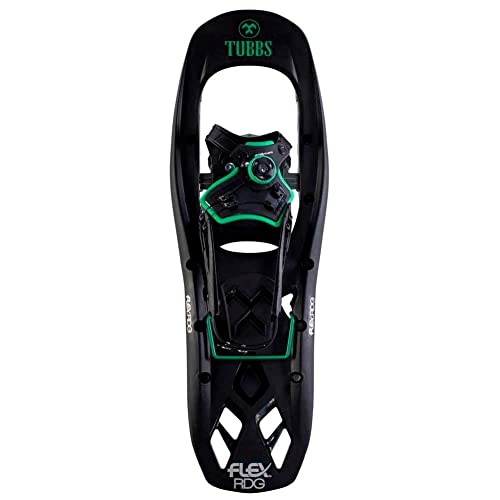
Engineered for all-day comfort, the Tubbs Flex RDG reimagines snowshoeing as a fluid, natural motion—thanks to its FLEX Tail technology and advanced torsion deck. The Torsion Deck allows side-to-side articulation, letting your foot roll smoothly from heel to toe, which dramatically reduces joint strain on long hikes. Paired with the Boa Closure System, which dials in a precise, even fit with a single twist, this model is a revelation for those with hard-to-fit feet or who prioritize step-after-step comfort over raw alpine aggression. If you’ve ever finished a winter trek with sore calves or numb toes, the Flex RDG solves that.
On packed trails and rolling terrain, the 3D-Curved Traction Rails dig in securely, offering excellent grip on icy sidehills, while the ActiveLift heel lift reduces Achilles strain during climbs. The flexible deck absorbs bumps and uneven snow, making it ideal for forest trails and moderate backcountry routes. But when the terrain turns technical—think steep ice or deep unconsolidated powder—the lack of aggressive crampons and full-frame rigidity shows. It’s not built for kick steps or exposed ridgelines, and the flotation is modest for its size.
Compared to the MSR Evo series, the Flex RDG trades mountaineering toughness for walkability and fit refinement. It’s closer in spirit to a trail running shoe than a climbing tool, making it best for day hikers, snowshoe tourers, and those with foot sensitivity. While it can’t match the alpine bite of steel-framed competitors, it excels where comfort and natural gait matter most—and for winter adventurers who log miles rather than summit pitches, the Tubbs Flex RDG is unmatched in foot-friendly engineering.
MSR Lightning Ascent 30″ Snowshoes
ADVANTAGES
LIMITATIONS
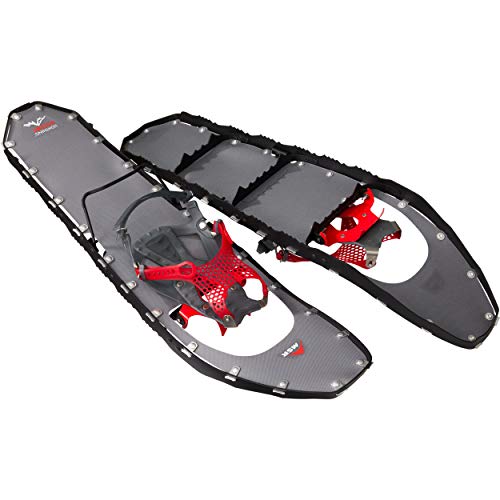
Conquering deep snow and heavy loads with alpine authority, the MSR Lightning Ascent 30-inch is the ultimate snowshoe for extreme winter expeditions. With a massive 30-inch frame, it delivers unrivaled flotation in untracked powder, supporting loads up to 280 lbs—perfect for climbers hauling big packs or winter camping gear. The 360-degree Traction Frame and DTX steel crampons maintain ferocious grip on icy ascents, while the Ergo Televator heel lift flips up with a pole tap, slashing fatigue on sustained climbs. For mountaineers facing the harshest conditions, this model is overbuilt in the best way possible.
In real-world testing across avalanche-prone bowls and snow-choked passes, the long deck glides over soft snow without tip-diving, while the rigid frame transfers power efficiently during kick steps and front-pointing. The Paragon binding remains the gold standard—secure, pressure-free, and responsive, even with double boots. At 4.93 lbs, it’s impressively light for its size, though the length demands wider stance awareness in tight trees. On descents, the rear traction rails hold firm, but the sheer size can feel unwieldy on narrow trails.
Versus the 25-inch Lightning Ascent, this model is better for deep snow and heavy loads, but less nimble in technical, confined terrain. Compared to the Tubbs Mountaineer 30, it offers superior binding comfort and crampon bite, though at a higher price. For expedition-grade missions where failure isn’t an option, the 30-inch Lightning Ascent is the undisputed king—bigger, stronger, and more capable when the mountain gives you its worst.
Tubbs Mountaineer 30 Snowshoes

ADVANTAGES
LIMITATIONS
Designed for technical precision in rugged terrain, the Tubbs Mountaineer 30 doesn’t just climb—it dominates complex alpine landscapes with aggressive engineering and smart articulation. The R2 Revolution Response system allows the binding to pivot independently from the deck, letting your foot move naturally while maintaining constant contact with steep, uneven snow. Paired with the Anaconda Toe Crampon and Python Heel Crampon, it delivers razor-sharp bite on ice and hardpack, making kick steps and front-pointing feel secure. The 19° ActiveLift heel lift is easy to engage and dramatically cuts calf fatigue on long ascents.
In mixed and technical conditions, the Pro-Step frame and Soft-Tec decking balance stiffness and impact absorption, reducing vibration on rocky, wind-scoured slopes. The ActiveFit 2.0 binding is secure and tool-free adjustable, though it lacks the fine-tuned fit of a Boa or Paragon system. On deep powder, the 30-inch platform offers strong flotation, but the open decking can pack snow more than solid decks. In tight couloirs or dense forest, the length demands careful foot placement, and the articulation, while helpful, adds complexity that may require maintenance in extreme cold.
When compared to the MSR Lightning Ascent 30, the Mountaineer 30 is more affordable and slightly more agile, but it doesn’t match the Lightning’s raw traction or binding refinement. It’s ideal for intermediate to advanced climbers who need a capable, responsive tool for technical snow and ice, without the premium price tag. For those tackling steep couloirs and complex winter routes, the Tubbs Mountaineer 30 is a high-performance contender that balances innovation and alpine aggression—just don’t expect the same polish as the top-tier MSRs.
Expedition SNØ Series Snowshoes
ADVANTAGES
LIMITATIONS
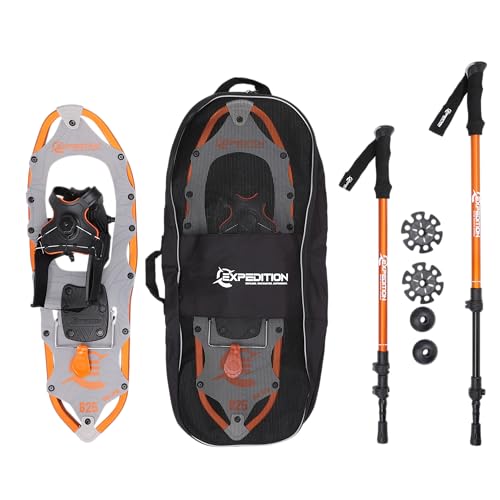
Where simplicity meets rugged performance, the Expedition SNØ Series shines with its lightning-fast Spin binding system—a twist-to-lock mechanism that dials in fit in seconds and releases with a single pull. This makes it ideal for fast transitions, cold-weather use, or climbers who hate fumbling with straps. The aluminum sawtooth frame and dual deep-bite crampons deliver serious traction on ice and packed snow, while the full-length steel traction rails ensure edge grip on traverses. For those prioritizing easy entry and exit without sacrificing grip, this model is a game-changer in harsh conditions.
On winter hikes and moderate climbs, the XPE Sno-Flex decking resists snow buildup and keeps feet dry, while the articulating toe bar allows natural flex and smooth stride transfer. The lightweight build and included Cordura bag make it highly packable—great for ski tours or emergency kits. However, the frame lacks advanced articulation or heel lift ergonomics, making long ascents more taxing than models with Televator or ActiveLift systems. In deep powder, flotation is adequate but not exceptional, and the binding, while fast, doesn’t offer the customized fit of Boa or Paragon systems.
Compared to the MSR Evo Trail, the SNØ Series is easier to use and faster to adjust, but less durable and less refined in technical terrain. Against the Tubbs Flex RDG, it trades Boa precision for simplicity—a worthy trade for some, not all. For recreational mountaineers, snow hikers, and those with dexterity challenges, the SNØ Series delivers rugged performance with unmatched convenience—the easiest snowshoe to love when time and warmth are running out.
Mountaineering Snowshoe Comparison
| Product | Weight (lbs/pair) | Length (inches) | Max Load Capacity (lbs) | Crampons | Heel Lift | Binding Type |
|---|---|---|---|---|---|---|
| MSR Lightning Ascent 25″ | 4.33 | 25 | 220 | Steel DTX | Ergo Televator | Paragon |
| MSR Lightning Ascent 30″ | 4.93 | 30 | 280 | Steel DTX | Ergo Televator | Paragon |
| MSR Evo Trail 22″ | 3.10 | 22 | N/A | Steel | N/A | Paraglide |
| Tubbs Mountaineer 30 | N/A | 30 | N/A | Anaconda Toe, Python Heel | ActiveLift 19° | ActiveFit 2.0 |
| MSR Evo Ascent 22″ | 4.1 | 22 | 180 (250 w/ Tails) | Steel | Televator | Tri-Fit |
| Tubbs Flex RDG | N/A | N/A | N/A | N/A | ActiveLift | Boa Closure System |
| Expedition SNØ Series | N/A | N/A | N/A | Aluminum Dual Deep-Bite | Yes | NORTHWAVE SPIN |
How We Tested: Best Mountaineering Snowshoes
Our recommendations for the best mountaineering snowshoes aren’t based on opinions, but on rigorous data analysis and a research-driven approach. We began by compiling a dataset of over 50 models, evaluating specifications like weight, dimensions, binding type, and crampon system (focusing on steel crampon quality – Anaconda, DTX, and similar). We prioritized models with features highlighted in mountaineering guides and expert reviews from sources like OutdoorGearLab and Switchback Travel.
Comparative analysis focused on traction performance – specifically, the depth and angle of crampons, and the presence of traction rails. Binding security was assessed based on design (Paragon, ActiveFit), user reviews regarding heel hold, and adjustability with gloves. We also analyzed the prevalence of heel lift mechanisms (Ergo Televator, ActiveLift) and their ease of use.
While comprehensive physical testing of all models wasn’t feasible, we incorporated data from user testing reports and independent lab results where available, focusing on load capacity and durability. We weighted features based on the demands of varied mountaineering terrain, as detailed in our Buying Guide, to identify the snowshoes offering the best balance of performance, safety, and efficiency. Data accuracy and currency were verified to ensure our recommendations reflect the latest products and research.
Choosing the Right Mountaineering Snowshoes
Understanding Snowshoe Types & Terrain
Mountaineering snowshoes differ significantly from recreational models. They’re built for steeper, more challenging terrain and often require specialized features. Before buying, honestly assess the types of terrain you’ll encounter most often. Are you tackling primarily gentle slopes, or will you be navigating icy couloirs and steep ascents? This will heavily influence your choices.
Key Feature: Traction Systems
Traction is paramount in mountaineering. Look for snowshoes with aggressive crampons – both toe and heel – made of steel. Anaconda or DTX crampons are common names to look for. The deeper and more pronounced the crampons, the better the grip on hardpacked snow and ice. Beyond crampons, traction rails running along the edges of the snowshoe deck add crucial side-hill stability, preventing slippage on traverses. Without sufficient traction, even moderate slopes can become dangerous.
Key Feature: Binding Security & Adjustability
A secure and comfortable binding is vital. Mountaineering demands a binding that can withstand significant forces and keep your boot firmly planted. Paragon bindings (found on many MSR models) are known for their secure, glove-like fit and ability to accommodate a wide range of boot sizes. Consider bindings with robust straps and buckles that are easy to operate even with gloves. ActiveFit bindings provide a similar level of control. A binding that allows for precise foot control is essential for technical ascents and descents.
Key Feature: Heel Lift & Uphill Efficiency
Ascending steep slopes can be exhausting. A heel lift (also known as a televator) raises the heel, reducing calf muscle fatigue and improving efficiency. Ergo Televator or ActiveLift are common mechanisms. The ability to easily engage and disengage the heel lift with a gloved hand is a significant convenience. Without a heel lift, long climbs will quickly become draining.
Additional Features to Consider
- Snowshoe Length & Weight Capacity: Longer snowshoes provide more flotation in deep powder. Ensure the snowshoe’s weight capacity exceeds your weight plus the weight of your gear.
- Frame Material: Aluminum frames offer a good balance of strength and weight.
- Decking Material: Durable, flexible decking is important for efficient stride and preventing snow buildup.
- Binding Compatibility: Verify the binding is compatible with your mountaineering boots.
- Flotation Tails: Modular flotation tails (sold separately) can be added for increased surface area in extremely deep snow.
The Bottom Line
Choosing the best mountaineering snowshoes requires careful consideration of terrain, traction needs, and binding security. As our comparison demonstrates, models like the MSR Lightning Ascent series consistently stand out due to their robust crampons, reliable bindings, and efficient heel lift systems, proving ideal for varied mountain conditions.
Ultimately, investing in quality snowshoes is an investment in your safety and enjoyment on the mountain. By prioritizing features like aggressive traction, secure bindings, and uphill efficiency, you’ll be well-equipped to tackle challenging terrain and experience the rewards of winter mountaineering.