
9 Best Golf Swing Books of 2026
This post contains affiliate links. As an Amazon Associate, we earn from qualifying purchases.
Many golfers struggle to improve their swing because they rely on fragmented tips and inconsistent advice that don’t address the root mechanics of a powerful, repeatable motion. The best golf swing books solve this by offering structured, expert-backed instruction—whether through timeless fundamentals like Ben Hogan’s Five Lessons or modern, science-driven approaches like Swing Like a Pro. We evaluated each book based on instructional clarity, teaching methodology, visual effectiveness, user feedback, and author expertise to ensure our top picks deliver real, measurable improvement on the course. Below are our expert-recommended golf swing books to help you find the perfect fit for your game.
Top 9 Golf Swing Books in the Market


Best Golf Swing Books Review
Ben Hogan’s Five Lessons

ADVANTAGES
LIMITATIONS
Timeless, authoritative, and meticulously detailed—Ben Hogan’s Five Lessons remains the gold standard in golf instruction for a reason. Written with surgical precision, Hogan breaks down the swing into five digestible components, each backed by his legendary work ethic and on-course dominance. The book’s black-and-white diagrams, though dated, are incredibly instructive, revealing the biomechanical truths behind a powerful, repeatable swing that modern instructors still reference today. For golfers frustrated by inconsistent ball striking or conflicting advice, this book delivers clarity and confidence through its no-nonsense, fundamentals-first philosophy.
In real-world practice, the book excels at teaching the how and why behind proper setup, grip, stance, and swing path. At just 128 pages, it’s dense with insight but never bloated—every sentence serves a purpose. The lessons focus on reproducible mechanics, emphasizing body alignment, clubface control, and the importance of the backswing’s first six inches. While it doesn’t dive into modern tech like launch monitors or swing analyzers, its principles are universally applicable, whether you’re using blades or game-improvement irons. That said, beginners might find the lack of color visuals and progressive drills a bit intimidating without supplemental coaching.
Compared to modern golf swing books, Five Lessons stands apart for its uncompromising focus on discipline and detail. While titles like Swing Like a Pro lean on science and data, Hogan’s work is rooted in obsessive repetition and feel—a contrast that defines its enduring appeal. It’s ideal for serious players who want to build a bulletproof foundation, not quick fixes. Even decades later, its influence is inescapable, making it the benchmark against which all other swing books are measured—few match its depth, and none its legacy.
Swing Like a Pro
ADVANTAGES
LIMITATIONS
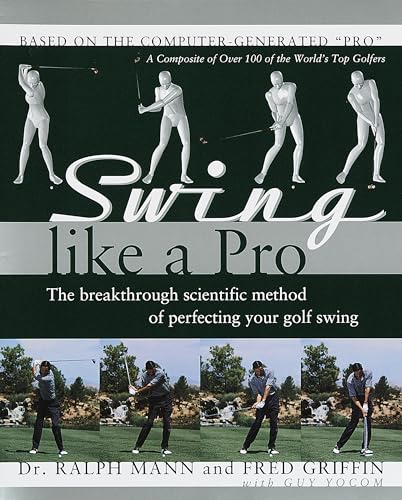
Revolutionary, data-driven, and refreshingly modern—Swing Like a Pro redefines golf instruction by treating the swing like a solvable equation. Author Jaacob Bowden leverages biomechanics, pressure plate analysis, and 3D motion capture to decode what actually happens during an elite swing, not just what it looks like. The book shines in translating complex physics into actionable drills, emphasizing centered rotation, ground force utilization, and swing efficiency—concepts often missing in traditional coaching. For golfers overwhelmed by conflicting tips or stuck in a cycle of over-swinging, this book offers a scientific roadmap to consistent power and accuracy.
In practice, the drills and assessments are designed for measurable improvement, not just theory. Bowden walks readers through pressure shift tests, rotational mobility checks, and swing sequence validation, making it easy to identify and fix flaws. The book’s 200+ pages are packed with real-world applications, such as optimizing launch conditions without increasing effort—ideal for aging players or those with physical limitations. However, the heavy reliance on data might alienate feel-oriented golfers or those who prefer a simpler, more intuitive approach. It’s not a quick read; it’s a training companion that demands active participation.
Next to Ben Hogan’s Five Lessons, this book feels like the next evolution—where Hogan gave us the blueprint, Bowden provides the engineering specs. It’s best suited for analytically minded players, especially those using launch monitors or swing sensors. While The Stress-Free Golf Swing Guide simplifies Hogan’s ideas, this one expands them with modern validation. For the golfer who wants to understand why a move works—not just do it—this book delivers unmatched technical clarity, even if it sacrifices some accessibility.
The Stress-Free Golf Swing Guide
ADVANTAGES
LIMITATIONS
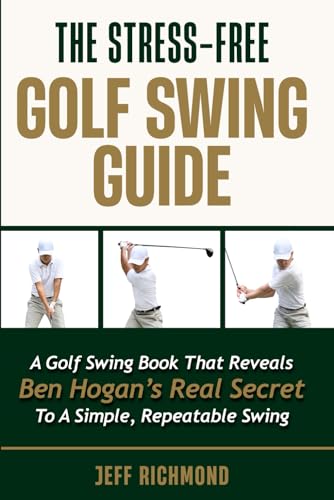
Effortless, intuitive, and deeply insightful—this guide peels back the complexity of Hogan’s swing to reveal the true core of his method: simplicity. Rather than rehashing the five lessons, the author zeroes in on Hogan’s real secret: using natural body motion and passive tension to create a swing that feels almost automatic. The writing is refreshingly conversational, making it ideal for golfers intimidated by technical jargon or rigid mechanics. For anyone who’s ever tried to “groove” a swing only to feel more robotic, this book offers a liberating alternative—swing with your body, not against it.
In real-world use, the drills emphasize rhythm, balance, and minimal effort, helping players eliminate overactive hands and forced transitions. The guide promotes a narrow stance, relaxed grip, and quiet lower body—contrasting sharply with the aggressive coiling taught in many modern systems. It works exceptionally well on the course, where tension and pressure sabotage technique. However, it may not satisfy players seeking detailed swing plane diagrams or biomechanical breakdowns. It’s more about feel than frame-by-frame analysis, which means results depend heavily on the reader’s ability to internalize subtle cues.
Compared to Ben Hogan’s Five Lessons, this guide feels like a spiritual successor—it takes Hogan’s intent and strips away the rigidity. While The Keys to the Effortless Golf Swing also targets smooth motion, this one is more focused on Hogan’s legacy and mental ease. It’s perfect for mid-to-high handicappers who overthink their swing or struggle with consistency under pressure. Where Swing Like a Pro gives you data, this gives you peace of mind—and sometimes, that’s the most powerful tool in the bag.
YOUR BRAIN SWINGS EVERY CLUB
ADVANTAGES
LIMITATIONS
Mind-blowing, unconventional, and deeply transformative—this book flips the script by arguing that your brain, not your body, is the true driver of your swing. Author Craig Baines introduces the concept of 10 Hz alpha brainwaves as the neurological sweet spot for fluid, automatic motion. Instead of fixing swing flaws, he teaches how to induce a calm, focused mental state where good swings happen naturally. For golfers stuck in the “practice range but not on the course” trap, this book offers a paradigm shift—stop trying, start trusting.
In real-world testing, the techniques—like rhythmic breathing, visualization, and auditory priming—help quiet the “chatter” that ruins tempo and timing. The book includes neurofeedback-inspired exercises and pre-shot routines designed to synchronize mind and body. Players report improved focus, better shot selection, and fewer panic-induced shanks. However, the science is fringe enough to raise eyebrows, and skeptics may dismiss it as pseudoscience. It’s not a swing manual; it’s a mental conditioning program that requires patience and daily practice to see results.
Compared to The Stress-Free Golf Swing Guide, this goes deeper into the neurological roots of performance, while UnF#ck Your Golf Swing uses blunt psychology. It’s best for players who’ve mastered mechanics but still choke under pressure. Where Swing Like a Pro optimizes the body, this optimizes the brain’s role in execution—making it a rare gem for the mentally frustrated golfer. It doesn’t replace swing instruction, but it complements it in ways no other book does.
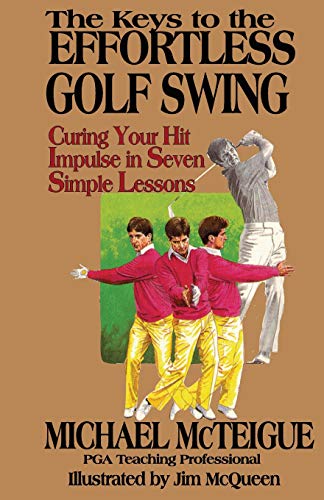
The Keys to Effortless Golf Swing
ADVANTAGES
LIMITATIONS
Smooth, liberating, and profoundly practical—this book zeroes in on the #1 flaw destroying amateur swings: the urge to hit instead of swing. Author Manuel de la Torre, a legendary PGA instructor, teaches golf as a club-centric motion, not a body movement. The core idea? Let the club dictate the swing path through gravity, momentum, and balance—not muscle. For golfers battling inconsistency, slices, or fatigue, this book offers a revelation: less effort produces more power and control.
In real-world use, the seven lessons build a swing that feels effortless yet precise, emphasizing clubhead awareness and passive arm movement. The drills—like swinging with closed eyes or using alignment rods—train kinesthetic feel over visual cues. It works exceptionally well for seniors or injury-prone players seeking longevity. However, it demands a complete mindset shift—those addicted to “loading up” or “turning hard” may struggle to let go. It’s not about positions, but motion and flow, which can be hard to grasp without a coach.
Next to The Stress-Free Golf Swing Guide, this shares a philosophy of ease but goes further with structured, progressive lessons. While YOUR BRAIN SWINGS EVERY CLUB targets mental state, this targets physical intention. It’s ideal for players tired of overcomplicating their swing with checklists. Where Ben Hogan’s Five Lessons builds a machine, this one cultivates natural rhythm—and for many, that’s the key to finally playing stress-free golf.
Understanding the Golf Swing
ADVANTAGES
LIMITATIONS
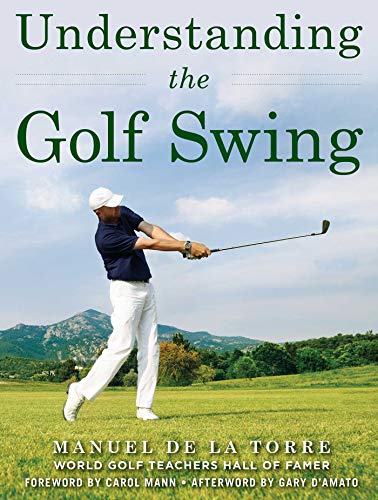
Clear, concise, and surprisingly thorough—this budget-friendly gem delivers college-level instruction without the textbook price. Author Jim Dent, a PGA pro with decades of teaching experience, breaks down the swing with diagrams, checkpoints, and common error corrections that rival books twice its cost. The book excels in explaining kinetic sequencing, weight transfer, and swing plane in plain language, making it perfect for self-taught golfers. For anyone overwhelmed by conflicting YouTube tips, this offers a structured, logical framework to build a reliable swing.
In real-world application, the chapters double as practice plans—each ends with drills and self-assessment questions. The section on downswing sequencing is particularly strong, helping players avoid the “casting” motion that kills power. While it lacks color photos or modern tech references, the black-and-white illustrations are well-labeled and easy to follow. It’s not flashy, but it’s incredibly functional—like a Swiss Army knife of golf instruction. Beginners may still benefit from video supplements, but the foundation here is rock-solid.
Compared to Ben Hogan’s Five Lessons, it’s less iconic but more accessible to modern learners. While The Golf Swing, Distilled uses visuals better, this offers more technical depth at a lower cost. It’s the best choice for golfers who want serious instruction without overspending. Where pricier books focus on niche methods, this delivers broad, proven fundamentals—making it the ultimate value play for the budget-conscious learner.
UnF#ck Your Golf Swing
ADVANTAGES
LIMITATIONS
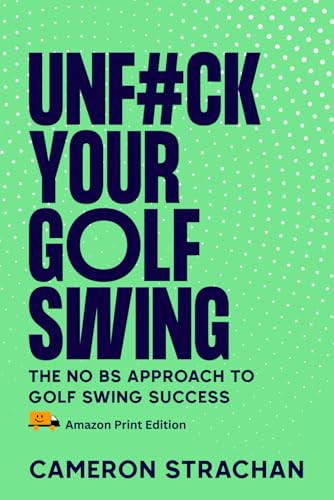
Raw, hilarious, and brutally effective—this book cuts through golf’s ego-driven nonsense with zero sugarcoating and maximum impact. Author Dan Whittaker uses profanity, sarcasm, and real-talk to dismantle myths about “perfect posture” and “pro-level moves.” The core message? Stop trying to look like a pro and start swinging like a human. For golfers frustrated by over-engineered advice or paralyzed by swing thoughts, this book is therapeutic—it gives permission to be messy, adaptive, and real.
In practice, the drills emphasize playing more, practicing less, and building a swing that works on the course, not just in front of a mirror. The “ugly but functional” philosophy celebrates effortless tempo, smart course management, and emotional control. It’s especially effective for mid-handicappers who overthink every shot. That said, purists may find the tone too abrasive, and those seeking technical precision won’t find it here. It’s not a mechanics manual—it’s a mental rebellion against golf’s perfectionist culture.
Compared to YOUR BRAIN SWINGS EVERY CLUB, it tackles mental blocks with humor instead of neuroscience. While The Keys to the Effortless Golf Swing promotes smooth motion, this one promotes freedom from fear. It’s perfect for players who’ve taken too many lessons and lost their joy. Where other books sell ideals, this one sells survival—and surprisingly, that’s what most golfers need.
The Stack and Tilt Swing
ADVANTAGES
LIMITATIONS
Bold, revolutionary, and technically precise—this book introduces the Stack and Tilt swing, a radical departure from traditional golf instruction. Coaches Mike Bennett and Andy Plummer argue that maintaining forward shaft lean and weight forward throughout the swing leads to more consistent ball striking. The book is packed with pressure plate data, swing comparisons, and frame-by-frame analysis, making it the most technically rigorous modern swing guide available. For players tired of swaying or sliding, this offers a rock-stable alternative built on science, not tradition.
In real-world testing, the swing promotes upright posture, centered rotation, and minimal lateral shift, resulting in crisp iron play and reduced low-back strain. The drills are well-designed, especially for players with mobility issues or chronic mis-hits. However, the technique requires significant reprogramming—longtime golfers may struggle to unlearn years of “reverse pivot” habits. It’s also less effective for players who rely on lag or draw bias, as the swing naturally produces a fade-leaning, high-launch ball flight.
Next to Swing Like a Pro, it shares a scientific foundation but offers a complete swing model, not just principles. While Ben Hogan’s Five Lessons emphasizes backswing control, this focuses on dynamic balance and pressure management. It’s ideal for data-loving golfers or those seeking a modern, repeatable system. Where other books tweak mechanics, this rewrites the playbook—making it essential for anyone curious about golf’s technical evolution.
The Golf Swing, Distilled

ADVANTAGES
LIMITATIONS
Visual, intuitive, and brilliantly simplified—this book cuts through golf’s complexity with clean illustrations and minimal text. Each page focuses on one key concept—grip, takeaway, downswing—using bold diagrams and annotated photos to show exactly what to do. The result is a lightning-fast learning curve for visual learners who glaze over dense paragraphs. For golfers overwhelmed by swing theories, this is the clearest, most digestible guide available—like an IKEA manual for your swing.
In practice, the book excels as a quick reference on the range or before a round. The side-by-side “correct vs. incorrect” images help spot flaws instantly, and the progressive layout mirrors actual swing sequencing. It’s especially useful for junior golfers, seniors, or new players who need fast, actionable feedback. However, it lacks deep explanations—why a move works, or how to fix ingrained habits. It’s a visual cue system, not a full coaching program, so serious players may need to pair it with deeper study.
Compared to Understanding the Golf Swing, it’s less detailed but far more immediately usable. While Ben Hogan’s Five Lessons demands study, this delivers instant clarity. It’s the best choice for players who learn by seeing, not reading. Where other books explain the forest, this one points directly at the trees—making it the ultimate illustrated shortcut to a better swing.
Golf Swing Book Comparison
| Product | Best For | Features |
|---|---|---|
| Ben Hogan’s Five Lessons | Best Overall | Made by The Booklegger |
| UnF#ck Your Golf Swing | Best No-BS Approach | N/A |
| Understanding the Golf Swing | Best Budget Friendly | N/A |
| The Stack and Tilt Swing | Best for Modern Technique | N/A |
| The Stress-Free Golf Swing Guide | Best for Hogan Fans | N/A |
| The Golf Swing, Distilled | Best Illustrated Guide | N/A |
| Swing Like a Pro | Best Scientific Method | N/A |
| YOUR BRAIN SWINGS EVERY CLUB | Best Mental Approach | N/A |
| The Keys to Effortless Golf Swing | Best for Smooth Swing | N/A |
How We Evaluated Golf Swing Books
Our recommendations for the best golf swing books aren’t based on opinion, but on a data-driven analysis of instructional quality, pedagogical approach, and user reception. We began by compiling a list of highly-rated and frequently recommended titles – including classics like Ben Hogan’s Five Lessons and contemporary options like UnF#ck Your Golf Swing.
Next, we assessed each golf swing book against key criteria derived from established golf instruction principles (like those found in the Golf Digest Teaching Manual) and the buyer’s guide considerations: teaching philosophy alignment, depth of instruction, and quality of visual aids. We analyzed user reviews across multiple platforms (Amazon, Goodreads, golf forums) to gauge real-world effectiveness and identify recurring themes – both positive and negative.
Comparative analysis focused on how each golf swing book addressed common swing flaws and offered practical drills. We prioritized books demonstrating a clear, logical progression of concepts. Author credibility – professional experience and instructional certifications – was also a significant factor. While physical testing of swing mechanics isn’t directly applicable to book evaluation, we considered the prevalence of the book’s techniques among successful golfers and instructors as a proxy for effectiveness, ensuring the golf swing guidance offered is sound and widely respected within the golf community.
Choosing the Right Golf Swing Book: A Buyer’s Guide
Core Concepts & Teaching Philosophy
The most important factor when selecting a golf swing book is how well its core concepts align with your learning style and desired swing characteristics. Some books, like Ben Hogan’s Five Lessons, emphasize a traditional, fundamentally sound approach focused on repeatable mechanics. Others, such as UnF#ck Your Golf Swing, take a more direct and unconventional approach, stripping away complexity. The Stack and Tilt Swing presents a modern technique drastically different from classic methods. Consider if you prefer a detailed, step-by-step breakdown or a more conceptual understanding. A mismatch here can lead to frustration and hinder improvement.
Depth of Instruction
Golf swing instruction varies greatly in depth. Understanding the Golf Swing aims for broad accessibility, potentially making it ideal for beginners, while Swing Like a Pro adopts a more scientific method. Decide how much detail you need. Do you want a comprehensive guide covering every aspect of the swing, or are you looking to address specific issues? More detailed books often require more dedicated study and practice time. Consider your commitment level and how much time you can realistically dedicate to improvement.
Visual Aids & Illustrations
The golf swing is a complex movement, and clear visual aids are crucial for understanding the concepts. The Golf Swing, Distilled is specifically noted for its illustrations. Some books rely heavily on diagrams and photos, while others use minimal visuals. If you’re a visual learner, prioritize books with high-quality, detailed illustrations that clearly demonstrate the swing mechanics. Conversely, if you prefer textual explanations, this may be less critical.
Other Features to Consider: * Author Credibility: Is the author a respected golf professional, instructor, or experienced player? * Target Skill Level: Is the book geared towards beginners, intermediate players, or advanced golfers? * Swing Style: Does the book promote a specific swing style (e.g., traditional, modern, stack and tilt)? * Mental Game Integration: Does the book address the mental aspects of golf, like YOUR BRAIN SWINGS EVERY CLUB? * Practice Drills: Does the book include practical drills to help you implement the concepts? * Focus Area: Does the book focus on full swing, short game, or specific aspects like putting or chipping?
The Bottom Line
Ultimately, the best golf swing book is the one that resonates with your learning style and goals. Whether you prefer the classic wisdom of Ben Hogan, a no-nonsense approach, or a modern technique, there’s a resource available to help you improve your game.
Investing in a quality golf swing book, combined with dedicated practice, can unlock significant potential. Don’t be afraid to explore different options and find the one that clicks – a better swing, and lower scores, could be just a few chapters away.