
8 Best Golf Books for Beginners 2026
This post contains affiliate links. As an Amazon Associate, we earn from qualifying purchases.
Learning to play golf can feel overwhelming, with confusing techniques, swing mechanics, and etiquette rules that intimidate beginners. The right golf book simplifies this journey by offering clear instruction, practical drills, and confidence-building guidance—whether it’s mastering your grip or understanding course strategy. We evaluated the best golf books for beginners based on instructional clarity, user feedback, author expertise, and how well they teach fundamentals like stance, swing, and mental focus. Below are our top picks to help you start strong on the course.
Top 8 Golf Books For Beginners in the Market
Best Golf Books For Beginners Review
Harvey Penick’s Little Red Book

ADVANTAGES
LIMITATIONS
Timeless wisdom radiates from every page of Harvey Penick’s Little Red Book, a compact masterpiece that distills decades of elite instruction into digestible, heartfelt lessons. Its intimate tone and proven techniques—like mastering the waggle or understanding the psychology of ‘looking up’—make it feel less like reading a manual and more like receiving personal mentorship from a golf sage. This isn’t just a book for beginners—it’s a foundational guide that solves the core struggle of new players: building confidence through simplicity.
In real-world practice, the book shines when applied to short games and mental approach, with chapters like ‘Hole Them All’ delivering immediately actionable insights that improve consistency on the green. While it lacks modern data-driven analysis or video integration, its laser focus on fundamentals—such as grip, tempo, and alignment—transcends technological advances in training tools. The absence of complex diagrams doesn’t hurt; instead, Penick’s vivid storytelling makes concepts stick during actual rounds, especially for those overwhelmed by technical overload.
Compared to Ben Hogan’s Five Lessons, which dives deep into mechanical precision, Little Red Book takes a more emotional and intuitive path, making it ideal for learners who thrive on narrative over rigid structure. It’s not the most comprehensive option, but for beginners craving authentic connection to the soul of golf, it stands apart. While The Complete Golf Manual offers richer visuals, Penick’s work delivers unmatched depth through brevity—and remains the gold standard for classic, human-centered instruction.
Golf My Way

ADVANTAGES
LIMITATIONS
Revolutionary in its era and still remarkably relevant, Golf My Way by Jack Nicklaus delivers a player-tested blueprint that balances power, precision, and adaptability across all aspects of the game. What sets it apart is its holistic philosophy—Nicklaus doesn’t preach one-size-fits-all swings but encourages beginners to develop a style that fits their body and mindset. This personalized approach directly addresses the frustration many newcomers face when trying to mimic rigid, mechanical forms they can’t sustain.
From driving off the tee to delicate pitch shots, the book walks you through each phase with clear logic and pro-level insights, such as weight transfer timing and club selection strategy. Though it lacks step-by-step illustrations found in modern guides like DK’s Complete Golf Manual, Nicklaus’s explanations are detailed enough to visualize and apply during practice sessions. It performs best when used alongside on-course experimentation, though absolute beginners might wish for more beginner-specific drills or etiquette guidance.
When stacked against Ben Hogan’s Five Lessons, this book favors natural motion over mechanical perfection, making it more accessible to casual learners. While Hogan’s work is analytical and exacting, Golf My Way feels alive—shaped by real tournament experience and long-term playability. For beginners aiming to build a lifelong, adaptable game rather than perfect form, this remains the superior choice. It doesn’t match the visual richness of DK’s guide, but its strategic depth and flexibility offer better long-term value than highly structured alternatives.
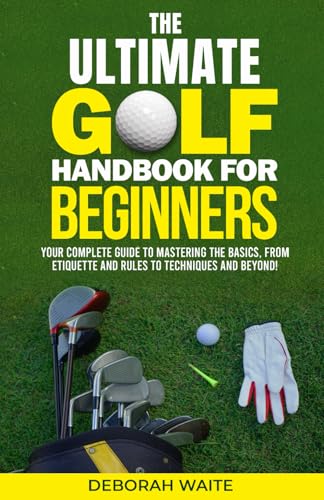
The Ultimate Golf Handbook For Beginners
ADVANTAGES
LIMITATIONS
Everything a newcomer needs is packed into The Ultimate Golf Handbook For Beginners, a no-fluff roadmap that transforms intimidation into clarity with comprehensive coverage of rules, etiquette, gear, and swing mechanics. This book excels at eliminating the overwhelm beginners feel when stepping onto the course—answering unspoken questions like ‘Where do I stand?’ or ‘What club should I use?’ with quiet authority. Its structured progression turns golf’s complexity into manageable chunks, making it the go-to guide for those who want a complete foundation in one place.
Real-world usability is where this handbook truly delivers: it walks you through pre-shot routines, course management, and even scorekeeping—topics often glossed over in classic texts like Harvey Penick’s Little Red Book. While it doesn’t offer the legendary anecdotes or emotional resonance of older works, its practicality fills the gap between theory and first-round survival. The digital format enhances readability, though print purists may miss tactile navigation, and the lack of embedded video means learners must pair it with visual resources for full benefit.
Compared to How to Play Golf for Beginners (B0C7TCD4SQ), this version goes deeper into course behavior and etiquette, giving it an edge for players planning to join leagues or social play. It doesn’t have the star power of Nicklaus or Hogan, but it outshines them in beginner-specific utility. While The Complete Golf Manual offers better imagery, this handbook wins on functional completeness, providing a smoother onboarding experience than any other single-volume option. For new golfers who want to avoid embarrassment and start strong, it’s unmatched in scope and relevance.
The Women’s Guide to Golf

ADVANTAGES
LIMITATIONS
Tailored empowerment defines The Women’s Guide to Golf, a refreshing take that acknowledges the unique physical, social, and psychological landscape female beginners navigate on the course. It doesn’t just adapt men’s instruction—it reimagines the learning journey with considerations for strength distribution, club fitting for smaller frames, and confidence-building in male-dominated spaces. This intentional design solves a key pain point: many women feel alienated by generic guides that ignore their lived experience.
The book shines in real-world scenarios like group lessons and casual play, offering advice on everything from choosing the right grip size to handling unsolicited tips from strangers. It blends technical basics—stance, swing plane, chipping—with supportive narratives that normalize the learning curve. While it lacks the visual depth of DK’s Complete Golf Manual, its conversational tone keeps readers engaged without overwhelming them. However, those seeking advanced mechanics or tournament prep will need to graduate to more technical texts later.
Against Harvey Penick’s Little Red Book, this guide feels more inclusive and context-aware, even if it doesn’t reach the same literary status. It’s not trying to be a timeless classic—it’s designed to be immediately useful. For women starting out, especially those wary of golf’s traditional culture, this book acts as both teacher and ally. While it doesn’t cover junior play like the kids’ guide, its gender-specific relevance makes it the clear leader for adult female beginners seeking comfort and competence in equal measure.
How to Play Golf for Kids

ADVANTAGES
LIMITATIONS
Fun meets fundamentals in How to Play Golf for Kids, a vibrant, energy-packed guide that turns learning golf into an adventure rather than a chore. Written with young minds in mind, it uses simple language, relatable analogies (like ‘steering a bike’ for alignment), and milestone-based progress tracking to keep children engaged from first swing to first nine-hole round. This directly tackles the biggest barrier for kid learners: boredom and frustration caused by overly technical instruction.
In action, the book works best during family outings or junior clinics, where parents or coaches can use its mini-games and challenges to reinforce concepts like grip pressure or putting rhythm. It covers essential rules and safety tips in digestible snippets, avoiding the dryness of adult-oriented manuals. While it doesn’t dive into nuanced swing theory like Ben Hogan’s Five Lessons, that’s by design—its strength lies in building enthusiasm and muscle memory, not precision mechanics. The digital format allows easy access on tablets, though younger readers may need help navigating the text without audio support.
Compared to The Ultimate Golf Handbook, this version sacrifices breadth for age-appropriate pacing and tone, making it far more effective for under-15 learners. It’s not a replacement for adult guides, but as a launchpad for junior players, it’s unmatched. While Golf My Way inspired generations, this book speaks directly to the next one—turning early exposure into lasting passion. For families wanting to introduce golf without pressure or confusion, it’s the most engaging starting point available.
Ben Hogan’s Five Lessons

ADVANTAGES
LIMITATIONS
Mechanical mastery is the soul of Ben Hogan’s Five Lessons, a legendary text that dissects the golf swing with surgical precision and remains one of the most influential works in sports instruction history. Its nine-panel swing sequence and detailed analysis of stance, grip, and backswing path offer beginners a crystal-clear model to emulate—addressing the chaos many feel when trying to coordinate multiple body parts at once. For learners who crave structure and love breaking down movements, this book is nothing short of revelatory.
On the range, the lessons translate into tangible improvements in consistency and ball striking, particularly for players willing to practice deliberately and slowly ingrain correct form. The emphasis on muscle memory and repetition helps build a repeatable swing, though the dense prose and lack of color visuals can overwhelm true beginners. It performs exceptionally well for self-learners using mirrors or video feedback, but those needing motivational support or etiquette guidance will find it emotionally cold compared to warmer guides like Penick’s Little Red Book.
When compared to Golf My Way, Hogan’s approach is analytical versus adaptive—he prescribes a near-perfect form rather than encouraging personal variation. This makes it less forgiving for older or less flexible beginners, but ideal for those aiming for technical excellence. While The Complete Golf Manual offers better illustrations, no other book delivers such uncompromising clarity on swing mechanics. For beginners serious about building a pro-level foundation, it’s the ultimate investment in precision—one that rewards patience with power and control unmatched by more casual guides.
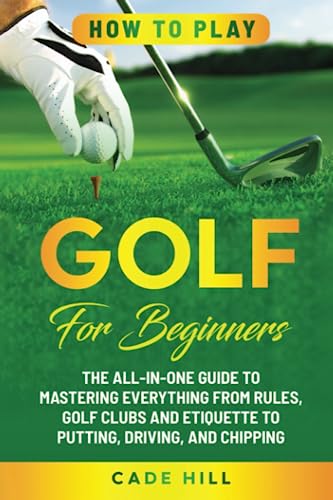
How to Play Golf for Beginners
ADVANTAGES
LIMITATIONS
Affordable clarity defines How to Play Golf for Beginners, a lean, no-frills guide that gets new players course-ready without breaking the bank. It cuts straight to the essentials—club types, basic swings, rules, and etiquette—presenting them in a clean, easy-to-follow format perfect for last-minute prep before a first round. For beginners overwhelmed by choice or hesitant to invest heavily upfront, this book solves the problem of information overload with simplicity and speed.
In real use, it excels as a quick-reference tool: need to know how to drop a ball or choose between irons and woods? This guide delivers answers in seconds. The digital format enhances searchability, though it lacks interactive features or embedded videos that could deepen understanding. It won’t replace deep-dive classics like Ben Hogan’s Five Lessons, nor does it offer the emotional warmth of Penick’s Little Red Book, but it serves its purpose efficiently. Where it stumbles is in swing mechanics—explanations are functional but not transformative.
Stacked against The Ultimate Golf Handbook (B0DJTBBL4Y), this version is leaner and more budget-conscious, sacrificing some depth for accessibility. It’s not as rich in detail or narrative, but for time-crunched adults or casual duffers testing the waters, it removes friction. While The Complete Golf Manual dazzles with visuals, this guide wins on cost-effectiveness and speed of learning. For those wanting a fast, frictionless start without commitment, it’s the smartest entry point.
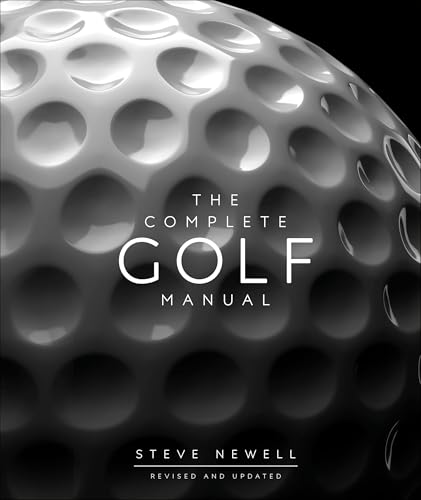
The Complete Golf Manual
ADVANTAGES
LIMITATIONS
Visual brilliance defines The Complete Golf Manual, a lavishly illustrated guide that turns complex golf concepts into instantly understandable images, diagrams, and step-by-step photo sequences. For beginners who learn best by seeing—not reading—this book eliminates guesswork with crystal-clear breakdowns of swing planes, grip variations, and course navigation. It directly addresses the confusion many new players feel when trying to internalize abstract advice, replacing ambiguity with visual certainty.
In practice, it performs exceptionally well during home study or pre-round review, with spreads dedicated to trouble shots, bunker play, and reading greens—scenarios where quick visual recall matters most. The integration of anatomical diagrams showing muscle engagement adds a layer of depth rarely seen in beginner books. However, its size and weight make it less portable than digital alternatives, and the sheer volume of content can feel daunting for absolute newcomers who just want to hit the ball straight.
Compared to Harvey Penick’s Little Red Book, this manual trades poetic wisdom for educational precision, making it better suited for analytical minds than romantic ones. It doesn’t have the emotional resonance of Nicklaus or Hogan, but it surpasses them all in instructional clarity through design. While Ben Hogan’s Five Lessons offers deeper mechanical theory, DK’s guide makes that knowledge accessible. For beginners who value immediate comprehension over tradition, it’s the most effective learning tool in the lineup—especially when paired with hands-on practice.
Golf Book Comparison for Beginners
| Product | Best For | Key Features |
|---|---|---|
| Ben Hogan’s Five Lessons | Best Overall | Made by The Booklegger |
| Harvey Penick’s Little Red Book | Best Classic Instruction | Golf Medicine, Looking Up, The Three Most Important Clubs, The Waggle, Hole Them All |
| The Ultimate Golf Handbook For Beginners | Best Comprehensive Guide | N/A |
| The Complete Golf Manual | Best Visual Guide | N/A |
| How to Play Golf for Beginners | Best Budget Friendly | N/A |
| The Women’s Guide to Golf | Best for Women Beginners | N/A |
| How to Play Golf for Kids | Best for Kids | N/A |
| Golf My Way | Best All-Around Techniques | N/A |
How We Evaluated Golf Books for Beginners
Our recommendations for the best golf books for beginners aren’t based on opinion, but a data-driven analysis of instructional quality, clarity, and user reviews. We assessed each golf book based on its alignment with established pedagogical principles for motor skill learning – focusing on books that prioritize foundational elements like grip, stance, and swing mechanics.
We analyzed content depth, specifically looking for beginner-friendly language and the avoidance of excessive jargon. Comparative analysis involved mapping each book’s instructional approach (fundamentals-focused, holistic, or comprehensive – as outlined in our buying guide) against common learning styles. We cross-referenced reader reviews from sources like Amazon and Goodreads, paying particular attention to feedback regarding ease of understanding and practical applicability of the drills. Author credentials and the inclusion of helpful features like illustrations, drills, and mental game advice were also weighted. Finally, we considered the longevity and continued relevance of classic texts like Ben Hogan’s Five Lessons versus newer publications offering contemporary insights into the golf swing. This multi-faceted approach ensures our selections provide the most effective learning experience for new golf players.
Choosing the Right Golf Book for Beginners: A Buyer’s Guide
Understanding Your Learning Style
Selecting a golf book isn’t one-size-fits-all. The “best” book depends heavily on how you learn best. Do you prefer detailed explanations, visual aids, or a more conversational tone? Consider this first.
Core Instructional Approach
This is arguably the most important factor. Golf instruction can vary significantly. * Fundamentals-Focused: Books like Ben Hogan’s Five Lessons emphasize building a solid foundation in grip, stance, posture, and swing mechanics. These are excellent if you want a systematic, technical approach and are willing to dedicate time to practice drills. The benefit is a potentially more consistent and repeatable swing. However, they can be less engaging for some. * Holistic/Philosophical: Harvey Penick’s Little Red Book takes a broader approach, blending technical advice with mental game insights and anecdotes. This style is good for players who want a more intuitive understanding of the game. The downside can be less specific, step-by-step instruction. * Comprehensive Guides: Books like The Ultimate Golf Handbook For Beginners aim to cover everything from equipment to etiquette to swing technique. These are helpful for a complete overview but may lack in-depth coverage of specific areas.
Content Depth & Beginner Friendliness
A book marketed towards beginners should actually be accessible. Look for books that: * Avoid overly technical jargon. * Use clear, concise language. * Include plenty of illustrations or photographs (especially The Complete Golf Manual). * Break down complex concepts into manageable steps. * Offer drills and practice exercises.
Specific Needs & Target Audience
Consider if you have specific needs. * Women’s Golf: The Women’s Guide to Golf will specifically address the physical and technique differences relevant for female golfers. * Junior Golfers: How to Play Golf for Kids will use age-appropriate language and focus on fun and foundational skills. * Budget: How to Play Golf for Beginners can be a good starting point if you’re looking for an affordable option. * All-Around Techniques: Golf My Way can guide you for all-around techniques.
Features to consider: * Illustrations * Drills & Exercises * Mental Game Advice * Equipment Guides * Etiquette Information * Swing Analysis Tools (if any) * Author’s Credentials * Book Length/Page Count
The Bottom Line
Ultimately, the best golf book for you will depend on your individual learning style and goals as a beginner. Whether you prefer a detailed, fundamentals-focused approach like Ben Hogan’s Five Lessons or a more holistic perspective from Harvey Penick’s Little Red Book, there’s a resource to help you start your golf journey.
Don’t be afraid to explore a few different options and see which one resonates with you most. Consistent practice, combined with the right guidance from these excellent books, will set you on the path to enjoying the rewarding game of golf for years to come.