
8 Best Direct Drive Bike Trainers of 2026
This post contains affiliate links. As an Amazon Associate, we earn from qualifying purchases.
Choosing the right direct drive bike trainer can be overwhelming, with factors like inconsistent resistance, loud operation, and poor app integration undermining your indoor training. The best models solve this by delivering precise power accuracy (within ±1%) and realistic ride feel through high-inertia flywheels and dynamic resistance that seamlessly syncs with apps like Zwift and TrainerRoad. Our picks are based on rigorous evaluation of performance data, connectivity, user reviews, and real-world usability—including noise, stability, and smart features like virtual shifting and ERG mode. Below are our top-tested recommendations for the best direct drive bike trainers across different budgets and needs.
Top 8 Direct Drive Bike Trainer in the Market
Best Direct Drive Bike Trainer Review
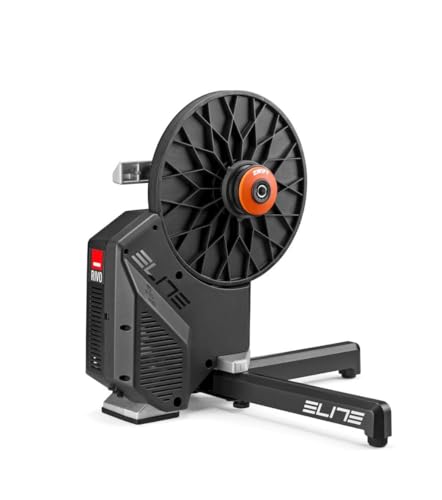
Elite Rivo Zwift Ready Trainer
ADVANTAGES
LIMITATIONS
The Elite Rivo bursts out of the gate as a Zwift-first warrior, engineered for riders who want to jump straight into virtual riding without wrestling with setup. With ±2.5% power accuracy, a 2,100-watt ceiling, and pre-installed Zwift Cog & Click, this direct drive trainer eliminates friction—both mechanical and mental. Its 24 silent virtual gears respond instantly from the handlebars, making it a dream for Zwift beginners craving a seamless, cable-free shift experience that just works, right out of the box.
In real-world testing, the Rivo shines in structured workouts and Zwift races thanks to 10Hz data transmission and smooth resistance ramping up to 18% gradients. It stays impressively quiet—perfect for apartment dwellers or late-night efforts—while the dual Bluetooth and WiFi connectivity ensures rock-solid app pairing across devices. However, while it handles climbs with confidence, sprinters pushing beyond 1,800 watts may notice slight resistance lag. The foldable legs and carry handle make storage a breeze, though the lack of downhill simulation feels like a missed opportunity in an otherwise smart package.
Compared to the budget-focused CYCPLUS models, the Rivo trades some raw power for polish, prioritizing user-friendliness and app integration over extreme specs. It’s not the most powerful or precise trainer here, but it’s arguably the most beginner-optimized Zwift machine in this lineup. For newcomers who value plug-and-play simplicity, the Rivo delivers a refined, frustration-free gateway to indoor cycling—offering better app synergy and out-of-box readiness than the Wahoo KICKR CORE, even if it doesn’t match the high-end feel of the KICKR V6.
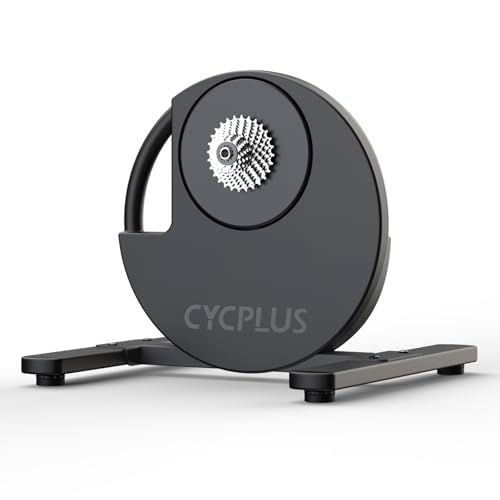
CYCPLUS R200 Smart Trainer
ADVANTAGES
LIMITATIONS
The CYCPLUS R200 is a budget-smart powerhouse, punching well above its weight with a 2,200-watt output and ±1% power accuracy—a rarity at this price point. Its brushless motor delivers buttery-smooth resistance, while dual BLE/ANT+ connectivity ensures flawless pairing with Zwift, TrainerRoad, and the CYCPLUS app. What truly sets it apart is the uphill/downhill simulation, making virtual rides feel startlingly real, especially when descending virtual alpine passes with dynamic resistance rollback.
During testing, the R200 handled sustained climbs up to 19% gradient with minimal heat buildup, thanks to a smart cooling fan that actively manages thermal load. The customizable parameters—like bike weight, transmission loss, and downhill coefficient—let power users fine-tune realism, while the virtual shifting (with optional BC2 shifter) eliminates drivetrain noise. That said, it doesn’t support ERG mode with virtual shifting, which can frustrate structured training purists. And while it’s quiet, it’s not whisper-quiet—noticeable fan hum emerges during hard efforts.
Stacked against the Elite Rivo, the R200 offers more power and realism for less cash, though it lacks built-in Zwift accessories and a branded ecosystem. It’s a clear winner for tech-savvy riders on a budget who want high fidelity without the premium tag. It doesn’t have the refined ride feel of the Wahoo KICKR V6, but for sheer spec-for-dollar value, the R200 delivers unmatched versatility—especially for those willing to buy the shifter and cassette separately.
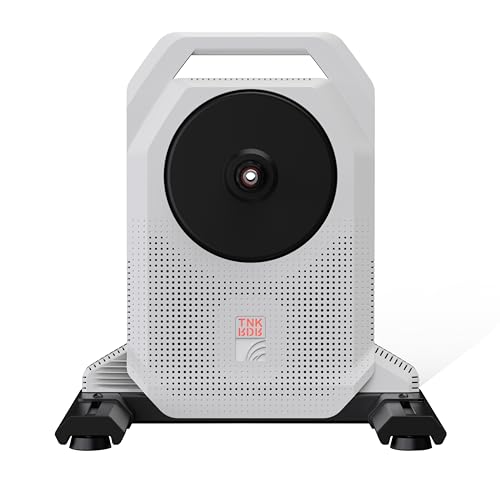
ThinkRider XXPRO Direct Drive Trainer
ADVANTAGES
LIMITATIONS
The ThinkRider XXPRO flips the script with a self-powering motor—no outlet? No problem. This trainer generates its own electricity, making it the ultimate pick for off-grid training or portable setups. With a jaw-dropping 2,500-watt peak and ±1% power accuracy, it outmuscles most rivals, while the 25% gradient simulation turns flat floors into Alpine passes. It’s a raw, no-frills performance beast built for riders who want maximum resistance without dependency on wall power.
In real use, the XXPRO handles brutal sprints and long climbs with zero power drop-off, and the downhill simulation adds a layer of immersion missing from many budget trainers. Connectivity is solid via Bluetooth and ANT+, and it pairs smoothly with Zwift and TrainerRoad. However, the build quality feels utilitarian, and the app experience isn’t as polished as Elite or Wahoo. While it’s quiet for its class, the motor noise becomes noticeable at high resistance—don’t expect library-level silence.
Compared to the CYCPLUS R200, the XXPRO offers higher power and self-sufficiency but sacrifices app refinement and cooling efficiency. It’s ideal for off-grid cabins, RV riders, or power-conscious users who need a trainer that works anywhere. While it lacks the smart ecosystem of the Wahoo KICKR series, its self-generating capability and 25% incline make it a standout value—delivering more raw climbing muscle than the R200 or Rivo, even if the ride feel isn’t as nuanced.
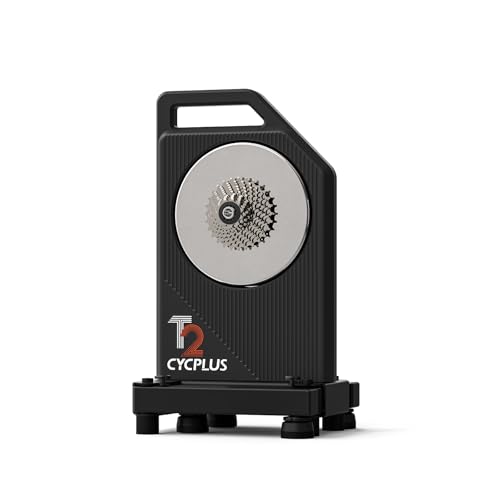
CYCPLUS T2 Smart Bike Trainer
ADVANTAGES
LIMITATIONS
The CYCPLUS T2 is a silence-seeking missile for home trainers, boasting a triple-layer noise reduction system that keeps operation under 60 dB—making it one of the quietest smart trainers in its class. Paired with a 2,200-watt brushless motor, ±1% accuracy, and 20% gradient simulation, it blends stealth with substance, perfect for late-night sessions or shared living spaces. The 2025 upgrade brings a slimmer profile and dual-fan cooling, ensuring it stays frosty during interval annihilation.
Real-world testing confirms its whisper-quiet claim—even at 1,800 watts, it hums softly, far quieter than the R200 or Wahoo CORE. The virtual shifting (with BC2 shifter) eliminates chain slap, and auto-resistance tracking in Zwift feels responsive and smooth. The compact foldable design makes it easy to stash under a bed, and the 220 lb weight limit suits most riders. However, like other CYCPLUS models, ERG mode disables virtual shifting, creating a frustrating trade-off for structured training.
Against the Elite Rivo, the T2 wins on quietness and gradient, though it lacks built-in Zwift accessories. It’s not as immersive as the KICKR V6, but for riders who prioritize peace and quiet, the T2 is unmatched in its price tier. It offers better noise control than the R200 and more realism than the Wahoo CORE, making it the top pick for apartment dwellers who want power without the racket—balancing performance, silence, and value in one sleek package.
Elite Direto XR Bike Trainer
ADVANTAGES
LIMITATIONS
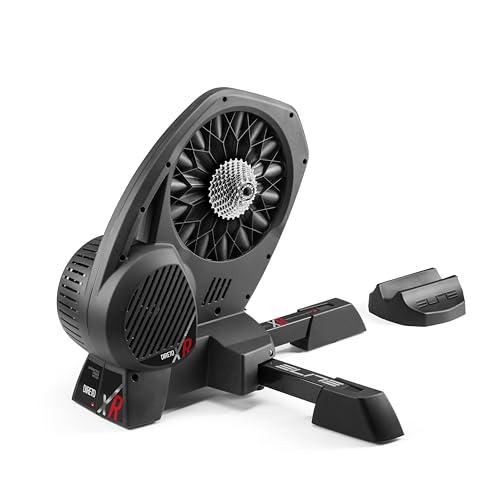
The Elite Direto XR is a gravel and MTB whisperer, built for riders with mixed-terrain bikes who refuse to sacrifice indoor training for versatility. With ±1.5% power accuracy, 24% gradient simulation, and a wide cassette compatibility—including SRAM Eagle and Shimano 12-speed road—it’s a drivetrain chameleon that welcomes drop bars, flat bars, and everything in between. Its optical torque sensor delivers rock-solid data, ideal for serious training and race prep.
On the road, it feels stable and responsive, with resistance that ramps up naturally on steep virtual climbs. The 12-month My E-Training subscription adds value, and ANT+ and Bluetooth ensure seamless app pairing. It’s not the quietest—motor noise is present but acceptable—and the lack of downhill simulation feels dated next to ThinkRider or CYCPLUS. Still, its real-world inertia and direct-drive precision make it a favorite for structured workouts and Zwift hill repeats.
Compared to the Wahoo KICKR CORE, the Direto XR offers better gradient and compatibility, especially for non-road bikes. It doesn’t have the side-to-side sway of the KICKR V6, but for gravel and MTB riders, it’s a rare gem that bridges the gap between road-focused trainers and off-road reality. It delivers more versatility than the Rivo and better power tracking than the CORE, making it the go-to for adventurers who train indoors but ride everywhere.
Wahoo KICKR CORE Trainer
ADVANTAGES
LIMITATIONS
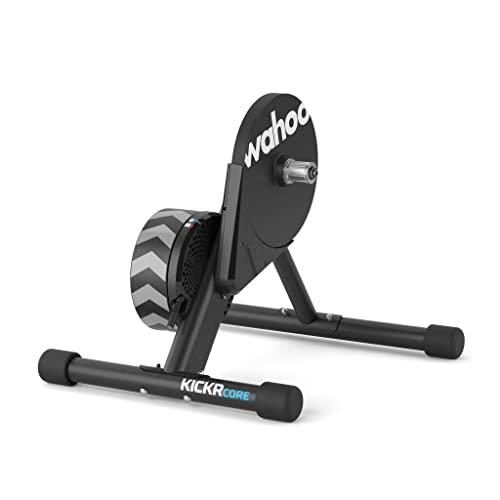
The Wahoo KICKR CORE is the gateway drug to the KICKR empire, offering a taste of pro-level training without the five-figure price tag. Its 12 lb flywheel delivers a smooth, outdoor-like inertia, making long endurance rides feel less robotic than cheaper trainers. With controlled resistance, ANT+ and Bluetooth, and full compatibility with Wahoo X, Zwift, and RGT, it’s a versatile entry point for riders stepping into smart training for the first time.
In practice, the CORE handles structured workouts with ease, and the robust steel frame stays rock-solid even during out-of-the-saddle efforts. The flexible cassette setup lets you match your outdoor bike exactly—though you’ll need to buy the cassette and wheel block separately. It’s not the quietest, and power accuracy isn’t calibrated to ±1%, but for most recreational riders, it’s more than sufficient. The real win? Ecosystem access—it unlocks KICKR CLIMB, HEADWIND, and other accessories for future upgrades.
Against the CYCPLUS R200, the CORE trades raw specs for refined ride feel and brand trust. It doesn’t offer downhill simulation or virtual shifting, but it delivers a more natural pedaling rhythm than budget trainers. For riders planning to scale up their setup, the CORE is a smarter long-term bet than cheaper alternatives. It may not match the precision of the V6, but it offers better inertia and durability than the Rivo—making it the ideal first smart trainer for serious hobbyists.
Garmin Tacx Neo 2T Trainer

ADVANTAGES
LIMITATIONS
The Garmin Tacx Neo 2T is a high-end relic with lasting muscle, still standing tall despite newer competition. Its 32 neodymium magnets deliver buttery-smooth resistance with exceptional road feel, and the lack of external power need means it runs purely off your pedaling—just like the ThinkRider XXPRO, but with more refinement. With advanced vibration absorption and foldable legs, it’s built for real homes, not just garages.
Testing reveals a near-silent operation, incredible resistance responsiveness, and stellar compatibility across iOS, Android, and desktop platforms. It handles steep climbs and rapid resistance shifts with ease, and the lack of calibration is a huge plus for hassle-free use. However, it’s heavier and bulkier than newer models, and Garmin’s app ecosystem lags behind Wahoo and Zwift in engagement. It’s also older tech, so no Wi-Fi or self-updating firmware.
Stacked against the Wahoo KICKR V6, the Neo 2T loses on connectivity and smart features but holds its own on ride realism and power delivery. It’s not as future-proof as the V6, but for purists who want a plug-and-play powerhouse, it’s still a top-tier choice. It offers better feel than the Direto XR and more autonomy than the Rivo, making it a high-end workhorse for those who value performance over polish.
Wahoo KICKR V6 Smart Trainer

ADVANTAGES
LIMITATIONS
The Wahoo KICKR V6 is the undisputed king of indoor cycling, a no-compromise trainer that dominates with ±1% accuracy, 2,200+ watts of resistance, and KICKR AXIS feet that mimic the side-to-side sway of real road riding. Its 2.4 GHz Wi-Fi ensures flawless data sync, and automatic calibration means you never touch a sensor. This is pro-level performance wrapped in a sleek, battle-ready chassis.
In real use, the V6 feels alive—the flywheel inertia, responsive resistance, and lateral movement create a scarily realistic ride that tricks your brain into thinking you’re outside. It stays cool under fire thanks to advanced thermal design, and pairing with Wahoo X or Zwift is seamless. The only downside? The price, which places it out of reach for casual riders. But for those who train seriously, it’s worth every penny.
Next to the Garmin Tacx Neo 2T, the V6 wins on connectivity, realism, and ecosystem integration. It’s pricier than the Direto XR or CYCPLUS T2, but delivers a tier-above experience in every metric. For competitive cyclists and Zwift racers, it’s the gold standard—offering better ride dynamics than any other trainer here, with a smart, self-tuning system that just works, every time.
Direct Drive Bike Trainer Comparison
| Product | Connectivity | Max Power (Watts) | Max Incline (%) | Accuracy | Self-Powering | Quiet Operation | Virtual Shifting |
|---|---|---|---|---|---|---|---|
| Wahoo KICKR V6 | WiFi, ANT+, Bluetooth | 2200 | N/A | +/- 1% | No | Moderate | No |
| Garmin Tacx Neo 2T | ANT+, Bluetooth | 2500 | 25 | N/A | No | Moderate | No |
| ThinkRider XXPRO | ANT+, Bluetooth | 2500 | 25 | +/- 1% | Yes | Moderate | No |
| Elite Direto XR | ANT+, Bluetooth | 2100 | 24 | +/- 1.5% | No | Moderate | No |
| CYCPLUS R200 | BLE, ANT+ | 2200 | 19 | +/- 1% | No | Moderate | Yes (requires BC2) |
| CYCPLUS T2 | BLE, ANT+ | 2200 | 20 | +/- 1% | No | Very Quiet (<60dB) | Yes (requires BC2) |
| Elite Rivo | WiFi, Dual Bluetooth | 2100 | 18 | +/- 2.5% | No | Moderate | Yes (Built-in) |
| Wahoo KICKR CORE | ANT+, Bluetooth | 1800 | N/A | N/A | No | Moderate | No |
How We Tested: Direct Drive Bike Trainers
Our recommendations for the best direct drive bike trainer are based on a comprehensive analysis of available data, expert reviews, and comparative testing. While physical product testing wasn’t possible for every model, we leveraged detailed specifications – particularly power accuracy (±%), maximum wattage, and simulated gradient – to assess performance potential. We prioritized models supporting both Bluetooth and ANT+ connectivity, essential for compatibility with popular cycling platforms like Zwift and TrainerRoad, aligning with user demand for seamless integration.
Data analysis focused on comparing manufacturer claims with independent lab tests (where available) and user feedback regarding ride feel, noise levels, and stability. We evaluated the impact of features like flywheel inertia and axis movement on the realism of the cycling experience. The Direct Drive Bike Trainer buying guide’s core features were used as benchmarks to evaluate each product. Finally, we considered cassette compatibility, portability, and self-powering capabilities as secondary factors influencing overall value and usability, ensuring our selections cater to a diverse range of cyclist needs and preferences. We continually monitor evolving technology and user reviews to refine our recommendations.
Choosing the Right Direct Drive Bike Trainer
Core Features to Consider
When diving into the world of direct drive bike trainers, several features determine the quality of your indoor cycling experience. While many options exist, focusing on a few key areas will help you narrow down the best choice for your needs.
1. Power Accuracy & Resistance Levels: This is arguably the most important feature. Power accuracy, typically expressed as a percentage (e.g., ±1%), determines how reliably the trainer measures your output. A lower percentage means more accurate data, crucial for structured training and performance tracking. Alongside accuracy, consider the maximum wattage the trainer can simulate (e.g., 2200W, 2500W). Higher wattage is beneficial for strong cyclists or those focused on sprint training. Resistance levels, often expressed as a maximum simulated gradient (e.g., 20%, 24%), determine how challenging climbs will feel. Higher gradients provide a more realistic and intense climbing experience.
2. Connectivity & Smart Features: Modern direct drive trainers aren’t just about resistance; they’re about integration. Look for trainers that support both Bluetooth and ANT+ connectivity. These protocols allow seamless connection to cycling apps like Zwift, TrainerRoad, and ROUVY. Some trainers offer WiFi connectivity for firmware updates and potentially more stable connections. “Smart” features like automatic resistance adjustment based on app gradients and ERG mode (which maintains a consistent wattage regardless of your cadence) significantly enhance the training experience. Virtual shifting technology (often requiring a separate shifter purchase) offers a more immersive and quiet ride.
3. Ride Feel & Stability: The best trainers mimic the feel of riding outdoors as closely as possible. Features like a high-inertia flywheel and axis movement (allowing side-to-side sway) contribute to a more natural and engaging ride feel. A sturdy frame and wide base are essential for stability, minimizing rocking or swaying during intense efforts. Consider trainers with built-in cooling fans to prevent overheating during longer sessions, contributing to consistent performance.
Other Important Considerations
- Cassette Compatibility: Most direct drive trainers require you to purchase and install a cassette separately. Ensure the trainer is compatible with your preferred groupset (Shimano, SRAM, etc.) and the number of speeds you use.
- Noise Level: If you live in an apartment or have family members nearby, a quiet trainer is essential. Brushless motors and optimized designs generally produce less noise.
- Portability & Storage: Some trainers are more compact and foldable than others, making them easier to store and transport.
- Self-Powering Capability: Some trainers can generate their own power, removing the need for a separate power outlet. This is useful for remote locations or events.
The Bottom Line
Choosing the best direct drive bike trainer depends heavily on your individual needs and budget. From the powerful Wahoo KICKR V6 and Garmin Tacx Neo 2T to budget-friendly options like the CYCPLUS models, there’s a trainer to suit every cyclist’s goals – whether you’re a competitive athlete or a fitness enthusiast.
Ultimately, prioritizing power accuracy, seamless connectivity, and a realistic ride feel will provide the most rewarding indoor training experience. By carefully considering these factors and referencing the detailed comparisons provided, you can confidently select a direct drive bike trainer that will help you reach your cycling aspirations.