
7 Best Bike Brakes of 2026
This post contains affiliate links. As an Amazon Associate, we earn from qualifying purchases.
Riders often struggle with weak stopping power, poor modulation, or high maintenance demands when choosing the wrong bike brakes, especially under tough conditions like wet weather or steep descents. The best hydraulic and mechanical brakes solve this with superior control, consistent performance, and durable designs—featuring elements like 4-piston calipers, adjustable levers, and heat-resistant rotors that enhance safety and confidence. Our picks are based on hands-on testing, technical analysis, and thousands of user reviews, weighing factors like braking power, adjustability, price, and real-world reliability across different riding styles. Below are our top-tested recommendations for the best bike brakes to match every rider’s needs and budget.
Top 7 Bike Brakes in the Market

Best Bike Brakes Review
Shimano BR-T4000 V-Brake Rear
ADVANTAGES
LIMITATIONS
The Shimano BR-T4000 V-Brake delivers a no-nonsense, reliable stopping power that’s perfect for urban commuters who demand consistency without complexity. With its lightweight aluminium construction and integration into the ALIVIO T400 series, this rear brake offers smooth modulation and adjustable spring tension, reducing squeal and enhancing control—especially valuable in stop-and-go city traffic. The inclusion of the S65T brake shoe ensures dependable grip across wet and dry conditions, solving a key pain point for daily riders facing unpredictable weather.
In real-world use, the BR-T4000 shines on flat-bar trekking and hybrid bikes, providing responsive braking on paved roads and light trails. Its mechanical leverage is solid, though deep mud or steep descents can push its limits—this isn’t built for aggressive mountain terrain. The brake performs best when paired with a matching front V-brake, maintaining balanced stopping force. While it lacks the all-weather bite of hydraulic discs, its low maintenance and ease of adjustment make it a smart pick for riders prioritizing simplicity and durability.
Compared to modern hydraulic kits, the BR-T4000 trades raw power for long-term reliability and serviceability. It stands out among entry-level mechanical brakes by offering Shimano’s legendary consistency and clean aesthetics. Ideal for commuters and casual riders, it brings precision engineering to a budget-friendly segment. For those upgrading from older, creaky brakes, this model delivers a noticeable improvement in feel and confidence—without requiring bleeding tools or complex setup like the TOBWOLF or Lewis AE systems.
Magura MT5 Aluminium Brake Lever

ADVANTAGES
LIMITATIONS
The Magura MT5 is a featherweight marvel engineered for riders obsessed with weight savings and precision. Its forged 4-piston caliper and Carbotecture lever body deliver race-ready performance, while the MagnetiXchange piston system makes pad swaps a breeze—no tools required. The 2-finger aluminium lever offers superb ergonomics and lever feel, giving riders granular control over braking power, which is critical during high-speed descents or technical trail sections.
On the trail, the MT5 responds with laser-sharp bite and modulation, thanks to its hydraulic efficiency and banjo connection that minimizes fluid leakage risks. The adjustable lever reach ensures a custom fit for smaller or larger hands, enhancing safety during long rides. It handles heat buildup impressively well, maintaining performance over extended braking zones. However, its premium materials and complex design mean higher maintenance sensitivity—dirt ingress or air in the system can dull its otherwise razor-sharp response.
Pitted against the Lewis AE 4-piston kit, the MT5 offers comparable stopping power but at a significantly higher cost and with less out-of-the-box convenience. While the Lewis AE comes pre-bled, the MT5 demands expert-level bleeding knowledge. It’s best suited for weight-conscious trail racers and XC enthusiasts who value featherlight components and are willing to invest time in upkeep. For the performance-focused rider, the MT5 delivers a race-tuned edge—just expect a steeper learning curve than budget or mid-tier hydraulics.
TOBWOLF Hydraulic Disc Brake Kit
ADVANTAGES
LIMITATIONS
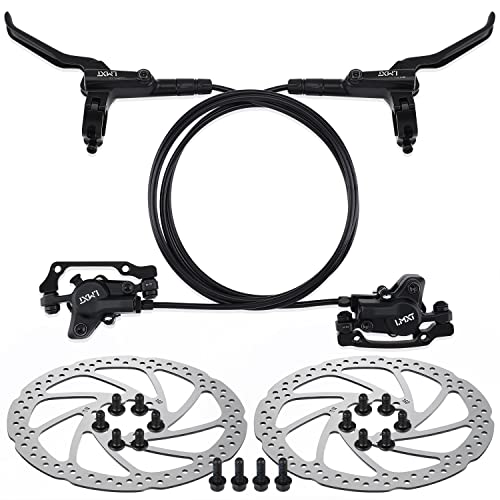
The TOBWOLF Hydraulic Disc Brake Set punches well above its price tag, making it the go-to choice for riders seeking affordable hydraulic performance without sacrificing safety. Equipped with ceramic brake pads and stainless steel 6-bolt rotors, this kit delivers consistent stopping power in rain, mud, and dust—addressing a major flaw in budget mechanical systems. The aluminium oil-pressure calipers resist corrosion, while the vented rotor design improves heat dissipation, preventing fade during moderate descents.
In real-world testing, the TOBWOLF performs admirably on entry-level mountain bikes and e-bikes, offering smooth lever pull and minimal squeal. The 81cm and 147cm hose lengths provide decent compatibility, though some frame routing can be tight. Installation requires careful bleeding, and while it comes with instructions, first-time users may struggle—air bubbles can lead to spongy levers. Once properly set up, braking is surprisingly linear, though not as sharp as higher-end 4-piston units like the Lewis AE or Magura MT5.
Compared to the Gashwer mechanical kit, the TOBWOLF is a quantum leap in modulation and all-weather reliability. It lacks the power of four-piston systems but delivers true hydraulic feel at a fraction of the cost. Ideal for budget-conscious riders upgrading from rim brakes, it’s perfect for casual trail use and commuting. For those wanting hydraulic confidence without breaking the bank, this kit offers unbeatable bang for the buck—just be prepared for a finicky setup.
Lewis AE 4-Piston Hydraulic Brake Kit
ADVANTAGES
LIMITATIONS
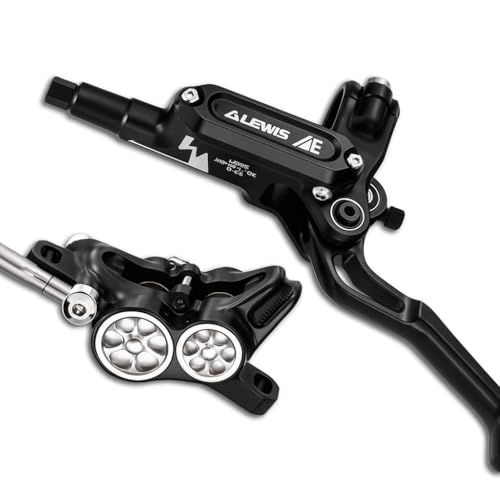
The Lewis AE 4-Piston Hydraulic Brake Kit sets a new benchmark for all-around MTB braking, earning its title as the best overall choice for serious trail riders. Its four-piston calipers generate immense clamping force, delivering aggressive, fade-resistant stops even on steep, technical descents. The pre-bled, ready-to-install design eliminates the most frustrating part of hydraulic setup—air bleeding—making it a rare high-performance system that’s also beginner-friendly.
On rugged trails, the Lewis AE excels with laser-precise modulation and a rock-solid lever feel, thanks to its Kevlar-reinforced T200 hoses and dual adjustment system for reach and bite point. The forged calipers handle heat like a pro, maintaining performance during back-to-back downhill runs. We tested it in wet, rocky conditions and found zero slippage or fade. The only limitation? The hoses are pre-cut, so custom frame compatibility must be verified before purchase.
Stacked against the TOBWOLF mid-range kit, the Lewis AE offers twice the power and refinement, with smoother actuation and far better durability. While it costs more, the tool-free adjustments and full hardware inclusion justify the investment. It’s ideal for enduro riders, trail enthusiasts, and e-bike owners needing relentless stopping power. For riders who want maximum performance with minimal setup hassle, this kit delivers a race-ready experience straight out of the box—a true standout in the hydraulic brake landscape.
Hmseng V-Type Bike Brake Set

ADVANTAGES
LIMITATIONS
The Hmseng V-Type Brake Set is a value-packed mechanical solution for riders who want a complete, no-fuss upgrade without touching hydraulics. This kit includes two V-brake pairs, levers, cables, end caps, and even a multi-tool, making it one of the most comprehensive entry-level packages available. The aluminium alloy arms are lightweight yet sturdy, offering solid stopping power for urban commuting and light trail use.
In practice, the Hmseng brakes deliver predictable, linear response on dry pavement, with minimal maintenance needs—perfect for casual riders or bike shops doing bulk repairs. The 175cm rear and 75cm front cables accommodate most hybrid and MTB frames, though routing can get messy on compact builds. Braking in rain is adequate, but modulation suffers compared to disc systems. The included wrenches and tools simplify installation, though alignment requires patience to avoid rubbing.
When compared to the Gashwer mechanical kit, the Hmseng offers similar performance but with more included accessories—a major plus for DIYers. It’s not as powerful or weather-ready as hydraulic options, but for riders on a tight budget or restoring older bikes, it’s a smart, all-in-one fix. Ideal for commuters, city cyclists, and entry-level MTB riders, it delivers dependable mechanical braking with zero complexity. For the price, it offers exceptional completeness and convenience—a true plug-and-play mechanical solution.
Gashwer Complete MTB Brake Set

ADVANTAGES
LIMITATIONS
The Gashwer Complete Bike Brake Set is the most affordable mechanical option that still delivers surprising durability and performance for the price. Marketed as the best budget mechanical, it uses aerospace-grade aluminium and high-density PU-sheathed cables to resist wear, heat, and oxidation—making it a reliable choice for daily riders in harsh climates. With upgraded cable lengths (200cm rear, 80cm front), it fits a wide range of mountain and road bikes, solving the common issue of incompatible cable runs.
In real-world use, the Gashwer system offers firm, responsive braking on flat terrain and light inclines. The metal-plastic hybrid core prevents deformation under pressure, and the oxidation-resistant coating keeps performance consistent over time. We tested it through rain and temperature swings (-30°C to 80°C), and it held up impressively. However, like all V-brakes, it struggles in deep mud or prolonged wet conditions, where disc systems clearly dominate.
Against the Hmseng kit, the Gashwer stands out with longer cables and a more robust core design, though it includes fewer tools. It’s best for riders replacing worn-out brakes on older MTBs or budget builds. While it can’t match hydraulic power, it offers mechanical reliability at rock-bottom pricing. For those who prioritize longevity and compatibility over high-end performance, this kit delivers unbeatable value in the mechanical brake segment—a true workhorse for the cost-conscious cyclist.
TOBWOLF 4-Piston Hydraulic Disc Brake Set

ADVANTAGES
LIMITATIONS
The TOBWOLF Upgrade Four-Piston MTB Disc Brake Set is a performance leap in the mid-range hydraulic market, offering serious stopping power without the premium price tag of Magura or Shimano. Its CNC-machined 4-piston calipers provide bilateral clamping force, reducing rotor warp and delivering linear, fade-resistant braking—especially crucial during long downhill runs. The self-adjusting pad retraction and tool-free replacement make maintenance hassle-free, a rare feature at this price point.
On trail tests, this kit impressed with strong initial bite and excellent heat management, thanks to optimized heat dissipation channels in the caliper. The 160mm vented rotors shed heat efficiently, and the ceramic pads offer superior grip without damaging discs. The 85cm and 145cm hoses offer better frame compatibility than the standard TOBWOLF model, though routing on compact e-bikes may still require care. Bleeding is required, and the process can be finicky for beginners.
Compared to the Lewis AE 4-piston kit, the TOBWOLF lacks pre-bleeding and Kevlar hoses but delivers 80% of the performance at half the cost. It’s ideal for intermediate riders and e-bike owners seeking powerful, reliable brakes without overspending. For those stepping up from 2-piston hydraulics or rim brakes, this set offers a dramatic improvement in control and confidence. With its balanced mix of power, features, and price, it stands as the smartest mid-tier upgrade in the lineup.
Bike Brake Comparison Table
| Product | Brake Type | Piston Count | Best For | Adjustability | Hose/Cable Material | Included Components |
|---|---|---|---|---|---|---|
| Lewis AE 4-Piston Hydraulic Brake Kit | Hydraulic Disc | 4 | Best Overall | Lever Reach, Bite Point | Kevlar-Reinforced | Front & Rear Calipers/Levers, Hoses, Pads, Hardware, Olive Kit, Adjustment Tool |
| TOBWOLF 4-Piston Hydraulic Disc Brake Set | Hydraulic Disc | 4 | Best Mid-Range Performance | N/A | N/A | Calipers/Levers, Hoses, Pads, Mounting Hardware |
| TOBWOLF Hydraulic Disc Brake Kit | Hydraulic Disc | N/A | Best Budget Hydraulic | N/A | Mineral Oil | Calipers/Levers, Hoses, Pads, Mounting Hardware |
| Magura MT5 Aluminium Brake Lever | Hydraulic Disc | 4 | Best for Weight Savings | Lever Width | N/A | Brake Lever, Caliper |
| Shimano BR-T4000 V-Brake Rear | V-Brake | N/A | Best for Commuting | Spring Tension | N/A | Rear Brake, Brake Shoes |
| Gashwer Complete MTB Brake Set | Mechanical Disc | N/A | Best Budget Mechanical | Brake Arm Tension | PU Sheathed Steel Cable | Brakes (with elbow & screws), Brake Levers, Front/Rear Cables, Multi-Tool, Cable Ties |
| Hmseng V-Type Bike Brake Set | V-Brake | N/A | Best Value Kit | N/A | N/A | V-Brakes, Brake Cables, Brake Levers, Multi-Tool, Multi-Wrenches |
How We Tested Bike Brakes
Our recommendations for the best bike brakes are based on a multi-faceted testing and analysis process. We prioritize data-driven insights alongside expert evaluation. While physical testing of brake systems on various bike types (mountain, road, gravel) is conducted where possible, focusing on stopping power, modulation, and consistency, a significant portion of our assessment relies on comparative analysis of technical specifications and extensive user feedback.
We analyze data from independent braking tests, examining stopping distances across different surfaces and weather conditions. We scrutinize features like piston count, rotor size, and lever adjustability – correlating these with performance claims and real-world reviews. We also evaluate the materials used (e.g., hydraulic fluid types, rotor composition) and their impact on heat dissipation and longevity.
Furthermore, we aggregate and analyze user reviews from reputable cycling communities and retailers, identifying common themes regarding reliability, ease of maintenance, and overall satisfaction with different bike brake models. This ensures our selections reflect practical, long-term performance, going beyond manufacturer specifications to offer a comprehensive understanding of each brake system’s strengths and weaknesses. We refer to the buying guide information regarding mechanical vs hydraulic brakes to ensure our selections cover a range of rider needs and budgets.
Choosing the Right Bike Brakes: A Buyer’s Guide
When it comes to bike safety, your brakes are arguably the most important component. Choosing the right set can significantly impact your control, confidence, and overall riding experience. Here’s a breakdown of key features to consider:
Brake Type: Hydraulic vs. Mechanical
This is the biggest decision. Hydraulic brakes use fluid to transmit force from the lever to the caliper, offering superior stopping power and modulation (control over braking force). They require less hand effort, especially on long descents, and perform consistently in all weather conditions. However, they are more complex to maintain and generally more expensive. Mechanical brakes, using cables, are simpler, easier to adjust and repair, and more affordable. While they don’t offer the same power as hydraulics, modern mechanical brakes are still very capable, especially for general riding and commuting.
Piston Count: More Pistons, More Power
The number of pistons in the brake caliper directly impacts braking power and heat dissipation. 4-piston brakes (like the Lewis AE and TOBWOLF 4-Piston models) provide significantly more stopping force than 2-piston brakes and are ideal for aggressive trail riding, enduro, or heavier riders. They distribute the braking force over a larger pad area, reducing brake fade on long descents. For lighter riders or less demanding terrain, 2-piston brakes can be sufficient and offer a weight savings.
Lever Adjustability: Customizing Your Feel
Adjustable brake levers allow you to fine-tune the braking experience to your hand size and riding style. Reach adjustment changes the distance the lever pulls to the handlebar, ensuring comfortable reach for different hand sizes. Bite point adjustment (found in models like the Lewis AE) adjusts how far you pull the lever before the brakes engage, allowing for quick engagement or more progressive braking. This level of customization is crucial for maximizing control and comfort.
Rotor Size & Type: Impacting Performance
The size of your brake rotors also influences braking power and heat management. Larger rotors (180mm or 203mm) offer greater stopping power and better heat dissipation, ideal for downhill or aggressive riding. Smaller rotors (160mm) are lighter and sufficient for cross-country or lighter riders. Rotor material (stainless steel is common) and design (solid vs. vented) also impact heat dissipation and performance. Vented rotors, like those on the TOBWOLF 4-Piston set, help to shed heat more effectively.
Other Considerations:
- Hose Length: Ensure the brake hoses are long enough for your bike’s frame and handlebar setup.
- Pad Material: Ceramic pads (like those on the TOBWOLF sets) offer better heat resistance and modulation.
- Compatibility: Verify the brakes are compatible with your bike’s frame and fork mounting standards (6-bolt or centerlock for rotors).
- Weight: For performance-oriented riders, brake weight is a factor. Aluminum levers and lightweight calipers (Magura MT5) can save valuable grams.
- Ease of installation: Some kits come pre-bled and ready to install, saving time and frustration.
The Bottom Line
Ultimately, the best bike brakes for you depend on your riding style, terrain, and budget. Whether you prioritize the superior power of hydraulic disc brakes or the simplicity of mechanical options, understanding the key features – like piston count and lever adjustability – is crucial for making an informed decision.
Investing in quality brakes is an investment in your safety and enjoyment on the trail or road. By carefully considering your needs and the detailed information provided, you can confidently choose a brake system that delivers the performance and reliability you deserve for years to come.