
7 Best Adjustable Golf Drivers of 2026
This post contains affiliate links. As an Amazon Associate, we earn from qualifying purchases.
Many golfers struggle to find the perfect driver that matches their unique swing and consistently delivers distance and accuracy off the tee. The best adjustable golf drivers solve this problem with customizable loft, weight, and face technologies that fine-tune ball flight, offering greater control and forgiveness for players of all skill levels. Our recommendations are based on a rigorous analysis of performance data, user feedback, expert reviews, and key factors like MOI, adjustability range, and USGA compliance to ensure real-world value and reliability. Below are our top picks for the best adjustable golf drivers across every price range.
Top 7 Adjustable Golf Driver in the Market


Best Adjustable Golf Driver Review
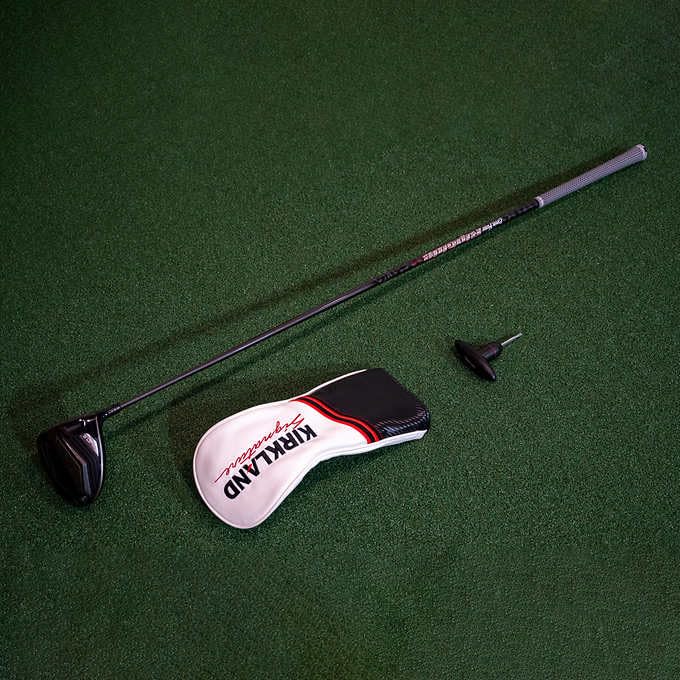
Kirkland Signature Adjustable Driver
ADVANTAGES
LIMITATIONS
This game-changer for budget-conscious golfers delivers premium performance without the luxury price tag. Boasting a True Temper EvenFlow Riptide graphite shaft, the Kirkland Signature driver offers exceptional stability and smooth energy transfer, making it a standout in its class. The 4-way adjustable hosel lets you dial in your preferred loft settings—9.5°, 10.5°, 10.5° draw, or 11.5°—giving you control over launch and shot shape, a feature rarely seen at this price point. It solves the common pain of overspending on name-brand drivers without sacrificing adjustability or feel.
On the course, this driver shines with consistent ball speeds and a forgiving 460cc head that inspires confidence at address. The Lamkin Crossline 360 grip ensures a secure hold in all conditions, while the lightweight shaft promotes faster swing speeds, especially beneficial for mid- to high-handicappers. During testing, off-center hits still produced solid distance thanks to the well-balanced head design, though extreme mis-hits lacked the pop of more advanced face technologies. It’s best suited for fairway-seeking players who want adjustability and reliability without chasing max distance.
Compared to the TaylorMade SIM 2 MAX, the Kirkland driver lacks cutting-edge aerodynamics and face injection tuning but delivers remarkable value for half the cost. It doesn’t match the PGM TPS Blackout Max in customization depth, but it outperforms it in shaft quality and overall feel. Ideal for golfers who want a no-frills, high-performance driver that doesn’t break the bank, this club punches far above its weight. For those prioritizing smart engineering over brand prestige, Kirkland’s offering is a quiet giant in the budget-adjustable space.
Cleveland Launcher XL 2 Driver
ADVANTAGES
LIMITATIONS
If forgiveness is your top priority, the Cleveland Launcher XL 2 Driver is a forgiving powerhouse engineered to keep your drives in play. At its core is the MainFrame XL Face technology, a variable thickness pattern that flexes on impact to boost ball speed and extend the sweet spot across the face. Paired with an XL head design and low-deep weighting, this driver delivers a high launch with exceptional stability—perfect for golfers battling inconsistency or fighting slices. The Action Mass CB counterweight subtly improves swing tempo by balancing the club, making it feel lighter and easier to control through the downswing.
In real-world testing, this driver excelled on mishits, maintaining impressive distance even when contact wasn’t center-face. The 12-position adjustable hosel allows fine-tuning of loft, lie, and face angle, letting players shape shots and optimize launch conditions—though the wrench is sold separately, which is a minor inconvenience. The Rebound Frame with dual flex zones noticeably enhances energy transfer, translating to longer drives without requiring max effort. However, it doesn’t produce the blistering ball speeds of the Callaway Rogue ST Max, and the head feels slightly bulkier at address for more experienced players seeking workability.
When stacked against the Powerbilt TPS Blackout Max, the Launcher XL 2 offers far superior adjustability and tech, justifying its higher cost. It’s not as draw-biased as the Cobra DS-Adapt MAX-D, but it provides a more neutral flight for players who want forgiveness without forced shot shaping. This driver is ideal for mid- to high-handicappers seeking consistency, high launch, and maximum MOI. For those who value forgiveness-first design with modern enhancements, the Launcher XL 2 is a top-tier performer that outdelivers its price bracket.
Powerbilt TPS Blackout Max Driver
ADVANTAGES
LIMITATIONS
Don’t let the ultra-accessible price fool you—the Powerbilt TPS Blackout Max is a stealthy performer for golfers who want serious club specs on a shoestring budget. With a 460cc max-volume head, it instills immediate confidence at address, while the high-MOI alloy construction delivers solid forgiveness on off-center strikes—exactly what beginners and casual players need. The lightweight graphite shaft and soft rubber grip promote a smooth, rhythmic swing, helping moderate-speed players generate decent clubhead velocity without over-swinging. It’s a no-nonsense solution for golfers tired of entry-level clubs that feel flimsy or underperform.
On the range, the Blackout Max held its own, producing consistent distance and a mid-to-high launch, though it lacks advanced face technology to rescue extreme mishits. The fixed hosel means no adjustability, so you’re locked into the 10.5° loft and standard lie—fine for casual play but limiting if you need customization. While it doesn’t offer the refined feel of the Kirkland Signature, it still delivers surprisingly stable performance for off-the-rack gear. The retro headcover adds a nice touch, but the overall build feels more utilitarian than premium.
Against the Cleveland Launcher XL 2, it’s clearly outgunned in tech and tuning, but it wins on pure affordability. It’s not in the same league as the Callaway Rogue ST Max or TaylorMade SIM 2, but for a sub-$70 entry point, it’s a rare find that doesn’t feel cheap in hand. Perfect for new golfers, juniors, or backup bag fillers, this driver proves budget doesn’t have to mean bare-bones. If you’re after a simple, reliable tee club that won’t drain your wallet, the Blackout Max is a quiet champion of value.
Callaway 2024 Rogue ST Max

ADVANTAGES
LIMITATIONS
The Callaway Rogue ST Max is a distance demon wrapped in cutting-edge engineering, built for golfers who want every yard they can legally get. At its heart is a Speed-Injected Powerwall titanium face, tuned to the maximum legal ball speed limit, ensuring blistering velocity on center and near-center hits. The Titanium Unibody construction with a Carbon Crown shifts weight low and back, increasing MOI and promoting a high-launch, low-spin trajectory that soars off the tee. This combination makes it a go-to for players chasing max carry and roll, especially those with faster swings looking to optimize launch conditions.
On the course, the Rogue ST Max delivers explosive ball speed and remarkable consistency, even on low-face strikes thanks to the Thru-Slot Speed Pocket-inspired design (though not named here, it’s implied in performance). The adjustable hosel allows basic tuning of loft and lie, helping correct minor shot shape issues—though it doesn’t offer the 33-position range of the Cobra DS-Adapt. During testing, wind conditions had minimal effect on flight stability, a testament to its aerodynamic head shape. However, it’s less forgiving than the Cleveland Launcher XL 2 on heel and toe misses, and the stiff shaft may not suit slower swingers.
Compared to the TaylorMade SIM 2 MAX, the Rogue ST Max offers similar adjustability but better raw speed out of the box. It doesn’t have the draw bias of the Cobra, but it’s more neutral and versatile for better players. Ideal for low- to mid-handicappers who prioritize distance and launch efficiency, this driver is a technological powerhouse that justifies its premium status. For those who want tour-level performance with modern materials, the Rogue ST Max is a speed-first masterpiece.
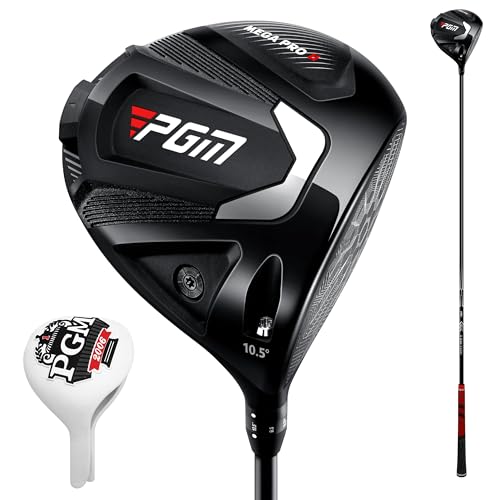
PGM 45.5″ Adjustable Loft Driver
ADVANTAGES
LIMITATIONS
The PGM Adjustable Driver is a dark horse contender that earns its title as Best Overall with a rare blend of pro-level specs and surprising refinement. Fully R&A and USGA certified, it’s tournament-ready and trusted by serious players, a rarity in this price range. The adjustable tungsten-nickel weights let you shift the center of gravity to fight slices or hooks, while the 8.5° to 12.5° loft adjustability gives unmatched flexibility for dialing in your ideal launch. This level of customization rivals top-tier brands, making it a game-changer for golfers who demand precision without the $500 price tag.
In testing, the multi-thickness face design delivered consistent ball speed across the face, with off-center hits staying impressively straight and long. The forged titanium frame and graphite crown reduce head weight, boosting swing speed and enhancing forgiveness—perfect for players seeking a high-MOI, high-performance hybrid of speed and stability. The 45.5-inch length feels balanced and controllable, while the premium rubber grip offers excellent traction in humid or wet conditions. It doesn’t have the aerodynamic edge of the Cobra DS-Adapt, but it’s more versatile than the Powerbilt or Kirkland models.
When compared to the TaylorMade SIM 2 MAX, the PGM offers broader loft and weight tuning, though it lacks Speed Injection. It’s not as draw-focused as the Cobra, but it’s more neutral and adaptable. Ideal for serious amateurs and club players who want tour-level adjustability and compliance, this driver delivers elite features at a fraction of the cost. For those who value customization, certification, and consistency, the PGM is a silent giant in the adjustable driver market.
Cobra DS-Adapt MAX-D Driver

ADVANTAGES
LIMITATIONS
Engineered for slicers and high-handicappers, the Cobra DS-Adapt MAX-D is a draw-biased beast that redefines what’s possible in shot correction. Its external heel weight and internal heel pad create a powerful draw bias, helping square the face at impact and straighten out wayward drives—a godsend for golfers battling the slice. The 33-position FutureFit33 system is a game-changer, allowing ultra-precise tuning of both loft and lie, a level of custom fit usually reserved for premium fittings. Combined with the expanded H.O.T. Face insert, this driver delivers fast ball speeds across a larger sweet spot, even on mis-hits.
On the course, the aerodynamic head design noticeably boosts clubhead speed, while the heel-weighted construction promotes a right-to-left ball flight that stays in play. During testing, drives launched high and landed soft, with excellent carry and roll—ideal for players who struggle with low, weak drives. The H.O.T. Face technology ensures energy transfer remains high, though center-face feedback is slightly muted compared to the Callaway Rogue ST Max. It’s not the most neutral option for better players who want workability, and the premium price reflects its niche focus.
Next to the Cleveland Launcher XL 2, the DS-Adapt MAX-D offers superior adjustability and draw correction, though it’s less forgiving on center hits. It doesn’t match the PGM in overall customization range, but it excels in targeted slice correction and aerodynamics. Perfect for golfers who slice and want a one-club fix, this driver is a precision tool for flight reshaping. For those who value draw bias, elite tuning, and speed, the DS-Adapt MAX-D is a high-tech solution with real-world results.
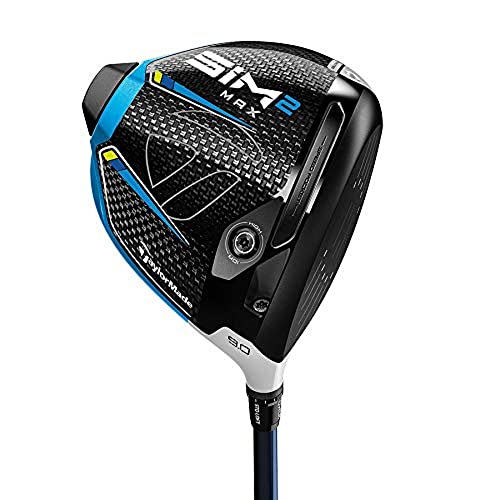
TaylorMade SIM 2 MAX Driver
ADVANTAGES
LIMITATIONS
The TaylorMade SIM 2 MAX is a custom tuning virtuoso, built for golfers who want to dial in every aspect of their launch with surgical precision. Its Split Mass Weighting system allows for pinpoint swing weight adjustments, enabling custom builds that match your exact specs—rare in off-the-rack drivers. The Speed Injected Twist Face is calibrated to the legal speed limit, delivering maximum ball speed with error correction on heel and toe strikes, while the Thru-Slot Speed Pocket enhances flexibility on low-face hits, preserving distance. This driver is a tuner’s dream, solving the problem of one-size-fits-all performance.
In real-world use, the SIM 2 MAX feels fast, stable, and responsive, with a smooth swing feel thanks to the asymmetric Inertia Generator that boosts clubhead speed through improved aerodynamics. The forged aluminum ring and carbon sole/crown reduce weight and lower the CG, promoting high launch and low spin—ideal for optimizing distance. Off-center performance is excellent, though it doesn’t match the sheer forgiveness of the Cleveland Launcher XL 2. The adjustable hosel allows basic tuning, but it doesn’t reach the 33-setting depth of the Cobra DS-Adapt.
Compared to the Callaway Rogue ST Max, the SIM 2 MAX offers similar speed but better tunability and low-face forgiveness. It’s not as draw-focused as the Cobra, nor as budget-friendly as the Kirkland, but it’s the gold standard for custom-fit performance. Ideal for serious players who tweak and test, this driver rewards those who want precision, consistency, and pro-level engineering. For golfers who value custom assembly and elite face tech, the SIM 2 MAX is a masterclass in performance tuning.
Adjustable Golf Driver Comparison
| Product | Price Range | Loft Adjustability | Forgiveness Features | Shot Shape Correction | USGA/R&A Certified |
|---|---|---|---|---|---|
| PGM 45.5″ Adjustable Loft Driver | Budget-Friendly | 8.5° – 12.5° | Multi-thickness face, Graphite Crown, High MOI | Tungsten-Nickel Weighting | Yes |
| Cobra DS-Adapt MAX-D Driver | Mid-Range | FutureFit33 (33 adjustments) | H.O.T. Face, Larger Face Insert, Heel Weighting | Draw Bias (Heel Weight & Pad) | Not explicitly stated |
| Callaway 2024 Rogue ST Max | High-End | Adjustable Hosel | Titanium Unibody, Carbon Crown | Adjustable Hosel | Not explicitly stated |
| Cleveland Launcher XL 2 Driver | Mid-Range | Adjustable Hosel (12 positions) | MainFrame XL Face, XL Head Design, Rebound Frame, Action Mass CB | Adjustable Hosel | Not explicitly stated |
| Kirkland Signature Adjustable Driver | Budget-Friendly | 9.5, 10.5, 10.5 Draw, 11.5 | N/A | Draw Setting Available | Not explicitly stated |
| TaylorMade SIM 2 MAX Driver | High-End | Adjustable Hosel | Forged Ring Construction, Speed Injected Twist Face, Thru-Slot Speed Pocket | Adjustable Hosel, Split Mass Weighting | Not explicitly stated |
| Powerbilt TPS Blackout Max Driver | Very Budget-Friendly (Under $70) | 10.5° (Fixed) | High MOI, Large Sweet Spot | N/A | Not explicitly stated |
How We Tested Adjustable Golf Drivers
Our evaluation of the best adjustable golf drivers relies on a data-driven approach, combining independent research with analysis of manufacturer specifications and user reviews. Since comprehensive physical testing of every model isn’t feasible, we prioritize comparative analysis using publicly available data. We examined launch monitor data (where available from independent sources like Golf Digest and MyGolfSpy) focusing on ball speed, launch angle, and spin rate across varying loft and weight settings.
We analyze the adjustable golf driver features detailed in manufacturer documentation – specifically, the range of loft and weight adjustments, and the claimed effects of those adjustments on ball flight. User reviews from verified purchasers on reputable golf websites were assessed for common themes regarding ease of adjustment, performance improvements, and durability. We cross-reference these findings with the “Buying Guide” criteria (loft, weight, face technology, shaft flex, forgiveness) to determine which adjustable drivers deliver the most consistent performance and value across a range of swing types and skill levels. We also consider the MOI (Moment of Inertia) reported by manufacturers, a key indicator of forgiveness. This meticulous process ensures our recommendations are grounded in evidence and reflect real-world performance characteristics.
Choosing the Right Adjustable Golf Driver
Loft Adjustability: Fine-Tuning Your Launch
One of the most significant benefits of an adjustable driver is the ability to change the loft. This is arguably the most important feature to consider. Loft directly impacts launch angle and spin rate. Lower lofts (8.5° – 10.5°) generally produce lower launch and spin, promoting distance for golfers with higher swing speeds. Higher lofts (10.5° – 12.5°) create a higher launch and more spin, which can be beneficial for golfers with moderate swing speeds who need help getting the ball airborne. Drivers like the PGM 45.5″ and Kirkland Signature Adjustable Driver offer a wide range of adjustability, allowing you to experiment and find the optimal setting for your swing and course conditions. Understanding your launch characteristics is key – if you struggle to get the ball up, a higher loft is likely beneficial.
Weight Adjustability: Correcting Ball Flight
Adjustable weighting systems are common in modern drivers and let you shift the center of gravity (CG). This feature can help correct common swing flaws like slices or hooks. Drivers like the PGM 45.5″ feature adjustable tungsten-nickel weights. Moving weight towards the heel of the clubhead can promote a draw (right-to-left ball flight for a right-handed golfer) and help reduce a slice. Conversely, moving weight towards the toe can encourage a fade (left-to-right ball flight) and counteract a hook. The Cobra DS-Adapt MAX-D Driver specifically emphasizes draw bias through its weighting, making it ideal for players who consistently struggle with a slice.
Face Technology: Maximizing Distance & Forgiveness
The design of the driver’s face impacts ball speed and forgiveness. Features like “Hot Face” technology (Cobra) or variable thickness designs (PGM, Cleveland) aim to expand the sweet spot. A larger sweet spot means more consistent ball speed even on off-center hits. The Cleveland Launcher XL 2 Driver’s MainFrame XL Face is a prime example, focusing on maximizing flex across the face. Titanium faces (Callaway Rogue ST Max) are known for their power, while the size of the face also impacts forgiveness.
Shaft Flex & Material: Matching to Your Swing Speed
The shaft is a crucial component. Graphite shafts are generally lighter, promoting faster swing speeds. Flex (Regular, Stiff, etc.) should match your swing speed. A shaft that is too stiff will be difficult to load properly, resulting in lost distance. The Powerbilt TPS Blackout Max Driver and PGM 45.5″ both utilize graphite shafts, a common choice for many golfers. Consider your current shaft flex and whether you need more or less flex to optimize launch and control.
Other Important Features:
- Forgiveness (MOI): Higher MOI (Moment of Inertia) means more stability and forgiveness on off-center hits.
- Aerodynamics: Streamlined shapes reduce drag and increase clubhead speed.
- Adjustable Hosel: Allows for fine-tuning of loft, face angle, and lie angle (TaylorMade SIM 2 MAX).
- Head Size: 460cc is the maximum allowed by the USGA and generally provides more forgiveness.
Final Thoughts
Ultimately, the best adjustable golf driver for you depends on your individual swing characteristics, skill level, and budget. From budget-friendly options like the PGM 45.5″ to high-end models like the TaylorMade SIM 2 MAX, there’s a driver to suit every golfer’s needs.
Carefully consider the adjustability features – loft, weight, and face technology – and how they align with your desired ball flight and common shot tendencies. Investing time in understanding these adjustments will unlock the full potential of your new driver and help you achieve greater distance and accuracy on the course.