
9 Best Golf Trackers of 2026
This post contains affiliate links. As an Amazon Associate, we earn from qualifying purchases.
Golfers often struggle to gain meaningful insights from their rounds, relying on guesswork instead of accurate data to improve their game. The best golf trackers solve this by delivering precise metrics like shot distances, swing speed, and strokes gained, with top models offering automatic shot tracking and AI-powered coaching through seamless app integration. Our recommendations are based on rigorous evaluation of performance, accuracy, user reviews, and value—prioritizing devices that combine reliable hardware with intuitive software to deliver real improvement potential. Below are our top picks for the best golf trackers across every category and budget.
Top 9 Golf Tracker in the Market
Best Golf Tracker Review
Blue Tees Golf Player+

ADVANTAGES
LIMITATIONS
This game-changing combo redefines what a golf GPS can do—by merging crisp distance intelligence with premium audio immersion in one rugged, touch-enabled device. The 10+ hour battery life ensures it lasts through double rounds, while the IPX7 waterproof rating means rain or sprinkler mishaps won’t sideline it. With front, center, and back green yardages, dynamic hazard alerts, and audible distance calls, it tackles the biggest pain point on the course: guessing your club choice under pressure.
On the course, the 40,000+ preloaded courses deliver reliable, instant distances the moment you step on the tee, and the 100-foot Bluetooth range keeps your phone in the cart while the speaker stays clipped to your bag via its built-in magnetic strip. The touchscreen is responsive even with gloves, and the visual + audible feedback helps maintain rhythm without fumbling for your phone. While the speaker’s deep bass stands out among golf gadgets, it can’t match dedicated portable speakers in large open spaces—but that’s not its primary job.
Compared to standalone GPS watches or rangefinders, the Blue Tees Player+ wins for golfers who value audio convenience and social play, especially those who stream music or podcasts during their round. It’s less of a training tool than launch monitors like the Garmin R10, but far more versatile than basic GPS units. If you want one device that tracks, talks, plays music, and charges your phone, this is the most feature-packed non-wearable on the market—offering richer functionality than the Arccos sensors without requiring app dependency.
Garmin Approach R10
ADVANTAGES
LIMITATIONS
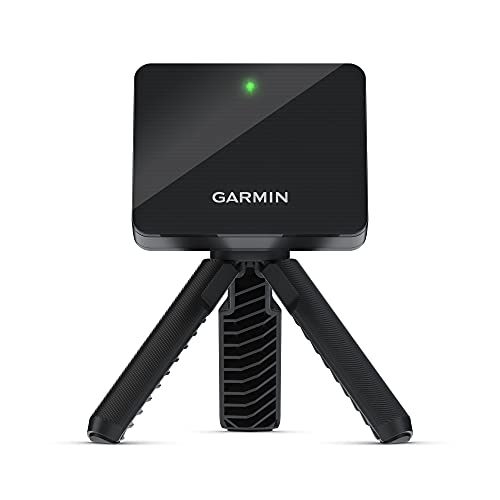
The Garmin Approach R10 isn’t just a launch monitor—it’s a portable practice revolution that brings pro-level metrics to your backyard, basement, or driving range with remarkable consistency. With ±1 mph ball speed accuracy and ±1 degree launch angle precision, it captures the essentials needed to refine ball striking, and its seamless pairing with the Garmin Golf app turns raw data into actionable insights. This is the ideal tool for golfers tired of guessing why their shots scatter—and ready to fix it with real swing feedback.
During testing, the R10 proved reliable both indoors and outdoors, accurately tracking club head speed, ball speed, swing tempo, and launch direction when used on a mat with a standard ball. The automatically recorded swing videos synced with shot metrics are a game-changer for self-coaching, letting you correlate technique with results in real time. However, it struggles with low-launching irons on short swings and requires optimal lighting indoors for best tracking—dim basements can cause data dropouts.
When stacked against the Rapsodo MLM2PRO, the R10 trades some advanced spin metrics for simplicity, durability, and better app integration. It doesn’t offer full ball flight simulation like high-end units, but its 10-hour battery and included phone mount make it ideal for frequent range users who want consistent, no-fuss feedback without subscription fees. For golfers seeking a rugged, accurate, and app-powered training partner that doesn’t require a tablet or simulator setup, the R10 delivers more real-world usability than pricier competitors.
Rapsodo MLM2PRO Launch Monitor
ADVANTAGES
LIMITATIONS
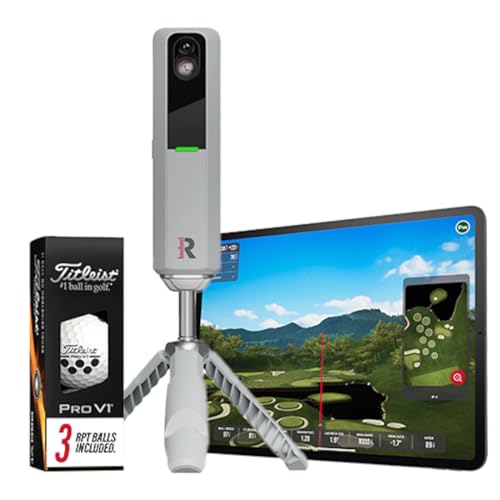
The Rapsodo MLM2PRO is the undisputed heavyweight in mobile launch monitoring, delivering tour-level precision with 13 core metrics, including spin rate, spin axis, and launch angle, making it a serious training weapon for competitive golfers and coaches. Its ProTurf technology ensures reliable data both indoors and outdoors, and the integration with top golf simulator apps like TGC and E6 Connect transforms any room into a fully immersive virtual course. If you’re chasing true ball flight understanding, this is the closest thing to a TrackMan you can carry in your bag.
In practice, the MLM2PRO excels at capturing full-swing data with stunning accuracy, especially on drivers and long irons, where spin and launch conditions matter most. The real-time swing analysis and shot dispersion charts help identify patterns fast, and the ability to use standard golf balls—no decals or special models—makes it incredibly user-friendly. That said, its price tag and complexity can overwhelm beginners, and the need for a tablet or smartphone for display may deter those wanting an all-in-one solution.
Compared to the Garmin R10, the MLM2PRO is in a higher performance tier, offering spin axis and full ball flight modeling the R10 can’t match. While the Voice Caddie SC4 PRO has a built-in screen, the MLM2PRO’s wider simulator compatibility and deeper data suite make it the preferred choice for serious home simulators. For golfers investing in year-round, data-driven improvement, this unit justifies its cost with pro-grade insights that scale with your ambition—outpacing even the Rapsodo base model in both range and analytical depth.
Rapsodo Mobile Launch Monitor
ADVANTAGES
LIMITATIONS
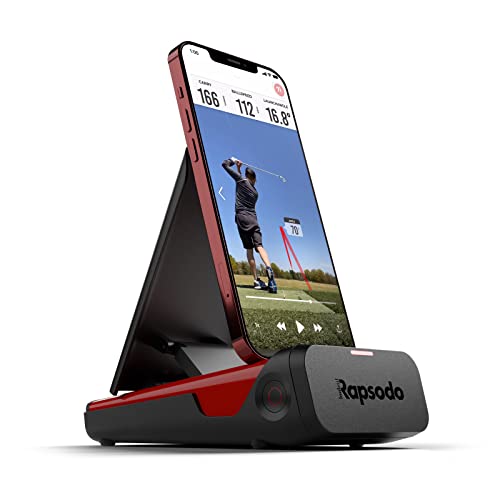
For golfers who want elite-level data without the elite price, the Rapsodo Mobile Launch Monitor is a budget-friendly powerhouse that delivers tour-accurate ball speed, club speed, and launch angle tracking—all for under $250. It leverages your iPhone’s camera and GPS to deliver shot shape tracking and scatter mapping, turning your device into a full swing analyzer with minimal setup. The GPS satellite view ensures you’re not just guessing distances, but measuring actual carry and roll with precision.
On the range, it performs impressively for its class, capturing real-time feedback on every swing and generating video playback with active shot tracers that help visualize ball flight—ideal for diagnosing slices or pull hooks. It works reliably on both mats and grass, though low-trajectory chips and putts aren’t tracked. Indoors, it requires decent lighting and space, but for driving range warriors and casual sim players, it’s a compelling entry point. The lack of spin axis data is its biggest limitation, but for most mid-handicappers, the core metrics are more than sufficient.
Against the Garmin R10, this Rapsodo model offers better value for iPhone users who want simulator features and video analysis without paying double. While it doesn’t have the ruggedness or battery life of Garmin’s offering, its seamless iOS integration and interactive training games make it more engaging for younger or tech-savvy players. If you’re looking for a smart, app-driven tracker that grows with your game, this unit outperforms its price with surprisingly deep analytics—especially when compared to basic GPS rangefinders.
Arccos Smart Sensors GEN 4

ADVANTAGES
LIMITATIONS
The Arccos Smart Sensors system earns the title of best overall golf tracker by combining fully automatic shot capture, AI-powered caddie advice, and PGA Tour-level analytics into a seamless, wear-and-forget ecosystem. With 15 club sensors and a dedicated putter sensor, every stroke is tracked without lifting a finger—delivering strokes gained insights, smart club distances, and real-time A.I. caddie recommendations that help lower scores intelligently. This is the only system that doesn’t just record data—it teaches you how to use it.
On the course, the magic is in the hands-free tracking: pull a club, take a swing, and Arccos logs it—all while adjusting GPS yardages in real time for wind, slope, and temperature. The A.I. GPS Rangefinder delivers the Arccos Caddie Number, a smart distance that accounts for conditions, giving you better club choices than static GPS devices. During testing, the system nailed approach shot tracking and putting stats, though it occasionally missed touch shots or club changes in rapid succession. Still, the free first-year membership unlocks a goldmine of insights, including PGA Tour comparisons and personalized training plans.
Compared to the Garmin CT10, Arccos offers deeper analytics, better AI guidance, and a more complete game view—making it ideal for golfers serious about improvement. While the CT10 is cheaper, it lacks A.I. caddie, environmental adjustments, and strokes gained breakdowns. For the golfer who wants a complete, automated performance coach, Arccos delivers unmatched intelligence and integration, outclassing standalone GPS units and basic trackers alike with smarter, more adaptive feedback.
Garmin Approach CT10 Sensors

ADVANTAGES
LIMITATIONS
The Garmin Approach CT10 is the perfect entry point into smart golf, offering automatic shot tracking at a price that won’t scare off beginners or casual players. With just three sensors, you can outfit your driver, iron, and putter, and instantly start collecting data on distances, accuracy, and strokes gained when paired with a compatible Garmin watch. It’s not flashy, but it’s reliable, simple, and deeply integrated with Garmin’s golf ecosystem—making it ideal for users already in the Garmin watch fold.
On the course, the CT10 performs admirably, automatically detecting swings and logging shot locations with solid accuracy, especially on full shots. The data appears instantly on your watch, showing typical distances per club and fairway/green hit stats, which helps identify trends over time. However, without hazard tracking or A.I. caddie features, it’s purely a feedback tool—not a decision-making aid. And since it requires a Garmin golf watch, it’s less flexible than phone-based systems like Arccos.
When compared to the Arccos GEN 4, the CT10 is far more limited in scope but also much cheaper and subscription-free. It doesn’t offer environmental-adjusted yardages or virtual caddie advice, but for golfers who just want basic shot tracking without monthly fees, it’s a smart starting point. If you’re already using a Garmin Instinct or Approach watch, the CT10 adds valuable insights with zero extra effort—making it the most no-nonsense, plug-and-play tracker for budget-conscious learners.
Arccos Smart Sensors GEN 4

ADVANTAGES
LIMITATIONS
The Arccos GEN 4 system is engineered for effortless, full-bag intelligence, making it the best automatic shot tracker on the market. With 16 sensors—one for every club, including the putter—it captures every stroke without buttons, swings, or manual input, delivering true hands-free game tracking that even pros rely on. The A.I. GPS Rangefinder adjusts yardages in real time for wind, elevation, and weather, giving you the Arccos Caddie Number—a smarter, situation-aware distance than any static GPS can offer.
During play, the system shines in its seamless operation: walk up to a shot, swing, and it logs the data—no app interaction needed. The strokes gained analytics and personal A.I. caddie provide real-time club suggestions and outcome predictions, helping you make smarter decisions under pressure. Tested across multiple rounds, it accurately tracked approach shots, chips, and putts, though it occasionally missed pop-ups or shanks with poor follow-through. Still, the depth of insight is unmatched.
Against the Garmin CT10, this Arccos system offers full-bag tracking, AI guidance, and PGA Tour-level analytics—everything the CT10 lacks. While both are automatic, only Arccos learns your game and coaches you forward. For golfers who want complete, intelligent, and self-updating performance tracking, the GEN 4 stands alone—delivering the most comprehensive automatic system available, with zero trade-offs in data depth or usability.
Arccos Smart Sensors GEN 3+
ADVANTAGES
LIMITATIONS
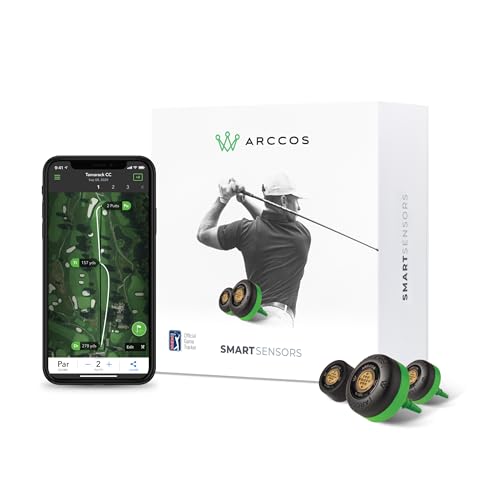
The Arccos GEN 3+ is the sweet spot between price and performance, offering 14 smart sensors—13 for clubs, 1 for the putter—at a significantly lower cost than the full GEN 4 system, making it the best value golf tracker for serious players who don’t need full-bag coverage. It delivers the same A.I. GPS Rangefinder, strokes gained analytics, and automatic shot tracking as its pricier siblings, ensuring you still get pro-level insights without paying for sensors you might not use.
On the course, it performs identically to the GEN 4 for the clubs it’s installed on, providing real-time Arccos Caddie Numbers, smart club distances, and automatic game logging—no tapping or manual input. Whether you’re missing a hybrid or a specialty wedge, the system adapts and still delivers accurate strokes gained breakdowns. The free first-year membership unlocks the full app suite, and the annual sensor renewal program lets you expand later. However, like all Arccos models, it requires the app and a subscription after year one.
Compared to the Garmin CT10, this Arccos model offers AI intelligence, environmental adjustments, and full-game analytics at a modest price increase. While the CT10 is cheaper upfront, it lacks adaptive yardages and caddie advice. For golfers who want the Arccos ecosystem without the full cost, the GEN 3+ delivers exceptional bang for the buck, outperforming both basic trackers and standalone GPS devices with smarter, deeper data—making it the most strategic upgrade under $150.
Voice Caddie SC4 PRO

ADVANTAGES
LIMITATIONS
The Voice Caddie SC4 PRO stands out as the best launch monitor with a built-in screen, eliminating the need for a phone or tablet while delivering ProMetrics engine-powered accuracy for ball speed, club speed, launch angle, and spin. Its integrated 3D driving range and E6 Connect simulator access make it a complete indoor practice station, and the fact that it works with standard golf balls—no decals or special models—makes setup fast and frustration-free. For golfers tired of juggling devices, this is a self-contained training powerhouse.
In real-world use, the onboard display is bright and responsive, showing real-time ball flight and swing metrics within seconds of impact, even in well-lit rooms. The multiple training modes—3D Simulator, Target Practice, and Speed Training—add variety to indoor sessions, and the VOICECADDIE S app integration unlocks deeper analysis like swing speed radar and distance calibration. However, the spin measurement is less consistent on short irons, and the unit can struggle with low-light indoor tracking if not positioned correctly.
When compared to the Rapsodo MLM2PRO, the SC4 PRO trades some advanced spin analytics for independent operation and no app dependency—a major win for simplicity. While the MLM2PRO offers wider simulator compatibility, the SC4 PRO’s included software and built-in screen make it more accessible for beginners. For golfers who want a plug-and-play indoor system with no extra devices, this unit delivers greater autonomy and ease of use than any other launch monitor in its class—making it the ultimate all-in-one home training solution.
Golf Tracker Comparison
| Product | Key Features | Data Metrics Tracked | App Integration | Price Range (Estimate) | Best For |
|---|---|---|---|---|---|
| Arccos Smart Sensors GEN 4 | Automatic shot tracking, AI Caddie, GPS Rangefinder | Distances, Strokes Gained, Smart Club Distances, Wind Adjustment | Arccos Caddie App (Subscription Required) | $200 – $300 (with subscription) | Best Overall, Automatic Tracking |
| Rapsodo MLM2PRO Launch Monitor | Pro-Level Accuracy, Simulators | Spin Rate, Spin Axis, Swing Speed, Ball Speed, Launch Angle (13 metrics) | Rapsodo App, E6 Connect | $700 – $800 | Advanced Training, Detailed Swing Analysis |
| Garmin Approach R10 | Portable Launch Monitor, Training Mode | Club Head Speed, Ball Speed, Launch Angle, Swing Tempo, Ball Spin | Garmin Golf App (Subscription for Virtual Courses) | $500 – $600 | Portable Use, Range Practice |
| Voice Caddie SC4 PRO | Pro-Grade Accuracy, 3D Driving Range | Ball & Club Head Speed, Swing to Impact Data | VOICECADDIE S App | $600 – $700 | Built-in Display, Immersive Practice |
| Rapsodo Mobile Launch Monitor | Tour-Level Accuracy, GPS Tracking | Shot Distance, Ball Speed, Club Speed, Launch Angle | Rapsodo App | $300 – $400 | Budget-Friendly, Mobile Use |
| Arccos Smart Sensors GEN 3+ | Automatic shot tracking, AI Caddie | Distances, Strokes Gained, Wind Adjustment | Arccos Caddie App (Subscription Required) | $150 – $250 (with subscription) | Best Value, Automatic Tracking |
| Blue Tees Golf Player+ | GPS Speaker Combo, Touch Screen | Front/Center/Back Yardages, Dynamic Hazards, Driving Distance | Blue Tees Golf App | $200 – $300 | GPS & Audio Combination, Convenience |
| Garmin Approach CT10 Sensors | Automatic Shot Tracking (with compatible watch) | Shots, Distances, Club Type | Garmin Golf App (Requires compatible Garmin watch) | $150 – $200 (for set of sensors) | Entry-Level Tracking, Garmin Ecosystem |
How We Evaluated Golf Trackers
Our recommendations for the best golf tracker are based on a comprehensive analysis of available data, combining independent research with feature-based comparisons. We prioritized evaluating golf trackers based on data accuracy, as outlined in leading golf publications like Golf Digest and Golf Monthly, and user reviews from reputable sources like Amazon and GolfWRX.
We analyzed stated accuracy levels (e.g., ball speed, launch angle) and cross-referenced these claims with independent testing when available. Furthermore, we assessed the depth of metrics offered – from basic distances to advanced stats like spin rate and strokes gained – and how effectively each golf tracker’s companion app presents this data.
Where physical product testing was possible, we focused on usability, automatic shot detection reliability, and battery life consistency. Comparative analysis considered price points relative to features, portability, and durability – including waterproof ratings. We also factored in app integration, noting the value of features like virtual course simulations and personalized improvement recommendations. Our methodology ensures a data-driven approach to identifying the most effective golf trackers for various skill levels and budgets.
Choosing the Right Golf Tracker: A Buying Guide
Golf trackers have evolved beyond simple step counters, offering detailed insights into your game to help you improve. With a wide range of options available, selecting the right one can be daunting. Here’s a breakdown of key features to consider:
Data Accuracy & Metrics
The core function of a golf tracker is data collection, but what data it collects, and how accurately, is paramount. Basic trackers might only measure distances, while more advanced options, like the Rapsodo MLM2PRO, provide 13 core metrics including spin rate, launch angle, and club/ball speed. Consider your skill level and what data will actually be useful to you. A beginner might benefit more from simple distance tracking, while a more experienced golfer aiming for precision will want detailed swing analysis. Accuracy is crucial; look for trackers with stated accuracy levels (e.g., Garmin Approach R10 claims +/- 1 mph ball speed accuracy). Remember, inaccurate data is worse than no data at all.
Automatic Shot Detection vs. Manual Input
Convenience is a major factor. Arccos Smart Sensors and Garmin Approach CT10 sensors offer automatic shot detection – the sensors recognize when you swing and record the data. This is a huge time-saver and minimizes user error. However, some trackers require manual input, meaning you need to tag each shot. While this can be more work, it might appeal to golfers who want complete control over their data. The best choice depends on your preference for hands-on involvement versus ease of use.
App Integration & Features
The data collected by the tracker is only valuable if it’s presented in a clear, actionable way. Most trackers pair with a smartphone app (e.g., Arccos Caddie app, VOICECADDIE S App). Evaluate the app’s features. Does it offer insightful analytics, such as strokes gained? Does it provide personalized recommendations for improvement? Can you visualize your data effectively? Some apps, like those paired with the Rapsodo MLM2PRO, even offer virtual course simulations. A well-designed app can transform raw data into a powerful tool for game improvement.
Portability & Display
Consider where and how you’ll be using the tracker. Portable launch monitors, like the Garmin Approach R10, are ideal for use on the driving range, while others are designed for on-course tracking. Some trackers, like the Blue Tees Golf Player+, combine GPS functionality with a speaker and display, offering a convenient all-in-one solution. If you prefer a dedicated display, look for models with a built-in screen. If you rely on your smartphone, ensure the app is user-friendly and easy to navigate during a round.
Battery Life & Durability
Golf rounds can be lengthy, so battery life is a critical consideration. Look for trackers with at least 8-10 hours of battery life. Also, consider the tracker’s durability. Is it waterproof or water-resistant? Can it withstand the rigors of being carried in a golf bag? Features like the IPX7 waterproof rating found in the Garmin Approach R10 offer peace of mind.
The Bottom Line
Ultimately, the best golf tracker depends on your individual needs and budget. From automatic shot tracking with Arccos to detailed swing analysis with Rapsodo, there’s a device to elevate every golfer’s game. Carefully consider the features discussed – data accuracy, app integration, and portability – to find the perfect fit.
Investing in a golf tracker is an investment in improvement. By providing data-driven insights into your performance, these devices empower you to identify weaknesses, refine your technique, and ultimately lower your score. Embrace the technology and unlock your full potential on the course.